Knowing where your main water shut-off valve is located can prevent serious water damage. When a pipe bursts or a leak suddenly appears, every second counts. Turning off the water quickly can stop flooding, reduce repair costs, and protect your home.
Many homeowners do not know where their main shut-off valve is until an emergency happens. The location varies depending on the age of the home, the plumbing layout, climate, and whether the house is built on a slab or has a crawl space or basement.
Understanding where your main water shut-off valve is typically located inside and outside homes can give you confidence during a plumbing emergency.
What Is the Main Water Shut-Off Valve?
The main water shut-off valve controls the flow of water from the municipal supply into your home. When this valve is turned off, water stops flowing to all sinks, toilets, showers, appliances, and outdoor fixtures.
This valve is different from smaller shut-off valves under sinks or behind toilets. The main valve stops water to the entire house.
If a major plumbing leak occurs, this is the valve you need to find immediately.
Where Is the Main Water Shut-Off Valve Located Inside a Home?
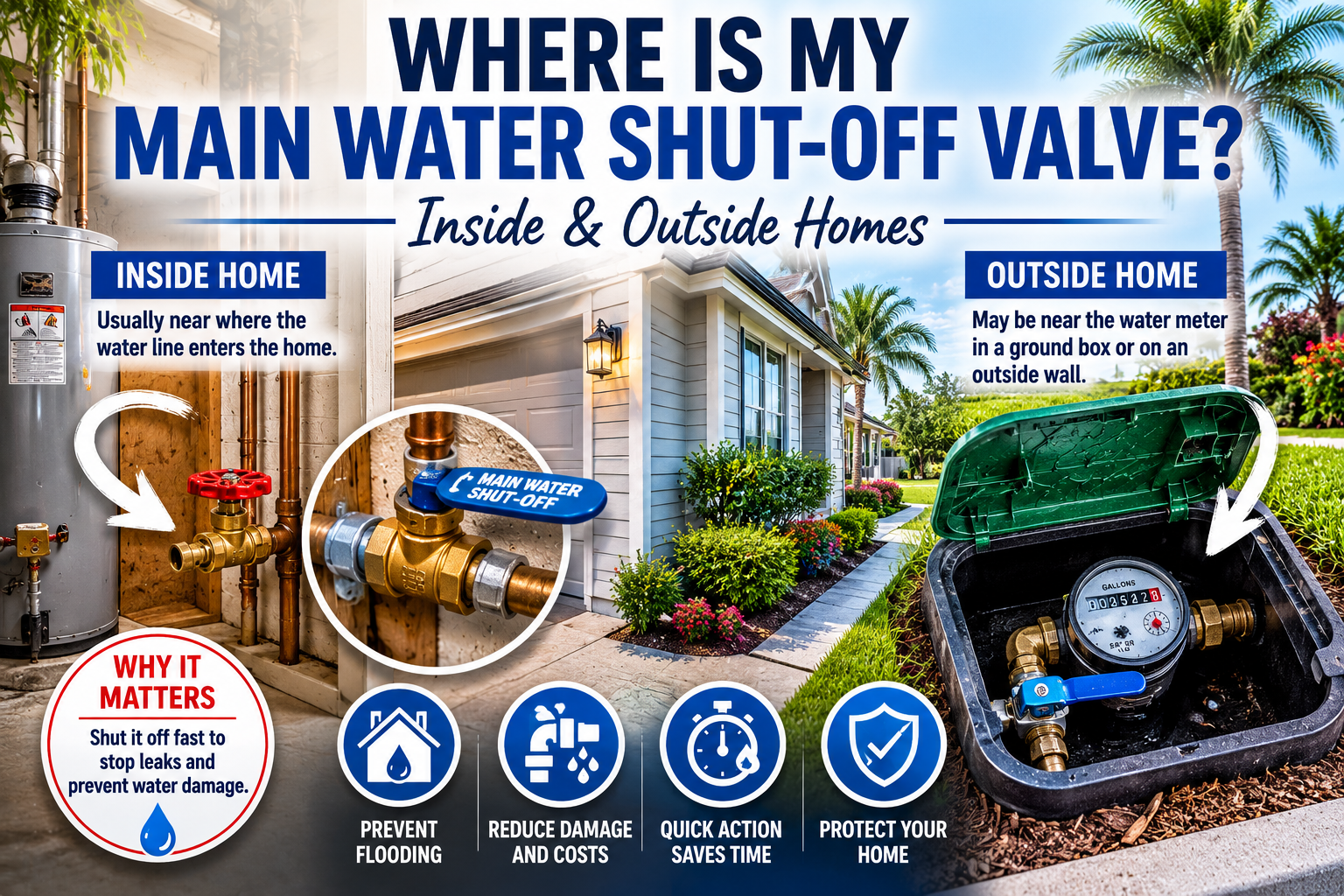
In many homes, especially in warmer climates like Florida, the main shut-off valve is located inside near where the main water line enters the house.
Common indoor locations include utility rooms, laundry rooms, garages, or near the water heater. It is often mounted low on the wall close to the floor.
In homes built on concrete slabs, the main water line typically enters through the front wall or near the garage. The shut-off valve is usually installed within a few feet of that entry point.
If you live in a home with a basement, the shut-off valve is often located along the front foundation wall, close to where the water line enters underground. It may be near the water meter inside the basement.
Crawl space homes may have the shut-off valve located beneath the house. In these cases, access panels or crawl space entries must be used to reach it.
Where Is the Main Water Shut-Off Valve Located Outside a Home?
In some homes, the primary shut-off valve is located outside near the water meter. This is common in older homes or properties where plumbing was designed with exterior access in mind.
Outdoor shut-off valves are often found in a ground-level meter box near the curb or sidewalk. The box typically contains the municipal water meter and sometimes a customer-accessible shut-off valve.
In many cities, there are two valves near the meter. One belongs to the city and requires a special tool to operate. The other may be a homeowner’s shut-off valve located on the house side of the meter.
Some homes also have an exterior shut-off valve mounted on an outside wall, especially in warmer regions where pipes do not need deep frost protection.
What Does the Main Shut-Off Valve Look Like?
Main water shut-off valves usually come in two styles. One type has a round wheel handle that you turn clockwise to close. The other type uses a straight lever handle that rotates a quarter turn.
If the handle is parallel to the pipe, the valve is open. If it is perpendicular to the pipe, the valve is closed.
Older valves may require several turns to shut off completely, while newer ball valves shut off quickly with a simple 90-degree turn.
Recognizing the valve shape makes it easier to identify during an emergency.
Why Every Homeowner Should Know This Location
A burst pipe can release gallons of water in minutes. Without shutting off the main water supply, flooding continues until help arrives.
Water damage spreads rapidly. It soaks into flooring, drywall, insulation, and framing. Mold can begin forming within 24 to 48 hours in damp conditions.
Knowing exactly where your main shut-off valve is located saves time and reduces stress when leaks occur.
How to Find Your Main Water Shut-Off Valve
Start by locating your water heater. In many homes, the main shut-off valve is nearby. Follow visible water lines backward from fixtures toward the point where they enter the home.
Look for pipes coming through walls or floors near the front of the house. In slab homes, the entry point is usually close to the front exterior wall.
If you cannot find it inside, check around the perimeter of your house for a small ground box near the curb. The water meter is often housed there.
If you still cannot locate the valve, contacting a licensed plumber can help. They can identify the valve and make sure it operates correctly.
Homes in Warm Climates vs Cold Climates
Climate plays a major role in shut-off valve placement. In cold regions, shut-off valves are typically located inside to prevent freezing.
In warmer climates like Melbourne, Florida, exterior shut-off valves are more common because freezing temperatures are rare. Many homes in Florida have both an indoor shut-off and an exterior meter shut-off.
Understanding local building practices helps narrow down where to look.
Signs Your Shut-Off Valve May Not Work Properly
Sometimes homeowners locate the valve but discover it is stuck or corroded. Valves that have not been used in years may seize up.
If turning the handle feels extremely tight or produces no change in water flow, the valve may need replacement. It is important to test your shut-off valve occasionally to ensure it functions when needed.
A professional plumber can replace outdated valves with modern ball valves that operate more smoothly.
What to Do After Turning Off the Water
Once you shut off the main water supply, open the lowest faucet in the home to drain remaining water from pipes. This relieves pressure and reduces further leaking.
After that, contact a plumber to diagnose and repair the issue. Turning off the water stops immediate damage but does not fix the underlying problem.
If the emergency involves a slab leak or hidden pipe burst, professional leak detection may be necessary to locate the exact source.
Emergency Situations That Require Immediate Shut-Off
There are certain situations where shutting off your main water valve should happen immediately. A burst pipe, major ceiling leak, flooding near appliances, or water spraying from walls are all urgent events.
If you hear rushing water behind walls or notice water pooling rapidly, turning off the supply is the fastest way to limit damage.
Quick action can save thousands of dollars in repairs.
Why Main Shut-Off Valve Knowledge Is Part of Home Maintenance
Knowing the location of your main water shut-off valve is just as important as knowing where your electrical panel is located. It is a basic part of responsible home ownership.
Taking a few minutes to locate and test the valve can prevent panic during an emergency.
It is also helpful to inform other family members where the valve is located in case you are not home when a plumbing problem occurs.
Frequently Asked Questions
Where is the main water shut-off valve usually located? It is commonly located near where the water line enters the home, often in a garage, utility room, basement, or near the water meter outside.
Is the water meter shut-off the same as the main shut-off? The meter shut-off controls water before it enters your plumbing system. Some meters include a homeowner-accessible valve, while others require a special tool.
Should I turn off the main water valve if I have a leak? Yes. Turning off the main valve stops water flow and prevents additional damage until repairs can be made.
How often should I check my shut-off valve? It is wise to test it once or twice per year to ensure it operates smoothly.
What if I cannot find my shut-off valve? A licensed plumber can locate it and ensure it is functioning properly.
Your Main Water Shut-Off Valve
Your main water shut-off valve is one of the most important components of your plumbing system. Knowing where it is located inside or outside your home can prevent serious water damage during an emergency.
Every home is slightly different. The valve may be in a garage, basement, crawl space, utility room, or near the exterior water meter. Climate, home design, and plumbing layout all affect placement.
Taking the time to locate and understand your shut-off valve gives you control during unexpected plumbing problems. When leaks occur, quick action protects your floors, walls, foundation, and overall home value.
What’s Next?
Doug Herrell Plumbing is a trusted leader in Brevard County, Florida, specializing in slab leak detection and re-piping services. Call us today for a free estimate before a slab leak causes unnecessary damage to your property.
About Doug Herrell Plumbing – lic#CFC 048487
Doug Herrell Plumbing has been Brevard County’s source for plumbing services since 1980. We are a family owned and operated business and take tremendous pride in providing honest and reliable plumbing services at an affordable price.
CALL 321-254-0004
Serving Melbourne, Palm Bay, Viera, Suntree, Titusville, Merritt Island, Melbourne Beach, Indialantic, Indian Harbour Beach, Cape Canaveral, Satellite Beach, Rockledge, West Melbourne, Cocoa, and Cocoa Beach.