Water pressure is something most homeowners take for granted until it changes. When the pressure is too low, everyday tasks like showering, washing dishes, or doing laundry become frustrating. When the pressure is too high, it can quietly damage your plumbing system, shorten the life of your appliances, and even lead to hidden water leaks.
The good news is that you do not need to be a plumber to check your home’s water pressure. A simple pressure test can tell you whether your plumbing system is operating within a healthy range. It only takes a few minutes and can help you catch problems before they become expensive repairs.
Understanding how to test your home’s water pressure is one of the easiest ways to monitor the health of your plumbing system. Whether you are buying a home, noticing changes in water flow, or simply performing routine maintenance, checking your water pressure is a smart habit.
Why Water Pressure Matters
Your home’s plumbing system depends on water pressure to deliver clean water to every faucet, shower, toilet, and appliance. The pressure supplied by your city or well system pushes water through your pipes whenever you turn on a fixture.
If the pressure is too low, water may barely trickle from faucets. Showers can become weak, washing machines may take longer to fill, and irrigation systems may not work properly.
High water pressure creates a different problem. While strong pressure may seem like a good thing, it places constant stress on your pipes, water heater, faucets, valves, and appliances. Over time, excessive pressure increases the chance of leaks, burst pipes, and costly plumbing repairs.
Maintaining the proper pressure helps your plumbing system last longer while providing consistent performance throughout your home.
What Is Normal Water Pressure?
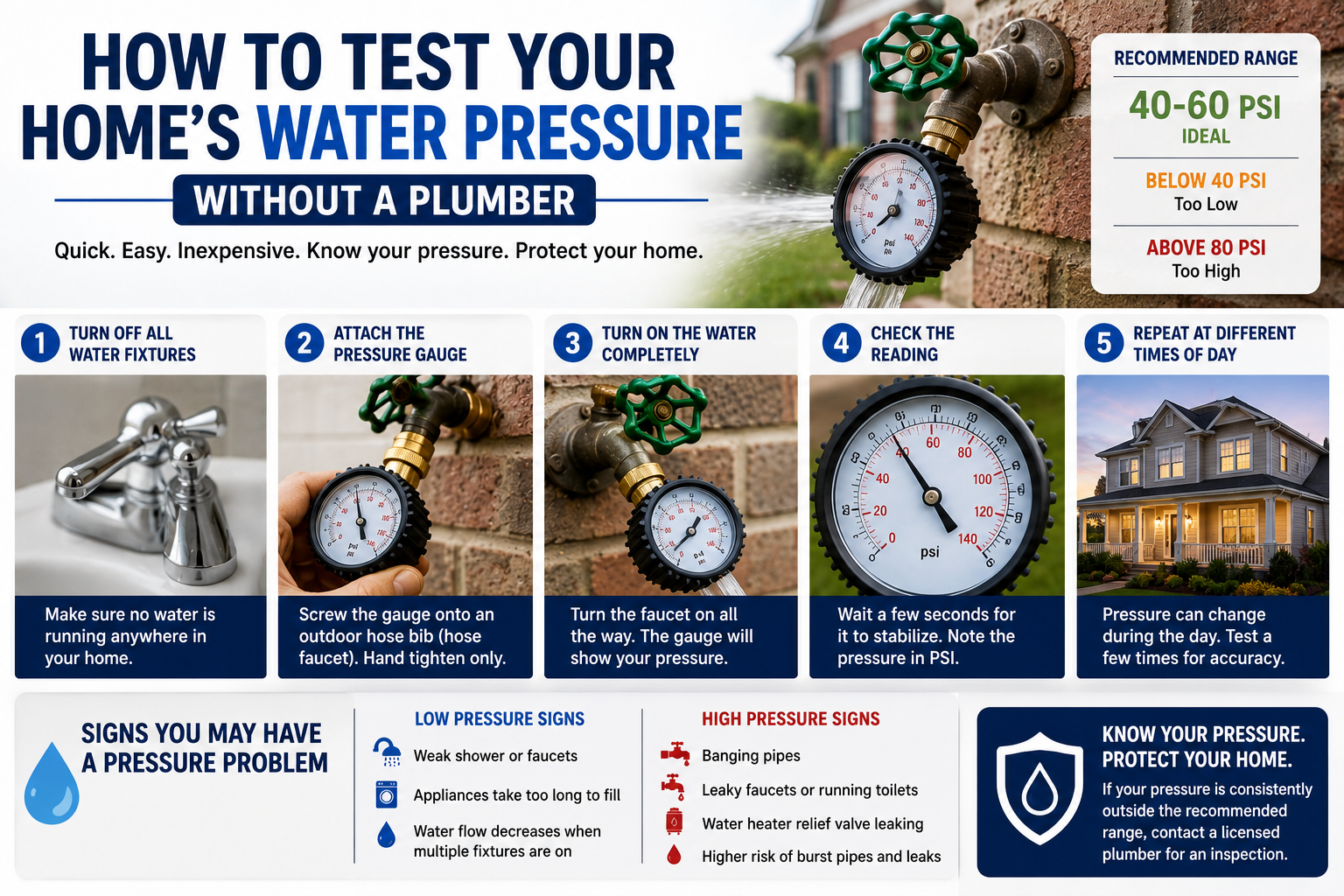
Most residential plumbing systems operate best between 40 and 60 PSI, which stands for pounds per square inch.
Many plumbers consider about 50 PSI to be ideal for most homes.
If your pressure falls below 40 PSI, you may notice weak water flow throughout the house.
If it consistently measures above 80 PSI, it should be addressed as soon as possible. High pressure can slowly damage plumbing fixtures even if you do not notice any immediate problems.
Some homes naturally experience slight fluctuations throughout the day as neighborhood water demand changes, but dramatic swings should always be investigated.
Signs Your Water Pressure May Be Too Low
Low water pressure is usually noticeable because everyday activities become less efficient.
You might notice your shower no longer feels as strong as it once did. Faucets may take longer to fill a sink or bathtub. Outdoor hose bibs may struggle to supply enough water for sprinklers or pressure washers.
Sometimes only one fixture has low pressure. In that case, the problem is often a clogged faucet aerator or showerhead rather than an issue affecting the entire plumbing system.
If every fixture throughout the home experiences low pressure, the cause may involve the main water supply, a pressure regulator, pipe corrosion, or a hidden plumbing leak.
Signs Your Water Pressure May Be Too High
Many homeowners never realize they have excessive water pressure because everything appears to work normally.
In fact, stronger isn’t always better.
High pressure often reveals itself through banging pipes, leaking faucets, running toilets, appliance failures, or dripping pressure relief valves on water heaters.
Over time, excessive pressure wears out seals and fittings throughout your plumbing system.
A sudden increase in your water bill may also indicate that high pressure has caused a hidden leak somewhere inside the home.
The Simplest Way to Test Water Pressure
Testing your home’s water pressure is surprisingly easy.
The most accurate method uses an inexpensive water pressure gauge that connects directly to an outdoor hose faucet.
These gauges are available at most hardware stores and home improvement centers for around $10 to $20.
They screw onto a standard garden hose connection and provide an instant pressure reading.
Because they are inexpensive and reusable, many homeowners keep one with their plumbing tools for occasional testing.
How to Perform the Test
Choose an outdoor hose bib that is connected directly to your home’s plumbing system.
Before attaching the gauge, make sure all water fixtures inside the house are turned off. This includes faucets, showers, dishwashers, washing machines, and irrigation systems.
Thread the pressure gauge onto the hose connection until it is snug.
Slowly turn on the faucet completely.
The needle will immediately display your home’s water pressure.
Allow the reading to stabilize for several seconds before recording the number.
For the most accurate results, repeat the test at different times of the day.
Water pressure sometimes changes slightly during periods of heavy neighborhood water usage.
What Your Results Mean
If your reading falls between 40 and 60 PSI, your plumbing system is generally operating within a healthy range.
Readings slightly above or below this range are not always cause for concern, especially if your plumbing performs normally.
Pressure below 40 PSI may indicate restrictions inside your plumbing system, municipal supply issues, pipe corrosion, mineral buildup, or hidden leaks.
Readings above 80 PSI should be corrected. Excessive pressure places unnecessary strain on every component of your plumbing system.
A licensed plumber can determine whether a pressure reducing valve should be adjusted or replaced.
Can You Test Water Pressure Without a Gauge?
While a pressure gauge provides the most accurate measurement, there are a few signs that can help you estimate whether your pressure is unusually high or low.
If water blasts forcefully from every faucet, shower doors shake when the shower runs, or pipes bang loudly after fixtures shut off, pressure may be excessive.
If showers feel weak, multiple fixtures lose pressure when used together, or appliances fill slowly, low pressure could be the issue.
These observations cannot replace an actual pressure reading, but they often indicate whether further testing is needed.
Why Water Pressure Changes Over Time
Many homeowners assume water pressure remains constant forever.
In reality, several factors can affect it.
Municipal water systems sometimes increase or decrease pressure depending on demand or maintenance work.
Older galvanized pipes gradually narrow because of corrosion and mineral buildup, reducing water flow.
Pressure reducing valves can wear out over time.
Hidden plumbing leaks also affect pressure because water escapes before reaching fixtures.
Seasonal temperature changes and plumbing repairs may temporarily alter water pressure as well.
Hidden Plumbing Leaks Can Lower Water Pressure
One of the most overlooked causes of low water pressure is a hidden water leak.
If water escapes behind walls, beneath floors, or under your home’s concrete slab, less water reaches your fixtures.
This often results in lower pressure throughout the home.
Other warning signs include unusually high water bills, damp floors, warm spots on tile, mold growth, or the sound of running water when everything is turned off.
Professional leak detection equipment can accurately locate hidden leaks without unnecessary damage to your home.
The Role of Pressure Reducing Valves
Many homes have a pressure reducing valve installed near the main water line.
Its job is exactly what the name suggests.
It lowers incoming water pressure from the municipal supply before it enters your plumbing system.
Without this valve, some neighborhoods would experience pressure high enough to damage plumbing fixtures.
Like any plumbing component, pressure reducing valves eventually wear out.
If yours begins failing, water pressure may suddenly become much higher or much lower than normal.
Replacing the valve often restores proper pressure throughout the home.
Why High Water Pressure Can Damage Plumbing
Although many people enjoy powerful showers, excessive pressure silently shortens the life of nearly every plumbing component.
Pipe joints experience more stress.
Rubber seals wear out faster.
Water heaters cycle under greater pressure.
Appliance hoses become more likely to burst.
Even small faucet cartridges can fail prematurely.
Reducing water pressure to recommended levels often prevents thousands of dollars in future plumbing repairs.
Why Low Water Pressure Should Not Be Ignored
Low pressure may seem like only an inconvenience, but it sometimes signals larger plumbing issues.
Hidden leaks continue wasting water until repaired.
Corroded pipes become increasingly restricted.
Main water line problems may worsen over time.
Ignoring low pressure allows small problems to grow into more expensive repairs.
If the issue develops suddenly, scheduling a plumbing inspection is usually the best decision.
When to Call a Plumber
Testing your water pressure is simple.
Diagnosing the reason behind abnormal readings sometimes requires professional equipment and experience.
If pressure remains below 40 PSI or above 80 PSI after repeated testing, it is a good idea to contact a licensed plumber.
Professional plumbers can inspect pressure reducing valves, locate hidden leaks, evaluate aging pipes, and determine whether municipal supply issues are affecting your home.
Early diagnosis often prevents major plumbing failures.
Keeping Your Plumbing System Healthy
Checking your home’s water pressure once or twice each year is a simple part of preventative home maintenance.
It takes only a few minutes but provides valuable information about your plumbing system.
Pairing pressure checks with routine inspections for leaks, monitoring your monthly water bill, flushing your water heater, and replacing worn supply hoses can help your plumbing system operate reliably for many years.
Small maintenance habits often prevent expensive emergencies.
Frequently Asked Questions
What is normal water pressure for a home?
Most homes operate best between 40 and 60 PSI. Around 50 PSI is considered ideal for many residential plumbing systems.
How do I know if my water pressure is too high?
Signs include banging pipes, leaking faucets, running toilets, appliance failures, and pressure readings above 80 PSI.
Can low water pressure mean I have a leak?
Yes. Hidden plumbing leaks can reduce water pressure while increasing your monthly water bill.
How often should I test my home’s water pressure?
Testing once or twice each year is recommended, especially if your home is older or you notice changes in water flow.
Can high water pressure damage pipes?
Yes. Excessive pressure places constant stress on pipes, fittings, water heaters, appliances, and plumbing fixtures, increasing the risk of leaks and failures.
Do I need a plumber to test water pressure?
No. Most homeowners can check water pressure themselves using an inexpensive pressure gauge that attaches to an outdoor hose faucet.
Your Home’s Water Pressure Affects Far More Than The Strength Of Your Shower
Your home’s water pressure affects far more than the strength of your shower. It plays an important role in the overall health of your plumbing system. Pressure that is too low can indicate hidden leaks or aging pipes, while pressure that is too high can quietly damage your plumbing over time.
Fortunately, checking your home’s water pressure is quick, inexpensive, and easy. With a simple pressure gauge and just a few minutes, you can learn whether your plumbing system is operating within a healthy range.
If your readings are consistently outside the recommended range or you notice signs like unusually high water bills, wet spots on floors or walls, banging pipes, or weak water flow, it is best to have your plumbing system inspected by a licensed professional. Catching problems early can help prevent costly water damage and keep your home’s plumbing running efficiently for years to come.
What’s Next?
Doug Herrell Plumbing is a trusted leader in Brevard County, Florida, specializing in slab leak detection and re-piping services. Call us today for a free estimate before a slab leak causes unnecessary damage to your property.
About Doug Herrell Plumbing – lic#CFC 048487
Doug Herrell Plumbing has been Brevard County’s source for plumbing services since 1980. We are a family owned and operated business and take tremendous pride in providing honest and reliable plumbing services at an affordable price.
CALL 321-254-0004
Serving Melbourne, Palm Bay, Viera, Suntree, Titusville, Merritt Island, Melbourne Beach, Indialantic, Indian Harbour Beach, Cape Canaveral, Satellite Beach, Rockledge, West Melbourne, Cocoa, and Cocoa Beach.