When you turn on a faucet, flush a toilet, or take a hot shower, you probably don’t think much about what is happening behind the walls. Your home’s plumbing system works quietly every day, delivering clean water where you need it and safely removing wastewater when you’re finished. It is one of the most important systems in your home, yet many homeowners know very little about how it actually works.
Understanding the basics of your home’s plumbing system can help you recognize problems earlier, prevent costly repairs, and communicate more effectively with a plumber when something goes wrong. While modern plumbing systems may seem complicated, they are actually built around a few simple components that work together every day.
Whether you own a newer home or an older property, the basic principles remain the same. Fresh water comes in, it is distributed throughout your home, used water leaves through drain pipes, and a vent system keeps everything flowing properly.
Everything Starts With the Main Water Line
Every home receives clean water from a main water supply. In most neighborhoods, this water comes from a city or county water system. Some homes use private wells instead, but once the water enters your home, the plumbing system functions much the same way.
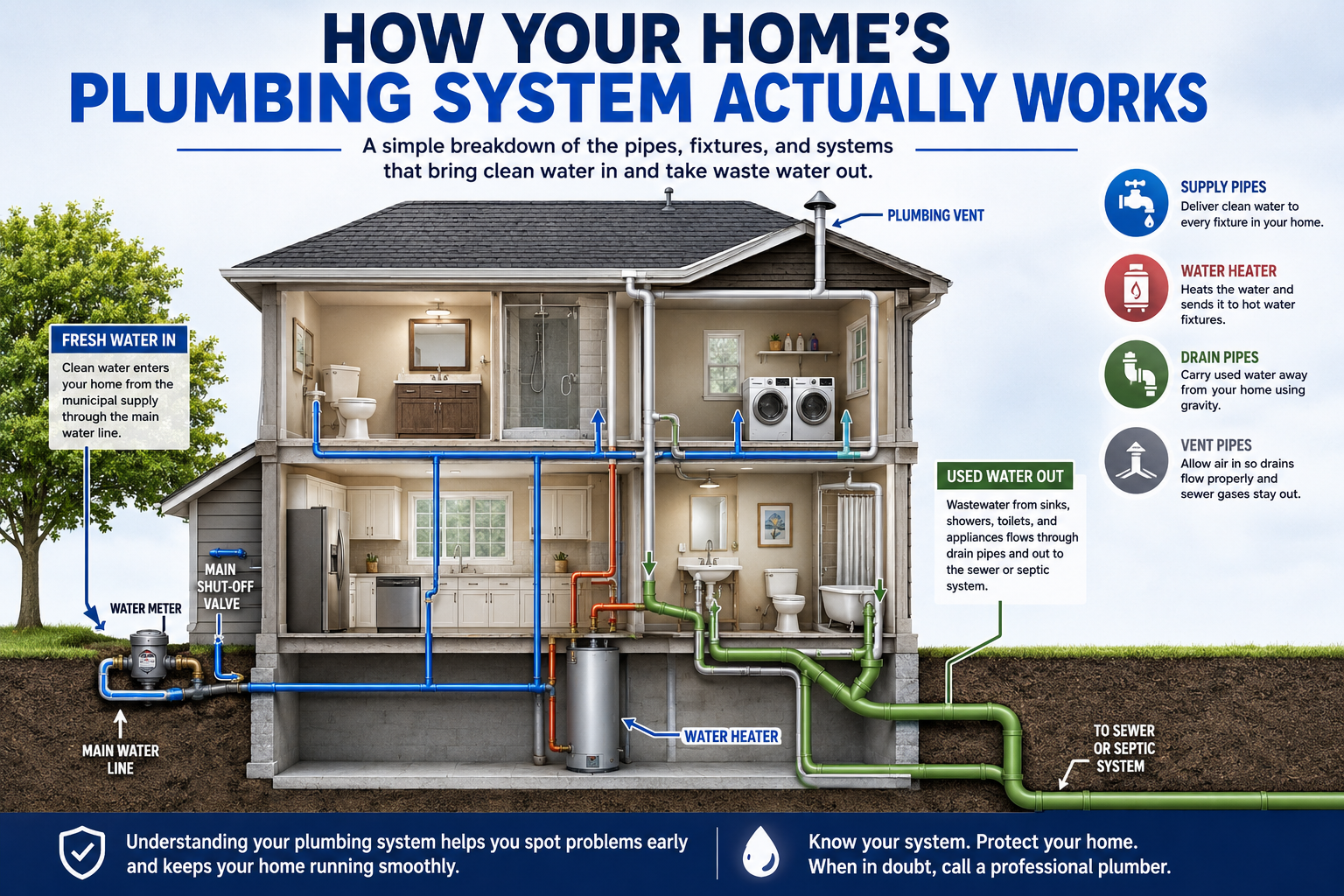
The main water line is the large pipe that carries fresh water from the street into your home. Before the water reaches your faucets, it passes through a water meter that measures how much water your household uses each month.
After the meter, the water flows through the home’s main shut-off valve. This valve controls the entire water supply to the house. If a major leak or burst pipe occurs, turning off this valve stops water from flowing throughout the plumbing system.
From there, the water enters your home’s network of supply pipes.
Water Pressure Makes Everything Work
Your plumbing system depends on water pressure. Without pressure, water would never reach your upstairs bathroom, kitchen sink, or washing machine.
Municipal water systems maintain pressure using large pumps and elevated water towers. This constant pressure pushes water through underground water mains and into individual homes.
When you open a faucet, the pressure forces water through the supply pipes almost instantly. Once you close the faucet, the pressure remains inside the pipes, ready for the next time you need water.
Most homes operate between 40 and 80 pounds per square inch (PSI). If water pressure becomes too high, it can stress pipes, fittings, and appliances. If pressure becomes too low, showers, sinks, and washing machines may not perform properly.
Water Supply Pipes Deliver Fresh Water
Once water enters your home, supply pipes carry it to every plumbing fixture.
These pipes run behind walls, beneath floors, and through ceilings to reach bathrooms, kitchens, laundry rooms, outdoor hose bibs, refrigerators, dishwashers, and water heaters.
Older homes often have galvanized steel or copper pipes. Newer homes commonly use PEX piping because it is flexible, durable, and resistant to corrosion.
The supply system constantly holds pressurized water. This is why even a tiny crack in a pipe can leak continuously until the water supply is shut off.
Most homeowners never see these pipes because they remain hidden inside walls, but they are working every minute of every day.
Cold Water and Hot Water Travel Different Paths
Not all water follows the same route.
Cold water travels directly from the main supply line to fixtures like toilets, outdoor faucets, refrigerator water dispensers, and many sink faucets.
Hot water takes an extra step. Before reaching showers, bathtubs, bathroom sinks, and kitchen faucets, cold water enters the water heater.
The water heater stores and heats the water before sending it back through a separate network of hot water pipes.
When you turn on the hot side of a faucet, you are drawing heated water from this dedicated system.
Because hot water expands when heated, water heaters also include safety components such as expansion tanks and pressure relief valves.
The Water Heater Plays a Major Role
Your water heater is one of the hardest-working appliances in your home.
Every day it heats water for showers, dishwashing, laundry, and cleaning. Whether your home uses a traditional tank water heater or a tankless model, both perform the same basic job.
Traditional water heaters store dozens of gallons of heated water until you need it.
Tankless water heaters heat water only when you turn on a fixture. Instead of storing hot water, they warm it instantly as it flows through the unit.
Both systems require regular maintenance to operate efficiently and extend their lifespan.
Plumbing Fixtures Connect Everything Together
Every faucet, toilet, shower, bathtub, dishwasher, washing machine, and outdoor spigot connects to both the water supply system and the drainage system.
When you turn on a faucet, clean water enters through the supply pipe.
When you turn it off, gravity takes over and wastewater flows into the drain.
Toilets use a similar process. Fresh water fills the tank, and when flushed, gravity and water pressure move waste into the drain system.
Although fixtures are the parts homeowners interact with every day, they represent only a small portion of the complete plumbing system.
Where Does the Dirty Water Go?
Once water goes down the drain, an entirely different plumbing system takes over.
Unlike the supply pipes, drain pipes do not rely on pressure.
Instead, they depend almost entirely on gravity.
Every sink, shower, bathtub, toilet, washing machine, and dishwasher drains into a network of larger pipes called the drain, waste, and vent system, often referred to as the DWV system.
These pipes slope downward so wastewater naturally flows away from your home.
Eventually, all wastewater leaves through the main sewer line, which connects to the city’s sewer system or a private septic tank.
Why Plumbing Vents Are So Important
One of the least understood parts of a home’s plumbing system is the vent system.
Every drain pipe connects to plumbing vents that extend through the roof.
These vents do not carry water.
Instead, they allow air into the drainage system.
Without proper ventilation, water flowing through drain pipes would create suction, slowing drainage and pulling water out of drain traps.
That would allow unpleasant sewer gases to enter your home.
Plumbing vents maintain balanced air pressure so wastewater flows smoothly while keeping odors safely outside.
If a vent becomes blocked by leaves, debris, or animal nests, you may notice slow drains or gurgling sounds.
The Purpose of P-Traps
Under nearly every sink is a curved section of pipe called a P-trap.
This small bend always holds a little water.
That water creates a seal between your home and the sewer system.
Without a P-trap, sewer gases could rise through the drain and enter your house.
The simple design has been protecting homes for generations.
If a sink goes unused for a long period, the water inside the trap can evaporate, allowing odors to appear.
Running the faucet for a few seconds usually solves the problem.
How Sewer Lines Remove Waste
Every drain pipe inside your home eventually connects to one larger pipe called the main sewer line.
This pipe carries wastewater away from the home.
If your property connects to city utilities, wastewater travels to a municipal treatment facility.
Homes with septic systems send wastewater into an underground septic tank where solids settle and liquids flow into the drain field.
Because the sewer line carries waste from the entire house, a blockage can affect multiple drains at once.
Signs of sewer line problems include several slow drains, toilets backing up, foul odors, or wastewater appearing in showers or tubs.
Why Plumbing Leaks Can Stay Hidden
Many homeowners wonder how a plumbing leak can exist for weeks without being noticed.
The answer is simple.
Most plumbing pipes are hidden inside walls, ceilings, crawl spaces, attics, or beneath concrete foundations.
Water often travels before becoming visible.
A pipe leaking behind a bathroom wall may eventually create a wet spot several feet away.
A slab leak beneath the foundation may only show itself through warm flooring, higher water bills, or damp carpet.
Professional leak detection equipment helps plumbers locate these hidden problems without unnecessary demolition.
Common Plumbing Problems Homeowners Experience
Even well-built plumbing systems experience wear over time.
Pipe joints loosen, seals wear out, fixtures age, and corrosion develops.
Some of the most common plumbing problems include dripping faucets, clogged drains, running toilets, leaking water heaters, burst pipes, low water pressure, sewer line blockages, slab leaks, and hidden water leaks.
While some issues develop gradually, others happen suddenly.
Recognizing early warning signs often prevents much larger repairs.
Signs Your Plumbing System May Need Attention
Your plumbing system usually provides several warnings before major problems develop.
An unusually high water bill may indicate a hidden leak.
Low water pressure could signal pipe corrosion, a leak, or mineral buildup.
Brown or discolored water sometimes points to aging pipes.
Slow drains may suggest developing blockages.
Wet spots on floors or walls often indicate hidden leaks.
Unpleasant odors can result from drain problems, sewer line issues, or dry P-traps.
Ignoring these warning signs usually allows small issues to become larger and more expensive.
Preventing Plumbing Problems
Although no plumbing system lasts forever, routine maintenance can greatly extend its lifespan.
Checking for visible leaks under sinks, inspecting appliance supply lines, monitoring your monthly water bill, flushing your water heater, avoiding grease in kitchen drains, and addressing small leaks promptly all help prevent major plumbing repairs.
Knowing where your main water shut-off valve is located is equally important.
If a pipe bursts, shutting off the water immediately can save thousands of dollars in water damage.
Professional plumbing inspections every few years can also identify hidden issues before they become emergencies.
Why Professional Leak Detection Matters
Some plumbing problems are easy to find.
Others remain hidden beneath slabs, inside walls, or underground.
Modern plumbers use specialized leak detection equipment that listens for water movement inside pipes, measures pressure changes, and identifies hidden moisture.
These tools allow plumbers to locate leaks accurately without tearing apart unnecessary portions of your home.
Early leak detection saves money, reduces repair time, and protects your home’s structure.
Frequently Asked Questions
How does a home’s plumbing system work?
A home’s plumbing system brings clean water into the house through supply pipes while removing wastewater through drain pipes. Water pressure delivers fresh water to fixtures, and gravity carries used water away through the drain and sewer system.
What are the main parts of a plumbing system?
The primary components include the main water line, shut-off valve, supply pipes, water heater, plumbing fixtures, drain pipes, plumbing vents, P-traps, and the main sewer line.
Why do plumbing systems have roof vents?
Roof vents allow air into the drainage system so wastewater flows properly. They also prevent sewer gases from entering the home.
What causes plumbing leaks?
Leaks can develop from aging pipes, corrosion, loose fittings, shifting foundations, excessive water pressure, freezing temperatures, or normal wear over time.
Why is my water bill suddenly higher?
A sudden increase often indicates a hidden plumbing leak, running toilet, slab leak, irrigation leak, or another issue that allows water to flow continuously.
What should I do if a pipe bursts?
Turn off your home’s main water shut-off valve immediately to stop the water flow, then contact a licensed plumber as soon as possible.
Your Home’s Plumbing System Is Something You Rely On Every Single Day
Your home’s plumbing system is something you rely on every single day, even if you rarely think about it. Behind the walls and beneath the floors, an entire network of pipes, valves, drains, vents, and fixtures works together to deliver clean water and remove wastewater safely.
Understanding how these components work makes it easier to recognize warning signs before they become expensive repairs. Whether it’s a hidden leak, a clogged drain, low water pressure, or a failing water heater, catching problems early can protect your home and save money over time.
If you notice unusually high water bills, wet spots on your floors or walls, slow drains, or any other plumbing concerns, it’s always best to have the issue inspected by a licensed plumber. A healthy plumbing system keeps your home safe, efficient, and comfortable for years to come.
What’s Next?
Doug Herrell Plumbing is a trusted leader in Brevard County, Florida, specializing in slab leak detection and re-piping services. Call us today for a free estimate before a slab leak causes unnecessary damage to your property.
About Doug Herrell Plumbing – lic#CFC 048487
Doug Herrell Plumbing has been Brevard County’s source for plumbing services since 1980. We are a family owned and operated business and take tremendous pride in providing honest and reliable plumbing services at an affordable price.
CALL 321-254-0004
Serving Melbourne, Palm Bay, Viera, Suntree, Titusville, Merritt Island, Melbourne Beach, Indialantic, Indian Harbour Beach, Cape Canaveral, Satellite Beach, Rockledge, West Melbourne, Cocoa, and Cocoa Beach.
Table of Contents
- Everything Starts With the Main Water Line
- Water Pressure Makes Everything Work
- Water Supply Pipes Deliver Fresh Water
- Cold Water and Hot Water Travel Different Paths
- The Water Heater Plays a Major Role
- Plumbing Fixtures Connect Everything Together
- Where Does the Dirty Water Go?
- Why Plumbing Vents Are So Important
- The Purpose of P-Traps
- How Sewer Lines Remove Waste
- Why Plumbing Leaks Can Stay Hidden
- Common Plumbing Problems Homeowners Experience
- Signs Your Plumbing System May Need Attention
- Preventing Plumbing Problems
- Why Professional Leak Detection Matters
- Frequently Asked Questions
- Your Home’s Plumbing System Is Something You Rely On Every Single Day
- What’s Next?
- Table of Contents