Most homeowners know that their plumbing system has water pipes and drain pipes, but very few realize there is another important part working behind the scenes. Plumbing vents are one of the most overlooked components of a home’s plumbing system, yet they play a major role in keeping everything flowing properly. Without them, your sinks would drain slowly, toilets might not flush correctly, and unpleasant sewer odors could make their way into your home.
Although plumbing vents are hidden inside walls and extend through your roof, they work every time you use water. They allow air to enter your plumbing system, helping wastewater move smoothly through the drain pipes while preventing dangerous sewer gases from entering your living space.
Understanding what plumbing vents do and recognizing the signs of a blocked vent can help you prevent larger plumbing problems and know when it’s time to call a professional plumber.
What Is a Plumbing Vent?
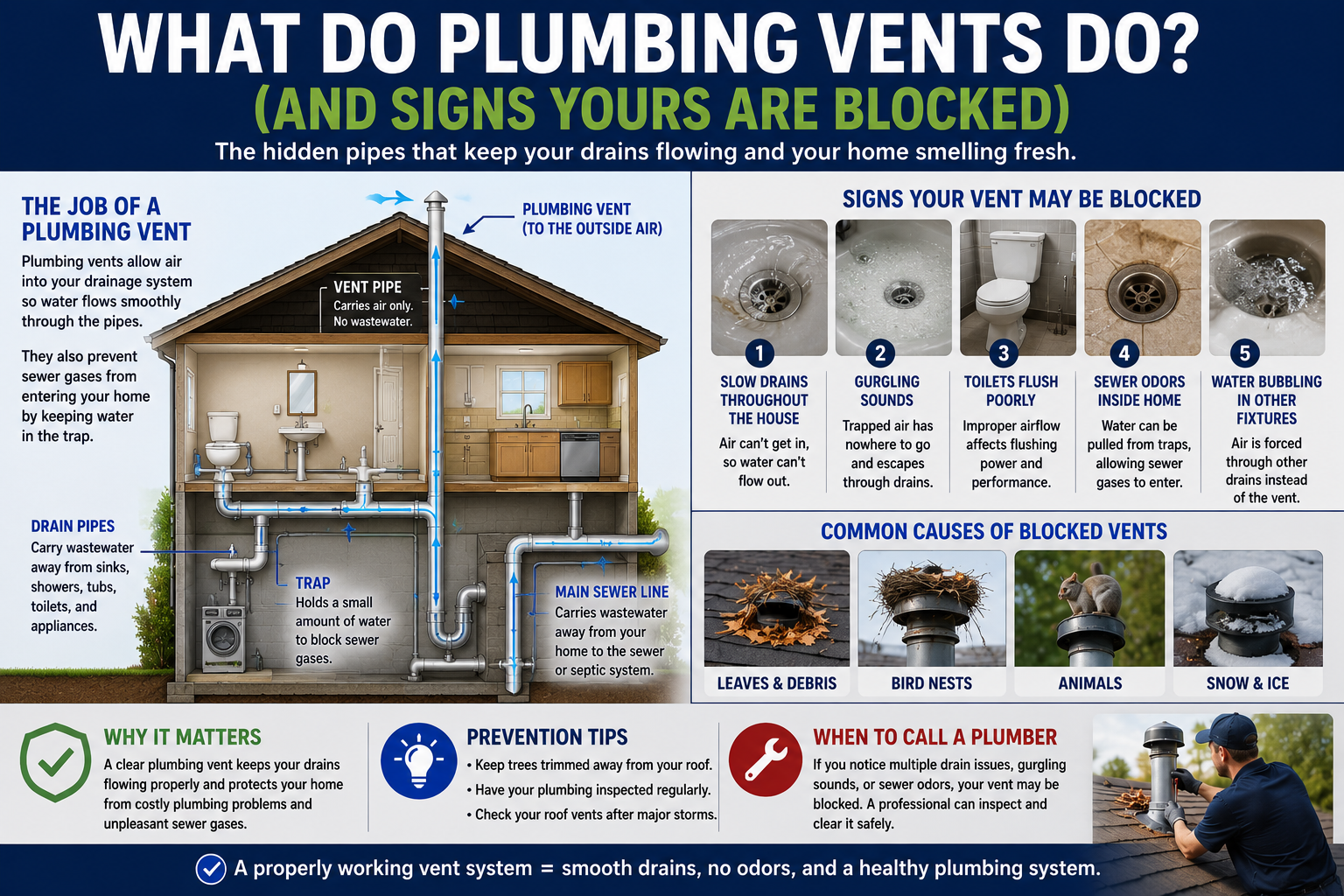
A plumbing vent, sometimes called a vent stack or vent pipe, is a pipe that connects your home’s drainage system to the outside air. While drain pipes carry wastewater away from your sinks, showers, toilets, and appliances, vent pipes only move air.
These pipes typically run vertically through the walls of your home before exiting through the roof. If you’ve ever noticed a pipe sticking up through your roof and wondered what it was, chances are you were looking at a plumbing vent.
Unlike sewer pipes, plumbing vents should never carry standing water. Their primary job is to regulate air pressure throughout your plumbing system.
Why Plumbing Vents Are So Important
Your home’s plumbing system works because of two things: gravity and air.
Gravity pulls wastewater downward through the drain pipes. Air supplied through the plumbing vents keeps the pressure inside those pipes balanced.
Without proper ventilation, water flowing through the pipes would create a vacuum. That suction would slow drainage, create loud gurgling noises, and pull water out of the drain traps beneath your sinks and showers.
Those drain traps hold water that blocks sewer gases from entering your home. Without plumbing vents, that protective seal could disappear.
In simple terms, plumbing vents help wastewater flow out while keeping unpleasant odors outside where they belong.
How the Drain, Waste, and Vent System Works Together
Your home’s drainage system is often called the DWV system, which stands for Drain, Waste, and Vent.
Each part has a different job.
The drain pipes carry wastewater away from fixtures.
The waste pipes transport sewage toward the main sewer line or septic system.
The vent pipes allow fresh air into the plumbing system so everything drains efficiently.
These three parts work together every time you flush a toilet, wash your hands, run the dishwasher, or take a shower.
If one part stops working properly, the entire system can begin showing symptoms.
What Happens When Water Goes Down the Drain?
Imagine pouring a bottle of water upside down.
As the liquid leaves, air bubbles rise to replace it. Without those air bubbles, the water would “glug” and pour unevenly.
Your plumbing system works in a very similar way.
When wastewater flows through your drain pipes, air from the plumbing vents replaces the space left behind.
Without that airflow, suction develops inside the pipes.
This slows drainage and affects every fixture connected to the plumbing system.
Signs Your Plumbing Vent May Be Blocked
One of the first signs of a blocked plumbing vent is slow drainage throughout your home.
If several sinks, tubs, or showers drain slowly at the same time, the issue may not be a clog inside the drain itself. Instead, the plumbing vent may not be allowing enough air into the system.
Blocked vents often affect multiple fixtures rather than just one.
While a clogged sink usually impacts only that sink, a blocked vent can create drainage problems throughout the house.
Gurgling Sounds Coming From Drains
Have you ever heard strange bubbling or gurgling noises after flushing a toilet or emptying a sink?
Those sounds often indicate air is struggling to move through the plumbing system.
When vent pipes become blocked, air finds alternative paths through nearby drains.
Instead of moving quietly through the roof vent, the trapped air bubbles through sink drains, shower drains, or toilets.
Gurgling noises are one of the most common warning signs of vent problems.
Sewer Odors Inside the Home
One of the biggest jobs performed by plumbing vents is helping protect the water seals inside drain traps.
When venting problems create excessive suction, water can be pulled from those traps.
Once the water seal disappears, sewer gases have a direct path into your home.
If you notice unpleasant sewer smells coming from sinks, showers, or floor drains, a blocked plumbing vent could be responsible.
These odors should never be ignored because they often indicate a plumbing problem requiring professional inspection.
Toilets That Flush Poorly
Blocked plumbing vents can also affect toilet performance.
A properly functioning toilet depends on balanced air pressure to move waste efficiently through the drain system.
If the vent becomes blocked, toilets may flush slowly, require multiple flushes, or produce bubbling sounds.
In some cases, flushing one toilet may cause water to rise inside another nearby fixture.
These symptoms usually indicate airflow problems somewhere within the plumbing system.
Water Draining Slowly Throughout the House
When one drain is slow, the cause is usually a localized clog.
When several drains become slow simultaneously, homeowners should consider venting issues.
Blocked plumbing vents restrict airflow throughout the drainage system.
Without sufficient air, wastewater moves more slowly because gravity alone cannot maintain smooth flow.
Multiple slow drains often point toward a problem affecting the entire drainage system rather than a single fixture.
What Causes Plumbing Vents to Become Blocked?
Because plumbing vents terminate above the roof, they are exposed to the weather year-round.
Leaves are one of the most common causes of blockages.
Twigs, dirt, pine needles, and other debris can accumulate inside the vent opening.
Birds sometimes build nests inside vent pipes.
Small animals occasionally become trapped inside as well.
In colder climates, snow and ice may temporarily block plumbing vents during winter.
Although this is less common in Florida, heavy storms can still blow debris into roof vents.
Tree Debris and Storm Damage
Homes surrounded by mature trees experience more roof debris.
After storms, leaves and branches frequently collect around roof penetrations.
If enough debris enters the plumbing vent, airflow becomes restricted.
This is one reason roof inspections after major storms can be beneficial.
Removing debris before it enters the vent pipe helps prevent future drainage problems.
Can a Blocked Vent Cause a Plumbing Backup?
Yes.
Although blocked vents do not directly create drain clogs, they make it much harder for wastewater to flow efficiently.
Over time, poor drainage combined with existing buildup inside the pipes can contribute to backups.
Homeowners sometimes assume they have a clogged sewer line when the actual issue involves inadequate venting.
A professional inspection can determine the true cause.
How Plumbers Diagnose Vent Problems
Diagnosing vent issues often begins by evaluating symptoms throughout the home.
If multiple fixtures drain slowly, produce gurgling sounds, or emit sewer odors, the plumbing vent becomes a likely suspect.
Professional plumbers may inspect the roof vent visually, use drain cameras, or perform airflow testing to locate blockages.
Because roof work can be dangerous, vent inspections are usually best left to trained professionals.
Why Plumbing Vent Problems Should Not Be Ignored
Many homeowners continue using their plumbing despite slow drains or occasional gurgling sounds.
Unfortunately, vent problems rarely improve on their own.
Restricted airflow places additional strain on your drainage system.
Over time, backups become more likely.
Persistent sewer odors also create an unpleasant indoor environment and may indicate that drain traps are no longer protecting your home from sewer gases.
Addressing vent issues early prevents larger plumbing problems later.
Preventing Plumbing Vent Blockages
Although you cannot completely eliminate the risk of vent blockages, regular home maintenance helps.
Keeping tree branches trimmed away from the roof reduces falling debris.
Roof inspections after severe storms may identify blocked vent openings before symptoms develop.
Scheduling routine plumbing inspections also allows professionals to identify developing problems before they affect your home’s drainage system.
When to Call a Plumber
If several drains throughout your home become slow at the same time, or you notice repeated gurgling sounds, sewer odors, or toilets flushing poorly, it is time to contact a licensed plumber.
While minor drain clogs can sometimes be cleared with basic maintenance, plumbing vent problems often require specialized equipment and roof access.
Attempting to clear roof vents without proper safety equipment can be dangerous.
Professional plumbers can safely diagnose the problem and restore proper airflow to your plumbing system.
Frequently Asked Questions
What does a plumbing vent do?
A plumbing vent allows air into your home’s drainage system. This balanced airflow helps wastewater drain properly while preventing sewer gases from entering your home.
What are the signs of a blocked plumbing vent?
Common signs include slow drains throughout the house, gurgling sounds, sewer odors, poor toilet flushing, and bubbling water in nearby fixtures.
Can a plumbing vent become clogged?
Yes. Leaves, bird nests, dirt, tree debris, and even small animals can block plumbing vents over time.
Where are plumbing vents located?
Most plumbing vents run vertically through interior walls before exiting through the roof.
Can I clear a plumbing vent myself?
While some homeowners attempt to remove visible debris, roof work can be dangerous. If the blockage is deeper inside the vent, it is safest to contact a licensed plumber.
Can a blocked vent damage my plumbing?
A blocked vent can slow drainage, increase the likelihood of backups, create sewer odors, and reduce the overall performance of your plumbing system.
Plumbing Vents May Not Be As Visible As Your Sinks Or Toilets
Plumbing vents may not be as visible as your sinks or toilets, but they are one of the most important parts of your home’s plumbing system. By allowing fresh air into the drain pipes, they help wastewater flow smoothly while protecting your home from unpleasant sewer gases.
When a plumbing vent becomes blocked, the symptoms can appear throughout the house. Slow drains, gurgling noises, sewer odors, and poor toilet flushing are all warning signs that should not be ignored. Addressing vent problems early can help prevent more serious plumbing issues and keep your drainage system working as it should.
If you notice multiple plumbing fixtures acting up at the same time or suspect a blocked vent, having your plumbing system inspected by a licensed professional is the safest way to identify the problem and restore proper drainage before it leads to more expensive repairs.
What’s Next?
Doug Herrell Plumbing is a trusted leader in Brevard County, Florida, specializing in slab leak detection and re-piping services. Call us today for a free estimate before a slab leak causes unnecessary damage to your property.
About Doug Herrell Plumbing – lic#CFC 048487
Doug Herrell Plumbing has been Brevard County’s source for plumbing services since 1980. We are a family owned and operated business and take tremendous pride in providing honest and reliable plumbing services at an affordable price.
CALL 321-254-0004
Serving Melbourne, Palm Bay, Viera, Suntree, Titusville, Merritt Island, Melbourne Beach, Indialantic, Indian Harbour Beach, Cape Canaveral, Satellite Beach, Rockledge, West Melbourne, Cocoa, and Cocoa Beach.