Finding a plumbing leak does not automatically mean your entire house needs new pipes. Many isolated leaks can be repaired without replacing the rest of the plumbing system. However, when leaks keep happening in different areas of the home, repeatedly repairing one section at a time may stop making sense. At some point, the bigger question becomes whether the pipes themselves are beginning to fail.
So, when should you repipe your house instead of repairing another leak? Whole-house repiping should be considered when leaks become repetitive, multiple sections of pipe are deteriorating, previous repairs are adding up, or the overall condition of the plumbing system suggests additional failures are likely. The decision should be based on the condition and history of the entire plumbing system rather than one leak alone.
Doug Herrell Plumbing specializes in whole-house repiping, leak detection, and slab leak repair in Melbourne, FL, and throughout Brevard County. With more than 30 years of plumbing experience, we help homeowners determine whether a plumbing problem can be handled with an individual repair or whether replacing aging water lines may be a better long-term solution.
What Is Whole-House Repiping?
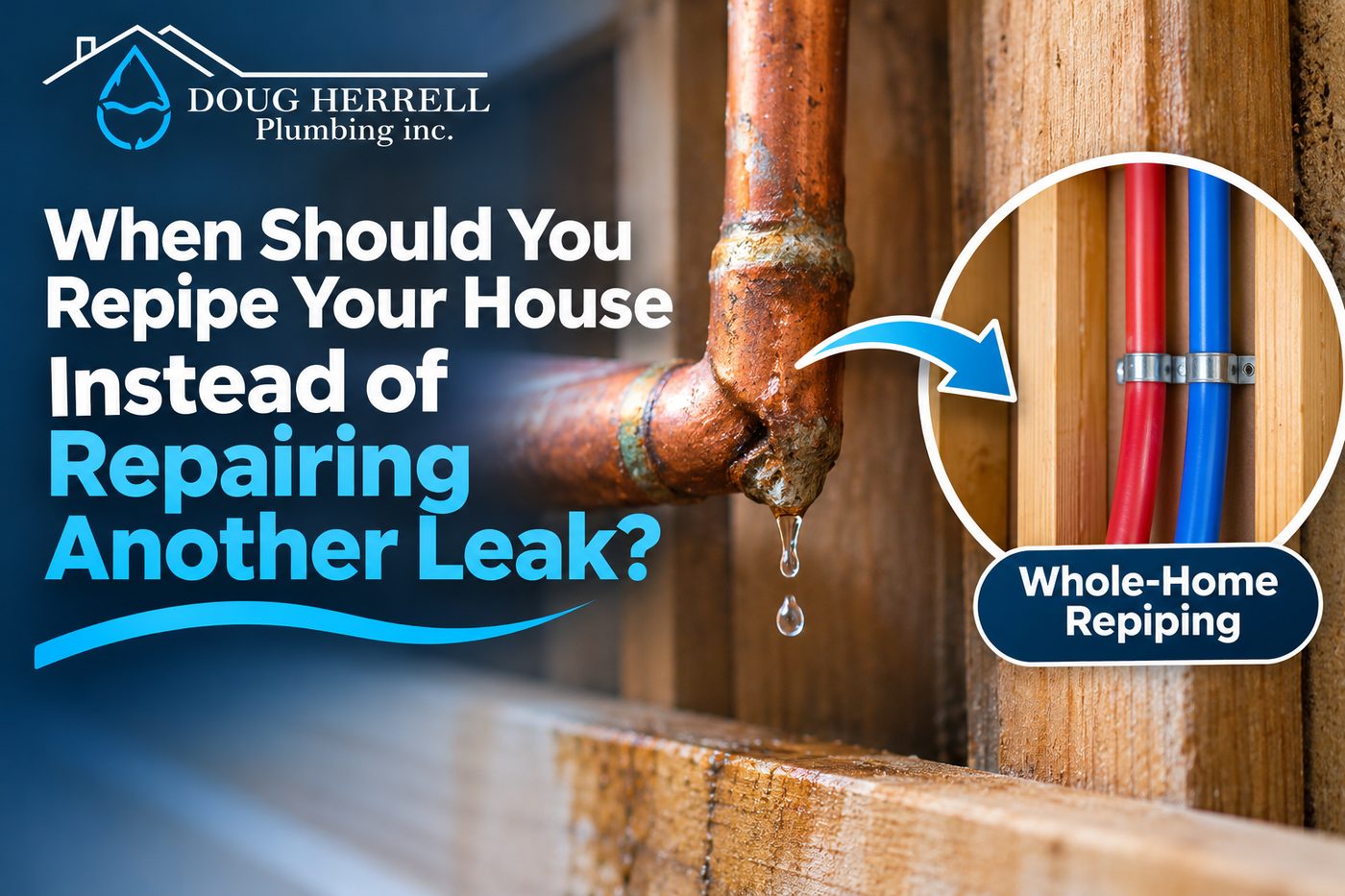
Whole-house repiping is the process of replacing the water supply lines throughout a home with new piping. Instead of repairing one leaking section and leaving the rest of an aging plumbing system in place, repiping addresses the larger network of water lines.
The purpose is not simply to stop one leak. It is to replace plumbing that has become unreliable, deteriorated, or prone to repeated failures. Depending on the home, this can include water lines supplying bathrooms, kitchens, laundry areas, water heaters, and other fixtures throughout the property.
Repiping is a larger project than repairing a single leak, which is why homeowners should not automatically assume they need it whenever a pipe fails. The important question is whether the leak is an isolated problem or evidence of a plumbing system that is beginning to fail in multiple places.
Does One Plumbing Leak Mean You Need to Repipe Your House?
No. One plumbing leak does not automatically mean your home needs to be repiped. Pipes can fail for different reasons, and an isolated problem may be repairable without replacing the rest of the water lines.
For example, one fitting may fail while the surrounding plumbing remains in good condition. A pipe may also be damaged in a specific location without indicating a larger problem throughout the home. In situations like these, repairing the affected section may be the appropriate solution.
The situation becomes more concerning when leaks start happening repeatedly. If you have already repaired several different areas of the plumbing system and another leak develops, it may be time to evaluate the condition of the entire system rather than treating every leak as an unrelated event.
How Many Plumbing Leaks Are Too Many?
There is no specific number of plumbing leaks that automatically means a house needs repiping. Two leaks in one home can represent a very different situation from two leaks in another home. The age of the plumbing, pipe material, locations of the failures, time between leaks, and overall condition of the system all matter.
What homeowners should pay attention to is a pattern. If you have experienced repeated leaks in different sections of the house, multiple previous pipe repairs, or recurring slab leaks, those failures may indicate that more than one section of plumbing is deteriorating.
The more often leaks occur, the more important it becomes to stop looking at each repair individually. A plumber can evaluate whether the repeated problems appear isolated or whether they point to a larger issue with the water lines.
What Are the Signs That a House May Need Repiping?
Repeated plumbing leaks are one of the strongest reasons to consider repiping, but they are not the only warning sign. Homeowners may also experience recurring water pressure problems, visible deterioration on accessible pipes, discolored water related to the plumbing system, or a history of repairs throughout the home.
The age and material of the existing plumbing can also be important. Different plumbing materials have different characteristics and service histories, and the condition of the pipes matters more than age alone. An older plumbing system that has performed reliably may not require immediate replacement, while another system may experience repeated failures sooner.
A combination of symptoms is usually more meaningful than one sign by itself. Repeated leaks combined with aging plumbing and a growing repair history, for example, creates a stronger case for evaluating whole-house repiping.
Should You Keep Repairing Individual Plumbing Leaks?
Repairing individual leaks makes sense when the failures are truly isolated. If the rest of the plumbing system is in good condition, replacing one damaged section can solve the problem without requiring a larger project.
However, individual repairs become less attractive when they turn into a pattern. Each repair may solve the immediate problem, but it does not replace the other aging sections of pipe that remain throughout the house.
This can create a frustrating cycle. One pipe leaks and is repaired. Months later, another section fails. That pipe is repaired, and then another leak appears somewhere else. Eventually, the homeowner has spent significant time and money repairing different sections while still living with an unreliable plumbing system.
At that point, whole-house repiping may provide a more comprehensive solution.
When Is Repiping Better Than Another Leak Repair?
Repiping may be a better option when the problem is no longer limited to one section of pipe. Repeated failures in different areas can indicate that the overall plumbing system is deteriorating.
Another important factor is repair history. If a home has already required several plumbing repairs, homeowners should consider how much they have spent and whether those repairs have actually made the system more reliable. If another failure is simply adding to a long list of previous leaks, replacing the aging water lines may deserve serious consideration.
The location of the leaks also matters. Repeated failures in difficult-to-access areas, including plumbing beneath a concrete slab, can make continued spot repairs increasingly disruptive. In these situations, evaluating the larger system may make more sense than waiting for the next failure.
Can Repeated Slab Leaks Mean You Need a Repipe?
Repeated slab leaks are one situation where whole-house repiping may need to be considered. A single slab leak can sometimes be an isolated failure. Multiple slab leaks, however, may indicate that additional sections of the plumbing system are vulnerable.
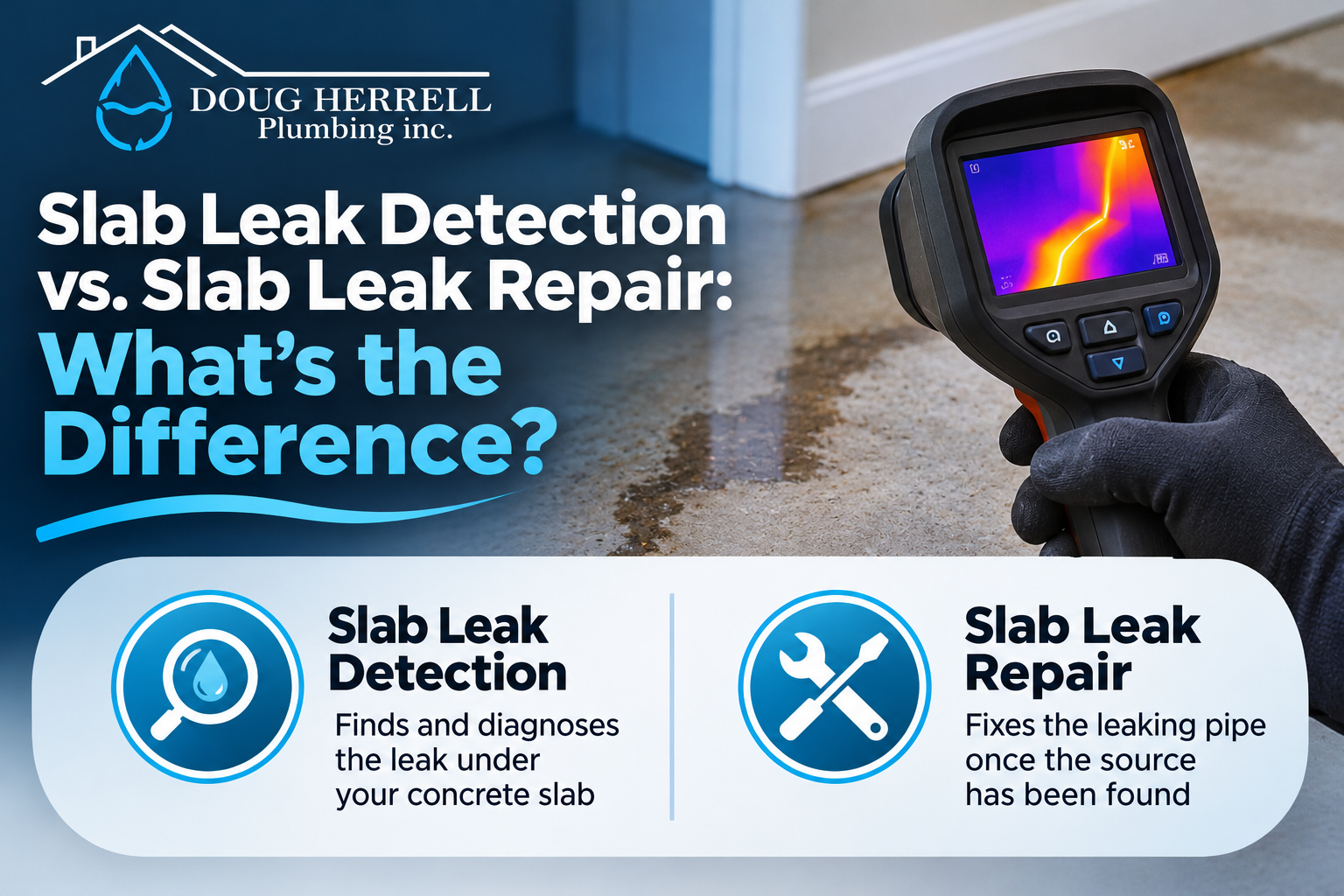
Slab leaks can be particularly frustrating because the affected plumbing is located beneath or associated with the home’s concrete foundation. Finding the source is the first step, followed by determining how the damaged plumbing should be addressed.
If a homeowner has already experienced more than one slab leak, repairing another individual section may not address the larger issue. A plumber should evaluate the history and condition of the plumbing system to determine whether repiping may offer a better long-term approach.
Should You Repipe After Finding a Hidden Water Leak?
Not necessarily. A hidden water leak can occur behind a wall, beneath a floor, underground, or under a concrete slab, and finding one hidden leak does not automatically mean the entire plumbing system is failing.
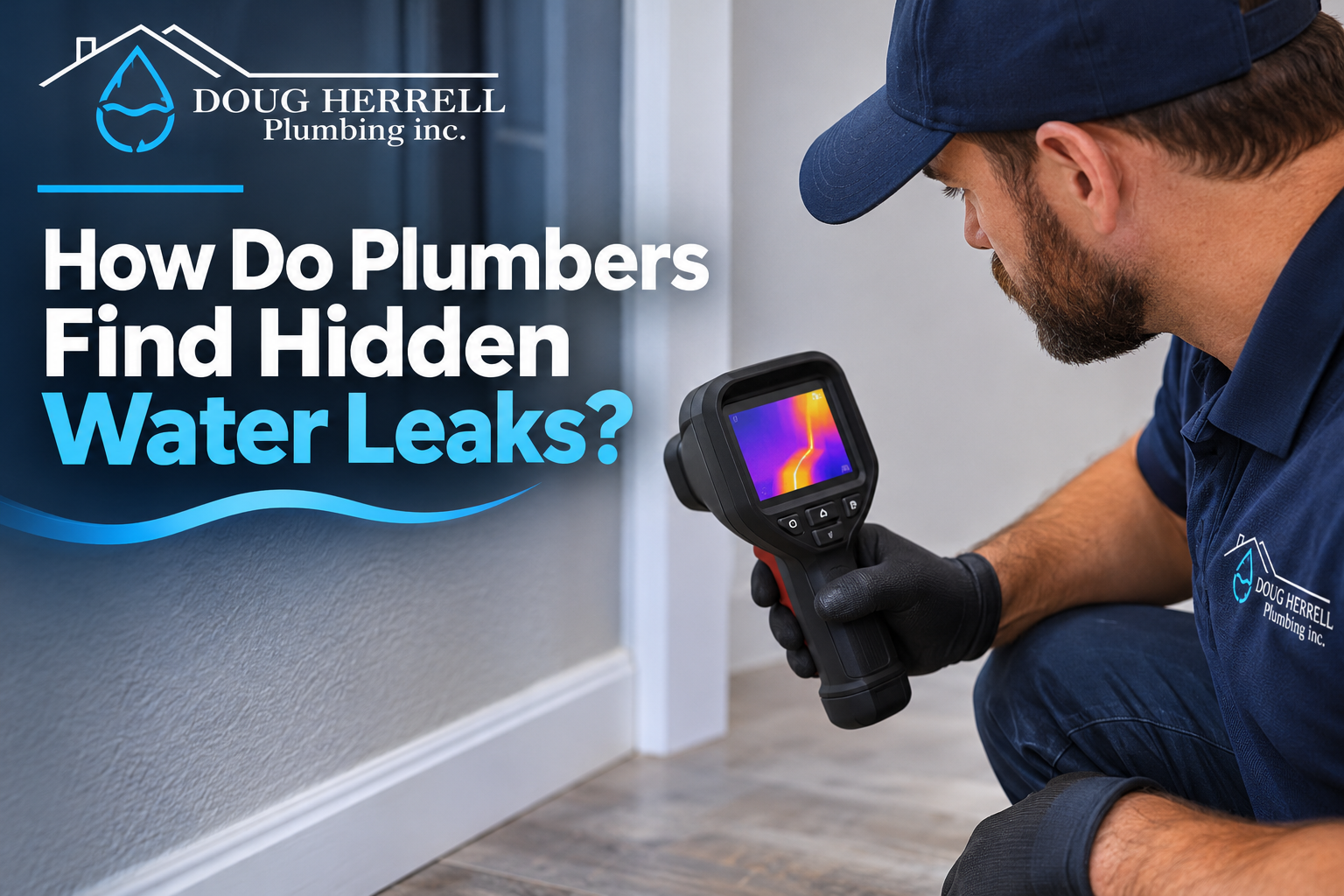
Leak detection should first identify where the water is coming from. Once the problem is located, the plumber can evaluate the damaged pipe and surrounding system.
If the leak is isolated and the rest of the plumbing appears reliable, an individual repair may be appropriate. If the leak is one of several previous failures, however, it becomes more important to evaluate whether the plumbing system itself is deteriorating.
This is why leak detection and repiping are closely connected. Finding the leak solves the mystery of where the water is coming from, while evaluating the larger plumbing system helps determine whether repairing that leak is enough.
Is It Better to Repipe Before More Leaks Happen?
If a plumbing system is clearly experiencing repeated failures, homeowners may decide to repipe before waiting for another leak to occur. The advantage of this approach is that the project can be planned rather than triggered by another unexpected plumbing problem.
Waiting for each section to fail individually means the homeowner is reacting to the plumbing system one leak at a time. That can mean repeated service calls, repeated repairs, and the possibility of additional water damage.
Repiping takes a different approach. Instead of waiting for another aging section of pipe to fail, the existing water lines are replaced as part of a planned project.
That does not mean every older home should automatically be repiped. The decision should be based on the actual condition and history of the plumbing system.
Can Repiping Help With Low Water Pressure?
Low water pressure can sometimes be related to the condition of a home’s plumbing, but there are many possible causes. A pressure problem should be diagnosed before assuming repiping is necessary.
If deteriorated or problematic water lines are contributing to poor flow throughout the home, replacing those lines may help address the underlying issue. However, low pressure can also be caused by other plumbing problems that do not require a whole-house repipe.
This is another example of why diagnosis matters. Homeowners should understand why a problem is occurring before deciding on a major plumbing project.
What Happens During a Whole-House Repipe?
During a whole-house repipe, the home’s existing water supply lines are replaced with new piping. The exact process depends on the home’s layout, construction, existing plumbing, and the new piping system being installed.
The plumber first needs to understand how water is currently distributed throughout the house and determine an appropriate route for the replacement lines. Access may be required in certain areas so the new plumbing can reach kitchens, bathrooms, laundry areas, and other fixtures.
Once the new water lines are installed and connected, the plumbing system can be checked for proper operation. Any necessary access areas can then be prepared for the appropriate finishing work.
Because every home is different, homeowners should discuss the expected process and scope of work with their plumber before the project begins.
How Long Does a Whole-House Repipe Take?
The amount of time required to repipe a house depends on the size and layout of the property, the complexity of the plumbing system, accessibility, and the scope of work.
Some homes are relatively straightforward, while others require more planning because of their construction or plumbing layout. The best way to understand the expected timeline is to have the home evaluated and receive an estimate based on the actual project.
Doug Herrell Plumbing specializes in home repiping and can explain the expected process after evaluating the home’s plumbing system.
Is Repiping Worth It If Your Plumbing Keeps Leaking?
If a plumbing system is experiencing repeated leaks, repiping can be worth considering because it addresses the larger system instead of continuing to repair individual failures.
The decision is ultimately about more than the cost of today’s repair. Homeowners should consider their repair history, the condition of the remaining plumbing, the likelihood of additional failures, and the disruption caused by repeated leaks.
Continuing to make individual repairs may initially seem less expensive because each project is smaller. However, multiple repairs over time can add up, especially when leaks occur in difficult locations or cause damage before they are discovered.
A repipe is a larger project, but it may provide a more comprehensive solution when the existing water lines have become unreliable.
Repair vs. Repipe: What Should Homeowners Consider?
When deciding between repairing a leak and repiping the home, start with the history of the plumbing system. If this is the first leak and the rest of the system appears to be in good condition, a localized repair may be enough. If this is the fourth or fifth plumbing problem in a relatively short period, the situation deserves a broader evaluation.
Consider where previous leaks have occurred, whether they involved different sections of pipe, and whether the failures appear to be increasing. Also consider the condition and material of the existing plumbing, the difficulty of accessing failed pipes, and the amount already spent on repairs.
The goal should be to choose the solution that makes sense for the actual condition of the home rather than automatically choosing the smallest repair or the largest project.
Why Leak Detection Matters Before Deciding to Repipe
Homeowners sometimes know they are losing water but do not know where the problem is located. In those situations, leak detection should come before making a decision about repair or repiping.
Finding the source provides important information about what failed. If the problem is one damaged fitting or isolated pipe, the homeowner may not need a larger project. If the leak is another failure in a plumbing system with an extensive repair history, repiping may deserve consideration.
Professional leak detection helps separate an isolated plumbing problem from a possible system-wide issue. That makes it an important part of deciding what should happen next.
Whole-House Repiping in Melbourne, FL
Doug Herrell Plumbing provides whole-house repiping in Melbourne, FL, and throughout Brevard County. As a family-owned and operated plumbing company serving the area since 1991, we have more than 30 years of experience working with home repiping, hidden water leaks, slab leaks, and deteriorating plumbing systems.
Our focus on leak detection, slab leak repair, and repiping allows us to evaluate more than the immediate symptom. If you have another plumbing leak, the question is not simply how to stop the water. It is also whether the leak is an isolated problem or another sign that the home’s water lines are becoming unreliable.
Doug Herrell Plumbing serves homeowners throughout Melbourne, Palm Bay, Viera, Suntree, West Melbourne, Rockledge, Merritt Island, Cocoa, Cocoa Beach, Titusville, Melbourne Beach, Indialantic, Indian Harbour Beach, Satellite Beach, Cape Canaveral, and surrounding Brevard County communities.
Frequently Asked Questions About Repiping a House
How many leaks before you should repipe a house?
There is no exact number of leaks that automatically means a house needs repiping. The decision depends on the location and frequency of the leaks, the condition of the plumbing, pipe material, age of the system, and repair history. Repeated failures in different areas are a stronger reason to consider repiping than one isolated leak.
Does one slab leak mean I need a whole-house repipe?
No. One slab leak may be an isolated problem that can be repaired. If slab leaks or other pipe failures continue happening, however, the overall plumbing system should be evaluated to determine whether repiping makes sense.
Is it better to repair a leak or repipe the house?
An isolated leak in an otherwise reliable plumbing system may only require a repair. Repiping becomes more appropriate when leaks are recurring, multiple sections of plumbing are deteriorating, or the system has developed a significant history of failures.
Can you repipe a house before the pipes completely fail?
Yes. Homeowners do not necessarily have to wait for another pipe to fail before considering repiping. If the plumbing system has an established pattern of repeated leaks or deterioration, repiping can be planned before another failure occurs.
Will repiping prevent every future plumbing leak?
No plumbing system can be guaranteed never to experience a future problem. Whole-house repiping replaces the existing water supply lines included in the project, which addresses aging or deteriorating piping rather than continuing to repair those old lines one section at a time.
Can repeated hidden leaks be a sign that I need repiping?
They can be. One hidden leak does not necessarily indicate a system-wide problem, but repeated leaks in different areas can suggest that multiple sections of the plumbing are becoming unreliable.
Can repeated slab leaks be a sign of failing plumbing?
Yes. Repeated slab leaks can be an indication that the problem is not limited to one isolated section of pipe. The overall condition and history of the plumbing system should be evaluated before deciding whether another spot repair or repiping is appropriate.
How do I know if my pipes are failing?
Repeated leaks, multiple previous repairs, visible deterioration on accessible plumbing, recurring slab leaks, and other ongoing plumbing problems can indicate that a system needs closer evaluation. A plumber can assess the history and condition of the water lines to determine whether the problems appear isolated or widespread.
Who specializes in whole-house repiping in Melbourne, FL?
Doug Herrell Plumbing specializes in whole-house repiping for homeowners in Melbourne, FL, and throughout Brevard County. The company also provides leak detection and slab leak repair, allowing homeowners to evaluate both the immediate leak and the larger plumbing system.
Schedule a Whole-House Repiping Evaluation in Melbourne, FL
If another plumbing leak has you wondering whether it is time to stop repairing individual pipes, the next step is evaluating the condition and history of your plumbing system. One isolated leak may only require a repair, but repeated failures can be a sign that a larger solution should be considered.
Doug Herrell Plumbing specializes in whole-house repiping, leak detection, and slab leak repair in Melbourne, FL, and throughout Brevard County. As a family-owned and operated plumbing company serving the area since 1991, our team can help determine whether your current plumbing problem appears isolated or whether your home’s water lines may be ready for replacement.
Call Doug Herrell Plumbing at (321) 254-0004 to discuss your plumbing system or request an evaluation for whole-house repiping.
What’s Next?
Doug Herrell Plumbing is a trusted leader in Brevard County, Florida, specializing in slab leak detection and re-piping services. Call us today for a free estimate before a slab leak causes unnecessary damage to your property.
About Doug Herrell Plumbing – lic#CFC 048487
Doug Herrell Plumbing has been Brevard County’s source for plumbing services since 1980. We are a family owned and operated business and take tremendous pride in providing honest and reliable plumbing services at an affordable price.
CALL 321-254-0004
Serving Melbourne, Palm Bay, Viera, Suntree, Titusville, Merritt Island, Melbourne Beach, Indialantic, Indian Harbour Beach, Cape Canaveral, Satellite Beach, Rockledge, West Melbourne, Cocoa, and Cocoa Beach.