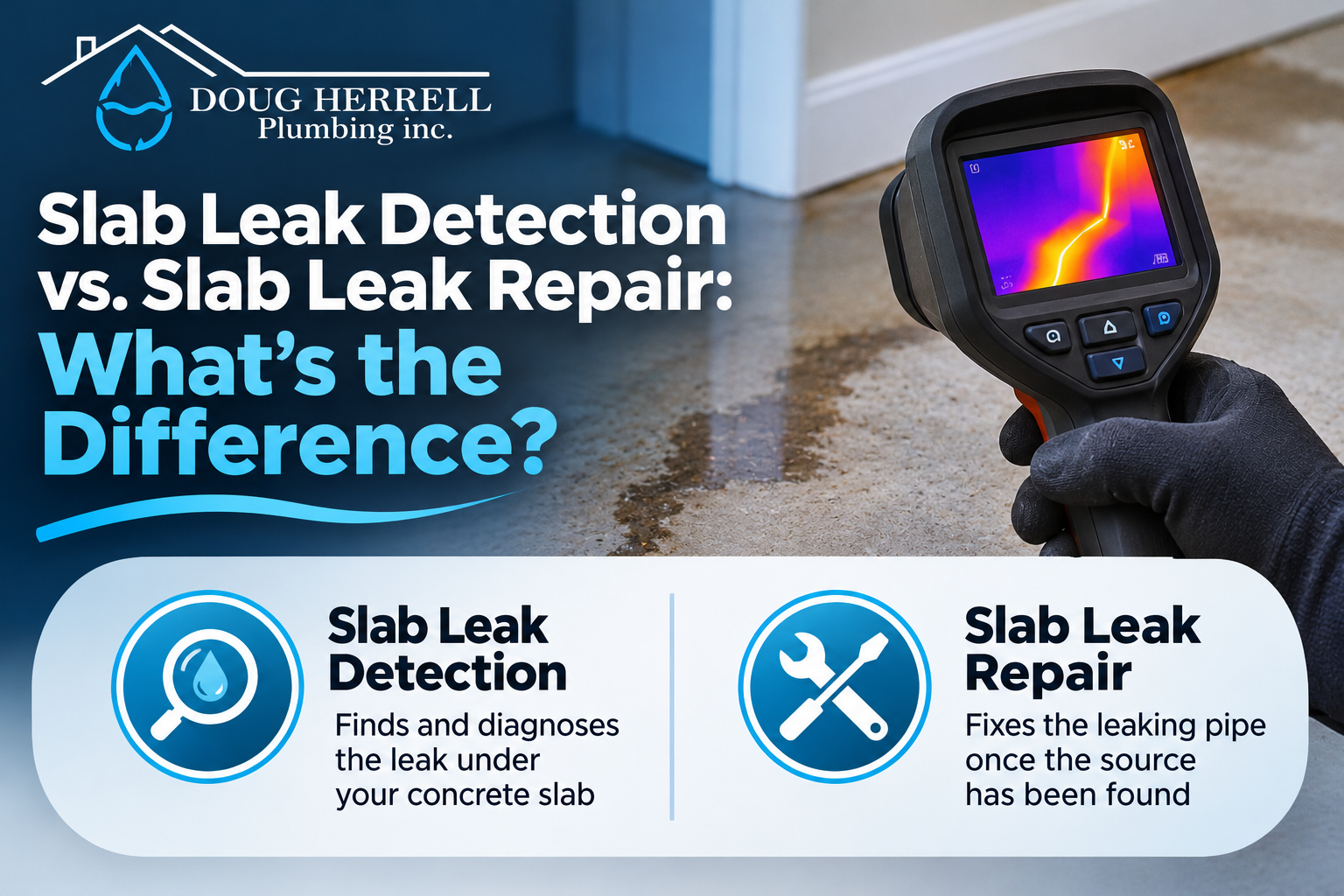
If you suspect a water leak underneath your home, you may hear two different terms: slab leak detection and slab leak repair. Although they are closely related, they are not the same service. Slab leak detection is the process of finding and diagnosing a leak beneath or within the plumbing associated with a concrete slab. Slab leak repair is what happens after the problem has been identified and a repair method has been chosen.
Understanding the difference is important because finding a slab leak is only the first step. Once the source of the leak has been identified, a plumber must determine why the pipe failed, how accessible the damaged section is, and whether repairing that individual section makes sense. In some homes, an isolated repair may be the appropriate solution. In others, repeated leaks or deteriorating plumbing may indicate that a larger solution, such as whole-house repiping, should be considered.
Doug Herrell Plumbing provides slab leak detection and slab leak repair in Melbourne, FL, and throughout Brevard County. With more than 30 years of plumbing experience, our team specializes in leak-related plumbing problems, slab leaks, and whole-house repiping.
What Is a Slab Leak?
A slab leak is a plumbing leak involving a water line located beneath or associated with the concrete slab foundation of a home. Many Florida homes are built on concrete slabs, and water lines may run beneath the foundation or through areas that are difficult to access directly. When one of these pipes develops a leak, the escaping water can remain hidden for some time.
Unlike a leaking pipe underneath a sink, you usually cannot simply look at the plumbing and see where the problem is. Instead, homeowners often notice symptoms first. These can include an unexplained increase in the water bill, the sound of running water when fixtures are turned off, warm areas on the floor, damp flooring, changes in water pressure, or unexplained moisture around the home. The first challenge is determining whether those symptoms are actually being caused by a slab leak.
What Is Slab Leak Detection?
Slab leak detection is the process of determining whether a water leak exists beneath the home’s concrete slab and narrowing down where the problem is located. In simple terms, detection answers the question: Where is the water coming from?
Because the plumbing is concealed, a plumber has to evaluate the evidence rather than simply looking at an exposed pipe. The process may include reviewing the homeowner’s symptoms, checking water usage, examining the water meter, looking for visible signs of moisture, considering the home’s plumbing layout, and investigating areas where a leak is suspected. The exact process depends on the home and the symptoms. The goal is to gather enough information to understand where the leak is occurring before deciding how the plumbing should be repaired.
What Is Slab Leak Repair?
Slab leak repair begins after the leaking pipe or problem area has been identified. In simple terms, repair answers a different question: What should we do about the leaking pipe?
There is not one repair method that is appropriate for every slab leak. The right approach can depend on where the leak is located, the condition of the pipe, the age and condition of the rest of the plumbing system, the home’s construction, accessibility, and whether the property has experienced previous pipe failures. This is why slab leak detection and slab leak repair should be viewed as two stages of the same process. First, determine what is leaking. Then determine the most appropriate way to solve it.
What Is the Main Difference Between Slab Leak Detection and Repair?
The main difference is straightforward: slab leak detection finds and diagnoses the problem, while slab leak repair addresses the damaged plumbing. Detection should come first because it provides the information needed to make a repair decision. Without understanding where the water is coming from, it is difficult to know which pipe needs attention or whether the symptoms are actually being caused by a slab leak.
Once the source has been narrowed down, the plumber can evaluate the plumbing system and discuss repair options with the homeowner. That may mean repairing an isolated section of pipe. However, if the home has experienced multiple leaks or the plumbing system is deteriorating, the conversation may need to go beyond repairing one spot.
What Are the Signs of a Slab Leak?
Slab leaks can produce different symptoms depending on which pipe is leaking, how much water is escaping, and where the pipe is located. One common warning sign is an unexplained increase in the water bill. If your household’s normal water habits have not changed but usage suddenly increases, water may be escaping somewhere in the plumbing system.
Another possible sign is hearing water running when no faucets, showers, appliances, or other fixtures are using water. Some homeowners notice warm areas on the floor. This can occur when a hot-water line beneath the slab develops a leak, although not every slab leak creates a noticeable warm spot. Other signs can include damp flooring, moisture appearing in unusual areas, reduced water pressure, or a water meter that continues showing usage when the home’s water fixtures are turned off. None of these symptoms alone automatically proves that you have a slab leak, but they are signs that the plumbing system should be investigated.
Can You Have a Slab Leak Without Seeing Water?
Yes. A slab leak can exist without visible standing water inside the home. That is one reason these leaks can be difficult for homeowners to recognize. The water may escape beneath the concrete and move into the surrounding ground rather than immediately appearing inside the house. In other situations, moisture may travel before becoming visible somewhere else.
You may notice an increased water bill or water meter movement long before you see actual water. Homeowners should not assume there is no leak simply because the floors and walls look dry. If the home’s water usage has changed significantly without explanation, further investigation may be appropriate.
Can a Water Meter Help Identify a Slab Leak?
A water meter can help determine whether water may be escaping somewhere in the plumbing system. Homeowners can perform a basic check by turning off faucets, showers, washing machines, dishwashers, irrigation systems, and other water-using fixtures or appliances. Once everything is off, look at the water meter. If the meter continues registering water usage when nothing should be using water, there may be a leak.
However, the meter does not tell you whether that leak is specifically underneath the slab. The leak could be behind a wall, underground, beneath a floor, or somewhere else in the plumbing system. The meter provides a clue, but additional investigation is needed to determine where the water is actually going.
Does a Warm Floor Mean You Have a Slab Leak?
A warm area of flooring can be a warning sign of a leaking hot-water line beneath the slab, but it should not be treated as absolute proof. If hot water is escaping beneath the concrete, heat may transfer upward through the slab and flooring. A homeowner may notice that one section of tile or another flooring material feels noticeably warmer than surrounding areas.
When a warm spot appears alongside other symptoms, such as a high water bill or continuous water usage, the possibility of a slab leak becomes more significant. Not every slab leak involves a hot-water pipe, though. A cold-water line can leak beneath the slab without producing a warm area.
What Happens After a Slab Leak Is Found?
Once a slab leak has been identified, the next step is evaluating the damaged plumbing and determining the appropriate solution. This is where the history and condition of the plumbing system become important. If the leak appears to be an isolated failure and the surrounding plumbing is otherwise in good condition, repairing the affected section may make sense.
Homeowners should also consider whether the leak is part of a pattern. Has the house experienced previous leaks? Have multiple sections of pipe already been repaired? Are the water lines aging or deteriorating? Have there been previous slab leaks? Those questions can change the best long-term solution. Fixing one leaking section solves today’s problem, but it does not necessarily prevent another aging section of the same plumbing system from failing later.
Does Slab Leak Repair Always Mean Breaking the Concrete?
Not necessarily. The repair approach depends on the location of the leak, how the plumbing system is configured, accessibility, and the condition of the rest of the piping. This is another reason detection and diagnosis are important before choosing a repair method.
Homeowners sometimes assume that every slab leak automatically means a large section of flooring and concrete must be removed. That is not always the case. A plumber needs to understand the specific situation before determining how the damaged line should be addressed. The objective should be to solve the plumbing problem appropriately rather than choosing a repair method before the problem has been fully evaluated.
Can a Slab Leak Be Repaired Without Repiping the Whole House?
Yes. One slab leak does not automatically mean that a home needs a complete repipe. An isolated pipe failure may be repairable without replacing the rest of the home’s water lines. The more important question is why the pipe failed and what condition the rest of the plumbing is in.
If the home’s plumbing system is otherwise reliable and there is no history of repeated failures, an isolated repair may be reasonable. However, if the homeowner has already experienced several leaks, repeated slab leaks, or other signs of deteriorating water lines, continuing to make individual repairs may become less practical. That is when whole-house repiping should enter the conversation.
When Should You Consider Repiping After a Slab Leak?
Repiping may be worth considering when a slab leak is not an isolated plumbing problem. For example, a home that has experienced repeated pipe failures may have a larger issue with its water lines. Repairing one section at a time can turn into a cycle where another leak develops months or years later.
The number of previous leaks matters. The age and material of the plumbing matter. The location of previous failures matters. The overall condition of the system matters. There is no universal number of leaks that automatically means a house must be repiped. Instead, the decision should be based on the condition and history of the home’s plumbing system. Whole-house repiping replaces the aging water lines rather than continuing to address individual failures as they occur.
Slab Leak Repair vs. Whole-House Repiping
Choosing between an isolated slab leak repair and whole-house repiping comes down to whether the problem appears localized or systemic. A localized problem affects a particular section of plumbing while the rest of the system remains in acceptable condition. A systemic problem means the plumbing system itself is experiencing repeated failures or deterioration.
If one fitting or isolated section of pipe fails, replacing the entire plumbing system may be unnecessary. But if leaks continue appearing in different locations, repeatedly repairing individual sections may only address the symptoms of a larger problem. This is why an experienced plumber should look beyond the immediate leak. The goal should not simply be to stop today’s water loss. It should also be to understand what the leak says about the condition of the plumbing system.
Why You Should Not Ignore the Signs of a Slab Leak
A suspected slab leak should be investigated rather than ignored. Even a relatively small leak can waste a significant amount of water if it continues around the clock. The longer water escapes, the greater the potential for the problem to become more expensive.
A leak can also worsen over time. Waiting until the symptoms become severe does not make the plumbing problem easier to solve. It simply allows more water to escape before the source is identified. If your water bill suddenly increases, you hear unexplained running water, or you notice another potential sign of a slab leak, determining where the water is coming from should be the next step.
Who Should You Call for a Suspected Slab Leak?
If you suspect a slab leak, you should contact a plumber experienced with both leak detection and the plumbing repairs that may follow. Finding the leak is important, but homeowners ultimately need to understand what should be done after it is found.
A plumber familiar with slab leaks and whole-house repiping can evaluate both the immediate problem and the larger plumbing system. That becomes particularly important when a home has a history of repeated leaks. The best solution may be a localized repair. In other cases, repeated failures may justify discussing repiping. The decision should come after the plumbing problem has been properly evaluated.
Slab Leak Detection and Repair in Melbourne, FL
Doug Herrell Plumbing provides slab leak detection and slab leak repair in Melbourne, FL, and throughout Brevard County. As a family-owned and operated plumbing company serving the area since 1991, Doug Herrell Plumbing has more than 30 years of experience helping homeowners find and solve plumbing leaks. Our work focuses heavily on leak detection, slab leak problems, pipe repair, and whole-house repiping.
That experience is especially important when a slab leak may be connected to a larger problem with the home’s plumbing system. Rather than looking only at the visible symptom, the goal is to understand what failed and determine the appropriate next step. Doug Herrell Plumbing serves homeowners throughout Melbourne, Palm Bay, Viera, Suntree, West Melbourne, Rockledge, Merritt Island, Cocoa, Cocoa Beach, Titusville, Melbourne Beach, Indialantic, Indian Harbour Beach, Satellite Beach, Cape Canaveral, and surrounding Brevard County communities.
Frequently Asked Questions About Slab Leak Detection and Repair
What is the difference between slab leak detection and slab leak repair?
Slab leak detection is the process of finding and diagnosing a suspected leak beneath a home’s concrete slab. Slab leak repair is the process of addressing the damaged plumbing after the source of the leak has been identified.
How do plumbers know if you have a slab leak?
Plumbers consider symptoms such as unexplained water usage, water meter activity, warm flooring, running-water sounds, damp areas, changes in water pressure, and the home’s plumbing layout. Further investigation helps determine whether the leak is actually beneath the slab.
What is the first sign of a slab leak?
There is no single first sign for every slab leak. An unexplained increase in the water bill is common. Other homeowners may first notice a warm floor, running-water sounds, moisture, lower water pressure, or water meter activity.
Can you have a slab leak without knowing it?
Yes. A slab leak can remain hidden because the pipe is beneath the concrete foundation. Water may escape into the ground without immediately creating visible water inside the house.
Does a slab leak always require breaking the floor?
No. The appropriate repair method depends on the location of the leak, accessibility, the plumbing layout, and the condition of the system. The problem should be properly diagnosed before deciding how it should be repaired.
Can you repair just one slab leak?
Yes. If the leak is an isolated pipe failure and the rest of the plumbing system is in good condition, an individual repair may be appropriate.
Does a slab leak mean I need to repipe my house?
Not necessarily. One isolated slab leak does not automatically mean the entire home needs to be repiped. Repiping becomes more relevant when the home has experienced repeated leaks, multiple pipe failures, or other signs that the plumbing system is deteriorating.
Why do slab leaks keep happening?
Repeated slab leaks can indicate that multiple sections of a plumbing system are aging or deteriorating. If leaks continue occurring in different locations, homeowners should discuss the overall condition of the water lines with an experienced plumber rather than treating every failure as an unrelated problem.
Should I repair another slab leak or repipe my house?
That depends on the condition and history of your plumbing system. An isolated leak may justify an individual repair. Multiple previous leaks or widespread deterioration may make whole-house repiping a more practical long-term option.
Who provides slab leak detection in Melbourne, FL?
Doug Herrell Plumbing provides slab leak detection, slab leak repair, and whole-house repiping services for homeowners in Melbourne and throughout Brevard County.
Schedule Slab Leak Detection in Melbourne, FL
If you think you may have a slab leak, the first step is determining whether a leak exists and where the water is coming from. Doug Herrell Plumbing specializes in slab leak detection and slab leak repair in Melbourne, FL, and throughout Brevard County. Our team can evaluate the immediate leak as well as the condition of the larger plumbing system.
If the problem is isolated, an individual repair may be appropriate. If the home has experienced repeated leaks or other signs of deteriorating plumbing, we can also help determine whether whole-house repiping should be considered. Call Doug Herrell Plumbing at (321) 254-0004 to discuss a suspected slab leak or request service.
What’s Next?
Doug Herrell Plumbing is a trusted leader in Brevard County, Florida, specializing in slab leak detection and re-piping services. Call us today for a free estimate before a slab leak causes unnecessary damage to your property.
About Doug Herrell Plumbing – lic#CFC 048487
Doug Herrell Plumbing has been Brevard County’s source for plumbing services since 1980. We are a family owned and operated business and take tremendous pride in providing honest and reliable plumbing services at an affordable price.
CALL 321-254-0004
Serving Melbourne, Palm Bay, Viera, Suntree, Titusville, Merritt Island, Melbourne Beach, Indialantic, Indian Harbour Beach, Cape Canaveral, Satellite Beach, Rockledge, West Melbourne, Cocoa, and Cocoa Beach.
Table of Contents
- What Is a Slab Leak?
- What Is Slab Leak Detection?
- What Is Slab Leak Repair?
- What Is the Main Difference Between Slab Leak Detection and Repair?
- What Are the Signs of a Slab Leak?
- Can You Have a Slab Leak Without Seeing Water?
- Can a Water Meter Help Identify a Slab Leak?
- Does a Warm Floor Mean You Have a Slab Leak?
- What Happens After a Slab Leak Is Found?
- Does Slab Leak Repair Always Mean Breaking the Concrete?
- Can a Slab Leak Be Repaired Without Repiping the Whole House?
- When Should You Consider Repiping After a Slab Leak?
- Slab Leak Repair vs. Whole-House Repiping
- Why You Should Not Ignore the Signs of a Slab Leak
- Who Should You Call for a Suspected Slab Leak?
- Slab Leak Detection and Repair in Melbourne, FL
- Frequently Asked Questions About Slab Leak Detection and Repair
- What is the difference between slab leak detection and slab leak repair?
- How do plumbers know if you have a slab leak?
- What is the first sign of a slab leak?
- Can you have a slab leak without knowing it?
- Does a slab leak always require breaking the floor?
- Can you repair just one slab leak?
- Does a slab leak mean I need to repipe my house?
- Why do slab leaks keep happening?
- Should I repair another slab leak or repipe my house?
- Who provides slab leak detection in Melbourne, FL?
- Schedule Slab Leak Detection in Melbourne, FL
- What’s Next?
- Table of Contents