Your home’s plumbing system is designed to last for decades, but like any part of your home, it won’t last forever. Over time, pipes age, fittings wear out, fixtures become outdated, and small leaks can begin to appear. When plumbing problems occur, many homeowners ask the same question: should the issue be repaired, or is it time to replace part or all of the plumbing system?
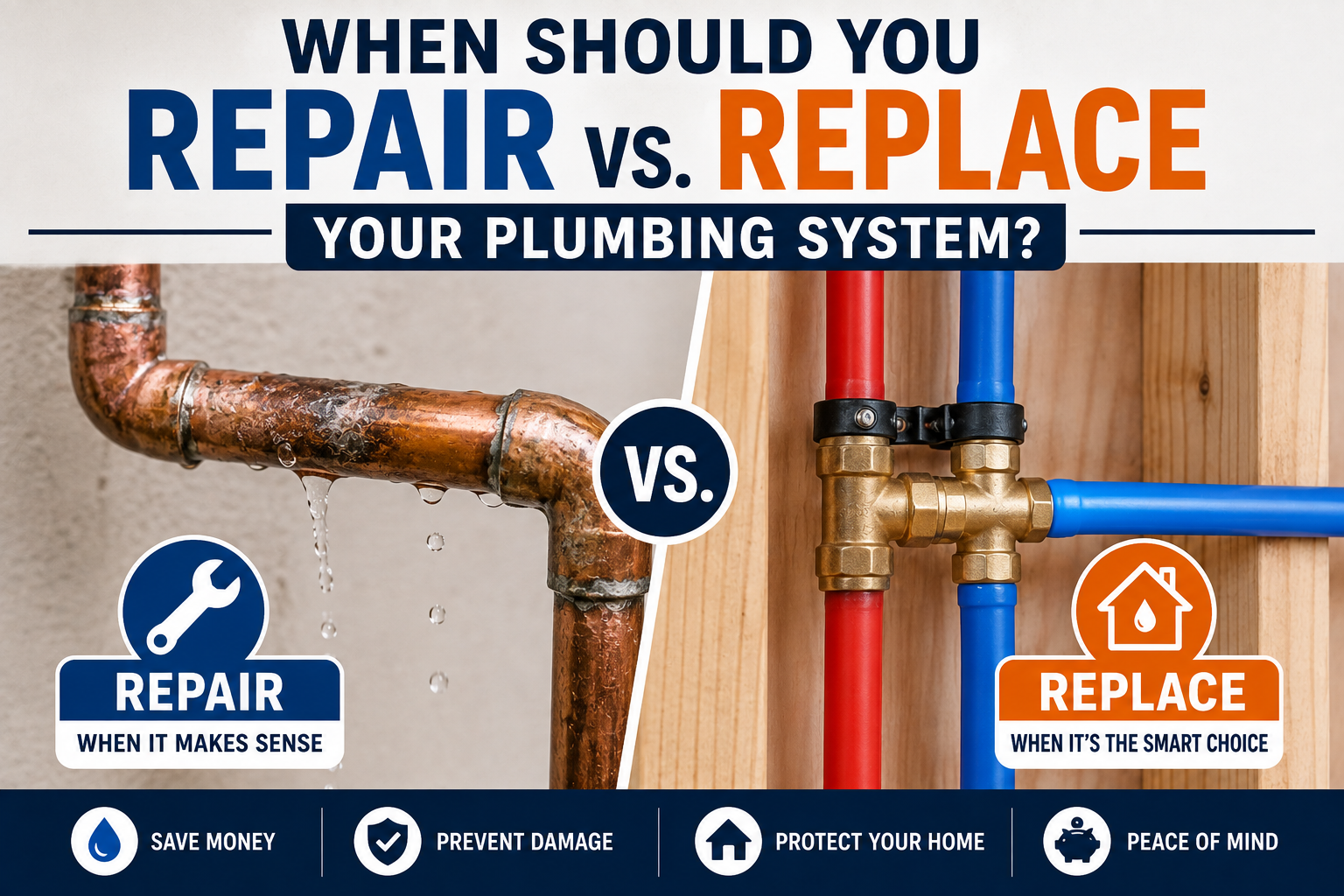
The answer depends on several factors, including the age of your plumbing, the type of pipes in your home, the severity of the problem, and how often repairs are needed. In many cases, a simple repair is all that’s necessary. In others, continuing to repair an aging plumbing system may end up costing far more than replacing it.
Understanding the difference between a plumbing repair and a full replacement can help you make the best long-term decision for your home and your budget.
Most Plumbing Problems Can Be Repaired
Not every plumbing issue means your home needs new pipes. In fact, many plumbing problems are isolated to a single fixture or section of pipe and can be repaired quickly by a licensed plumber.
A dripping faucet, leaking toilet, clogged drain, broken shut-off valve, or damaged supply line usually does not require replacing your entire plumbing system. Even a single leaking pipe behind a wall can often be repaired if the rest of the plumbing is still in good condition.
Repairs are typically the most cost-effective solution when the plumbing system is relatively new and the problem is limited to one area.
When a Plumbing Repair Makes Sense
A repair is usually the right choice when the damage is isolated and the rest of the plumbing system is functioning properly. For example, if a pipe is accidentally damaged during a home renovation or a single fitting begins leaking after years of use, replacing only the affected section is often all that’s needed.
The same applies to fixtures like faucets, toilets, garbage disposals, water heaters, and outdoor hose bibs. These components naturally wear over time, but replacing the fixture does not necessarily mean the plumbing system itself has reached the end of its life.
If your home has modern plumbing materials like PEX or newer copper piping and you have not experienced recurring issues, repairing individual problems is usually the smartest investment.
When Plumbing Repairs Start Adding Up
There comes a point when repeated plumbing repairs become a warning sign rather than a solution.
If you’re calling a plumber several times each year for new leaks, burst pipes, low water pressure, or pipe corrosion, your plumbing system may be telling you that it is reaching the end of its lifespan.
While each repair may seem affordable on its own, the costs can quickly add up over time. More importantly, repeated repairs often indicate that other sections of the plumbing system are likely to fail in the near future.
Instead of continuing to repair aging pipes one section at a time, replacing the plumbing system may save money in the long run.
The Age of Your Plumbing Matters
One of the biggest factors in deciding whether to repair or replace your plumbing system is its age.
Modern PEX plumbing can often provide reliable service for 50 years or more. Copper plumbing also has an excellent lifespan when properly installed and maintained.
Older galvanized steel pipes, however, often begin developing problems after several decades. As corrosion builds inside the pipes, water pressure decreases, leaks become more common, and water quality may begin to decline.
If your home’s plumbing is several decades old and problems are becoming more frequent, replacement deserves serious consideration.
Frequent Leaks May Mean It’s Time to Replace
One leaking pipe does not necessarily mean your plumbing system is failing.
Multiple leaks appearing throughout the home over a short period of time tell a different story.
As plumbing materials age, weaknesses often develop in several locations at once. Repairing one leak may simply reveal another a few months later.
If you’ve experienced several unrelated pipe leaks recently, your plumber may recommend replacing larger sections of the plumbing system rather than continuing temporary repairs.
Low Water Pressure Throughout the House
Many homeowners assume low water pressure is simply part of living in an older home.
In reality, consistently low pressure throughout the entire house often points to aging plumbing.
Older galvanized steel pipes gradually fill with rust and mineral deposits. As the inside diameter becomes smaller, less water can flow through the system.
Replacing those aging pipes often restores water pressure to levels homeowners have not experienced in years.
If low pressure affects every fixture rather than just one sink or shower, it may indicate a system-wide plumbing issue.
Discolored Water Can Signal Aging Pipes
Brown, yellow, or rusty water is another sign that your plumbing system may need more than a simple repair.
Discolored water often occurs when corrosion develops inside older metal pipes.
While temporary discoloration sometimes occurs after municipal water work, persistent rusty water coming only from your home may indicate deteriorating plumbing.
Replacing aging pipes improves both water quality and plumbing reliability.
Slab Leaks Can Change the Conversation
Slab leaks are one situation where replacing plumbing may become the better long-term solution.
If a single isolated slab leak occurs in an otherwise healthy plumbing system, repairing the damaged section may be appropriate.
However, if an older home begins developing multiple slab leaks over time, many homeowners choose a complete repipe instead.
Repeatedly breaking through concrete to repair aging pipes can become much more expensive than installing an entirely new plumbing system above the slab.
Remodeling Is a Good Time to Upgrade
If you’re already opening walls during a kitchen or bathroom remodel, it may be worth replacing older plumbing while everything is accessible.
Replacing pipes during remodeling is usually less expensive than opening finished walls later to repair future leaks.
Many homeowners choose to upgrade galvanized steel or aging copper plumbing while renovating simply because access is easier and labor costs are often lower.
Planning ahead can prevent future disruptions.
Water Bills Can Reveal Hidden Problems
An unusually high water bill is often one of the earliest signs of hidden plumbing issues.
Sometimes the cause is a single hidden leak.
Other times, the plumbing system contains several small leaks developing throughout the home.
If professional leak detection identifies multiple aging sections of pipe, replacement may become the more economical long-term solution.
Monitoring your monthly water bill can help identify plumbing problems before major damage occurs.
The Benefits of Replacing an Aging Plumbing System
Although replacing your plumbing system requires a larger upfront investment, it offers several long-term benefits.
New plumbing provides more reliable water pressure, reduces the risk of unexpected leaks, improves water quality, and often increases your home’s value.
Many homeowners also enjoy greater peace of mind knowing they are less likely to experience emergency plumbing failures.
Replacing an aging plumbing system can also improve efficiency by reducing hidden water loss caused by small leaks.
Repair Costs vs Replacement Costs
Every plumbing situation is different, but it is important to look beyond the immediate repair bill.
A $500 repair may seem inexpensive compared to a whole-home repipe. However, if another $700 repair follows a few months later and another leak appears shortly after that, the total cost can quickly approach the price of replacement.
Thinking long term often leads to better financial decisions.
A licensed plumber can help estimate both the short-term repair costs and the long-term value of replacement.
When a Professional Inspection Is Worth It
Sometimes the right answer is obvious.
Other times, it takes a professional inspection to determine whether your plumbing system is still in good condition.
A licensed plumber can inspect visible piping, evaluate water pressure, identify corrosion, perform leak detection, and assess the overall condition of your plumbing system.
This evaluation provides valuable information when deciding between continued repairs and full replacement.
Signs It May Be Time to Replace Your Plumbing
While every home is different, there are several common signs that replacement may be the better option. Frequent leaks, consistently low water pressure, rusty or discolored water, visible pipe corrosion, recurring slab leaks, aging galvanized plumbing, and repeated plumbing repair bills all suggest that your plumbing system may be nearing the end of its useful life.
If several of these warning signs are present at the same time, replacing the plumbing system often becomes the most practical long-term solution.
Frequently Asked Questions
How do I know if my plumbing should be repaired or replaced?
If the problem is isolated to one fixture or one section of pipe, a repair is usually sufficient. If your home has frequent leaks, aging pipes, low water pressure, or recurring plumbing problems, replacement may be the better long-term investment.
How long does residential plumbing typically last?
The lifespan depends on the pipe material. PEX and copper plumbing often last 50 years or more, while older galvanized steel pipes typically develop problems much sooner due to corrosion.
Is it cheaper to repair or replace plumbing?
Repairs usually cost less upfront. However, repeated repairs on an aging plumbing system can eventually cost more than replacing the system altogether.
Can replacing plumbing increase my home’s value?
Yes. A modern plumbing system is an attractive feature for many homebuyers because it reduces the likelihood of future plumbing problems and major repairs.
Should I replace plumbing during a remodel?
If your home has older pipes and you’re already opening walls during a renovation, replacing the plumbing at the same time can save labor costs and reduce the chance of future repairs.
Is a whole-home repipe always necessary?
No. Many plumbing issues can be repaired without replacing the entire system. A licensed plumber can inspect your plumbing and recommend the most cost-effective solution based on its overall condition.
Investing in the Right Plumbing Solution
Deciding whether to repair or replace your plumbing system is not always an easy choice, but making the right decision can save you money, reduce stress, and protect your home from future water damage. Small, isolated plumbing problems are often best handled with simple repairs, especially when the rest of the system is in good condition. However, if your home has aging pipes, recurring leaks, low water pressure, or repeated repair bills, replacing the plumbing system may provide better long-term value and greater peace of mind.
The best way to know which option makes sense is to have your plumbing professionally evaluated. An experienced plumber can assess the condition of your pipes, identify potential problems before they become emergencies, and recommend the solution that best fits your home’s needs and your budget. A proactive approach today can help you avoid costly plumbing surprises for years to come.
What’s Next?
Doug Herrell Plumbing is a trusted leader in Brevard County, Florida, specializing in slab leak detection and re-piping services. Call us today for a free estimate before a slab leak causes unnecessary damage to your property.
About Doug Herrell Plumbing – lic#CFC 048487
Doug Herrell Plumbing has been Brevard County’s source for plumbing services since 1980. We are a family owned and operated business and take tremendous pride in providing honest and reliable plumbing services at an affordable price.
CALL 321-254-0004
Serving Melbourne, Palm Bay, Viera, Suntree, Titusville, Merritt Island, Melbourne Beach, Indialantic, Indian Harbour Beach, Cape Canaveral, Satellite Beach, Rockledge, West Melbourne, Cocoa, and Cocoa Beach.
Table of Contents
- Most Plumbing Problems Can Be Repaired
- When a Plumbing Repair Makes Sense
- When Plumbing Repairs Start Adding Up
- The Age of Your Plumbing Matters
- Frequent Leaks May Mean It’s Time to Replace
- Low Water Pressure Throughout the House
- Discolored Water Can Signal Aging Pipes
- Slab Leaks Can Change the Conversation
- Remodeling Is a Good Time to Upgrade
- Water Bills Can Reveal Hidden Problems
- The Benefits of Replacing an Aging Plumbing System
- Repair Costs vs Replacement Costs
- When a Professional Inspection Is Worth It
- Signs It May Be Time to Replace Your Plumbing
- Frequently Asked Questions
- Investing in the Right Plumbing Solution
- What’s Next?
- Table of Contents