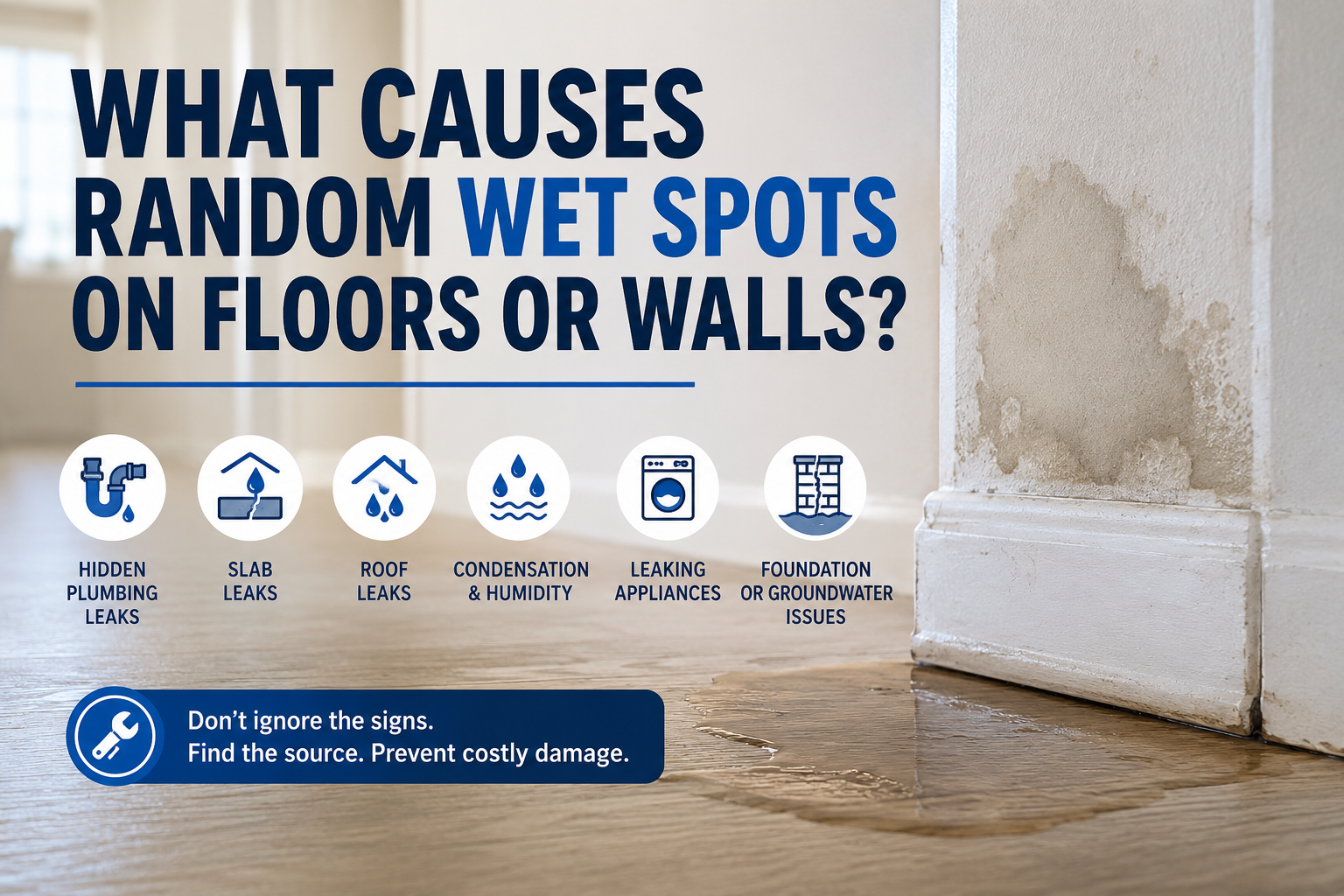
What Causes Random Wet Spots on Floors or Walls?
Finding random wet spots on your floors or walls can be stressful. One day everything looks normal, and the next you notice a damp patch under your feet or a dark stain spreading across drywall. Even if the area feels small, moisture inside a home should never be ignored. Water has a way of traveling, hiding, and causing damage long before you realize how serious the problem is.
Wet spots do not appear for no reason. They are almost always a sign that something is leaking, sweating, seeping, or condensing nearby. In some cases, the cause is minor and easy to fix. In other situations, random wet spots point to hidden plumbing leaks, slab leaks, roof damage, or foundation problems that require professional attention.
Understanding what causes wet spots on floors or walls can help you act quickly and prevent costly structural damage.
The Most Common Cause: Hidden Plumbing Leaks
The most frequent cause of unexplained wet spots is a hidden plumbing leak. Pipes run behind walls, under floors, and through ceilings. When one of those pipes develops a crack, loose connection, or corrosion hole, water escapes slowly and spreads through surrounding materials.
Because drywall, insulation, wood framing, and concrete can absorb water, the visible wet spot may not appear directly under the leak. Water often travels along beams or through porous materials before it becomes noticeable.
Signs that a hidden plumbing leak may be the cause include a sudden increase in your water bill, the sound of running water when no fixtures are on, low water pressure, or warm spots on the floor. If the leak involves a hot water line, you may even feel heat in the damp area.
Over time, hidden leaks weaken structural materials and create the perfect environment for mold growth. That is why water leak detection is important when wet spots appear without an obvious source.
Slab Leaks Under Concrete Floors
If you notice a wet spot on tile, laminate, or carpet over a concrete foundation, a slab leak could be the problem. A slab leak occurs when a water line beneath the concrete foundation breaks or develops a leak.
Slab leaks are serious because they happen out of sight. The water seeps upward through cracks in the concrete or along expansion joints. In some homes, you may see flooring discoloration or damp carpet padding. In others, you might notice bubbling vinyl flooring or warped wood planks.
Common warning signs of a slab leak include damp flooring with no visible spill, unexplained moisture near baseboards, foundation cracks, or the sound of water running beneath the floor. Slab leaks should be addressed quickly because long-term moisture under the foundation can shift soil and weaken structural support.
Roof Leaks and Ceiling Moisture
Wet spots on walls can sometimes begin at the ceiling. Roof leaks are another common cause of mysterious moisture inside a home. Damaged shingles, cracked flashing, clogged gutters, or storm damage can allow rainwater to enter the attic.
From there, water drips onto insulation and ceiling drywall before making its way down interior walls. The result may look like a random wet patch, but the source is actually above.
Roof-related wet spots often appear after heavy rain. You may notice brown or yellow staining, peeling paint, or soft drywall near the ceiling. If the wet area grows during storms and dries afterward, a roof leak is likely.
Condensation From Humidity
Not all wet spots come from broken pipes. High indoor humidity can also create moisture problems. When warm, moist air meets cooler surfaces such as walls, windows, or floors, condensation forms.
This is common in bathrooms, laundry rooms, and kitchens where steam builds up. In Florida’s humid climate, condensation can also develop inside exterior walls when insulation is inadequate.
Condensation-related wet spots often feel cool to the touch. You might see water droplets forming on surfaces during certain times of day. Over time, repeated condensation can cause paint to bubble and drywall to soften.
Improving ventilation and controlling humidity levels often resolves condensation issues.
Leaking Appliances
Household appliances are another common source of unexpected moisture. Washing machines, dishwashers, refrigerators with water lines, and water heaters all contain hoses and fittings that can fail.
A slow drip from a supply line behind a refrigerator can soak into flooring before becoming visible. A loose washing machine hose connection may cause intermittent wet spots in nearby rooms. Water heater leaks often show up as moisture near walls or adjacent floors.
If a wet spot appears near an appliance, check for signs of pooling water, rust, or loose connections. Appliance leaks can remain hidden for weeks before the damage becomes noticeable.
Damaged or Cracked Exterior Walls
Water intrusion from outside can also cause wet spots on interior walls. Cracked stucco, damaged siding, missing caulk around windows, or deteriorated seals allow rainwater to enter.
In coastal areas like Melbourne, Florida, heavy storms and wind-driven rain increase the risk of exterior wall leaks. Water may seep behind siding and travel downward before showing up inside.
When exterior water intrusion is the cause, wet spots often appear after rainfall. You may notice bubbling paint, warped trim, or soft drywall near windows or doors.
Foundation or Groundwater Issues
Groundwater seepage is another possible explanation for wet floors, especially in homes with slab foundations. If soil around the foundation becomes saturated, water pressure can push moisture through small cracks in the concrete.
Poor drainage, clogged gutters, or improper grading can worsen this issue. Water should always flow away from the home. If it pools near the foundation, seepage becomes more likely.
Foundation-related moisture often appears near perimeter walls and may leave a chalky residue as it dries. Over time, persistent seepage can weaken structural components.
Air Conditioning Leaks
Air conditioning systems remove moisture from the air. That condensation drains through a line that can become clogged with debris or algae. When the drain line backs up, water overflows and leaks into ceilings or walls.
AC leaks are especially common during hot months when systems run continuously. If you see a wet ceiling spot near your air handler or notice dripping around vents, the condensate drain may be blocked.
Addressing AC drainage problems early prevents drywall damage and mold growth.
How Water Travels Inside Walls and Floors
One reason wet spots seem random is that water rarely stays where the leak starts. Gravity and material absorption allow moisture to travel in unpredictable ways.
Water can move horizontally along framing, drip down electrical wiring, or soak through insulation before appearing in a visible location. This is why professional leak detection often involves specialized equipment that listens for leaks or detects moisture behind surfaces.
By the time a wet spot becomes visible, the leak may have been active for days or even weeks.
Signs That Wet Spots Are Serious
Not all moisture issues are emergencies, but some warning signs indicate a more urgent problem. If the wet area continues to expand, feels warm, produces a musty odor, or causes flooring to warp, immediate action is necessary.
A sudden spike in your water bill often confirms a hidden leak. Mold growth, peeling paint, bubbling drywall, or soft spots underfoot also signal deeper damage.
Water damage spreads quickly, and mold can begin forming within 24 to 48 hours in damp conditions.
The Risk of Mold and Structural Damage
Moisture trapped inside walls creates the perfect environment for mold. Mold spores thrive in dark, damp spaces and can spread rapidly through ventilation systems.
Beyond health concerns, prolonged moisture weakens wood framing, corrodes metal pipes, and deteriorates drywall. Flooring materials such as laminate and hardwood may buckle or separate.
Early detection limits repair costs and prevents long-term structural issues.
When to Call for Professional Leak Detection
If you cannot identify the source of a wet spot within a short time, professional leak detection is recommended. Plumbers use acoustic listening devices, pressure testing, and moisture sensors to pinpoint hidden leaks without tearing apart walls.
Water leak detection services are especially important if you suspect a slab leak or underground pipe issue. Identifying the exact location of the leak reduces unnecessary demolition and speeds up repairs.
In areas like Melbourne, FL, where homes often sit on concrete slabs, leak detection is one of the most effective ways to protect property from unseen water damage.
Why Wet Spots Should Never Be Ignored
It is easy to dismiss a small damp patch as a minor issue. However, water rarely fixes itself. What starts as a tiny leak can expand into widespread damage if left untreated.
Wet spots are warning signs. They indicate that moisture is entering an area where it does not belong. Acting quickly reduces repair costs and prevents secondary damage.
Even if the spot dries temporarily, the underlying problem may still exist. Hidden plumbing leaks often cycle on and off depending on water usage.
Frequently Asked Questions
What causes random wet spots on floors? Random wet spots on floors are commonly caused by hidden plumbing leaks, slab leaks, appliance leaks, condensation, or groundwater seepage. The moisture may travel from the source before becoming visible.
Can a wet spot mean a slab leak? Yes. If the wet area appears on flooring above a concrete foundation and there is no visible spill, a slab leak may be the cause.
Are wet walls always from roof leaks? Not always. Wet walls can result from plumbing leaks, exterior wall cracks, window seal failures, or condensation buildup.
How do I know if it is a plumbing leak? Signs include increased water bills, reduced water pressure, the sound of running water, warm floor spots, or persistent damp areas.
Can small wet spots turn into big problems? Yes. Even minor leaks can cause mold growth, structural damage, and expensive repairs if ignored.
Random Wet Spots On Floors Or Walls Are Never Truly Random.
Random wet spots on floors or walls are never truly random. They are signals that water is escaping somewhere inside or around your home. Whether the cause is a hidden plumbing leak, slab leak, roof damage, condensation, or appliance failure, identifying the source quickly is critical.
Moisture spreads quietly and damages materials over time. Early detection protects your foundation, walls, flooring, and overall home value. If wet spots continue to appear and the source is unclear, professional water leak detection provides answers and prevents further damage.
What’s Next?
Doug Herrell Plumbing is a trusted leader in Brevard County, Florida, specializing in slab leak detection and re-piping services. Call us today for a free estimate before a slab leak causes unnecessary damage to your property.
About Doug Herrell Plumbing – lic#CFC 048487
Doug Herrell Plumbing has been Brevard County’s source for plumbing services since 1980. We are a family owned and operated business and take tremendous pride in providing honest and reliable plumbing services at an affordable price.
CALL 321-254-0004
Serving Melbourne, Palm Bay, Viera, Suntree, Titusville, Merritt Island, Melbourne Beach, Indialantic, Indian Harbour Beach, Cape Canaveral, Satellite Beach, Rockledge, West Melbourne, Cocoa, and Cocoa Beach.