Your home’s main water line is one of the most important parts of your plumbing system. It carries clean water from the municipal water supply or your private well into your home, providing water to every sink, shower, toilet, appliance, and outdoor faucet. Most homeowners never think about this underground pipe until something goes wrong. When a main water line begins to leak, becomes damaged, or fails completely, replacing it can become one of the largest plumbing repairs a homeowner will ever face.
One of the first questions people ask is, “How much does it cost to replace a main water line?” The answer depends on several factors, including the length of the pipe, the material being installed, how deep the line is buried, and how difficult it is to access. While every home is different, understanding what affects the cost can help you prepare for the project and avoid surprises.
What Is a Main Water Line?
The main water line is the underground pipe that connects your home to the city’s water supply or a private well. Every drop of fresh water entering your home travels through this pipe before reaching your plumbing fixtures.
Unlike the smaller pipes hidden behind your walls, the main water line is usually buried underground. Because it is out of sight, problems often go unnoticed until homeowners experience low water pressure, unusually high water bills, wet spots in the yard, or even complete water loss.
Although these pipes are designed to last for decades, they do not last forever. Age, corrosion, shifting soil, tree roots, freezing temperatures, and accidental damage can all shorten their lifespan.
Average Cost to Replace a Main Water Line
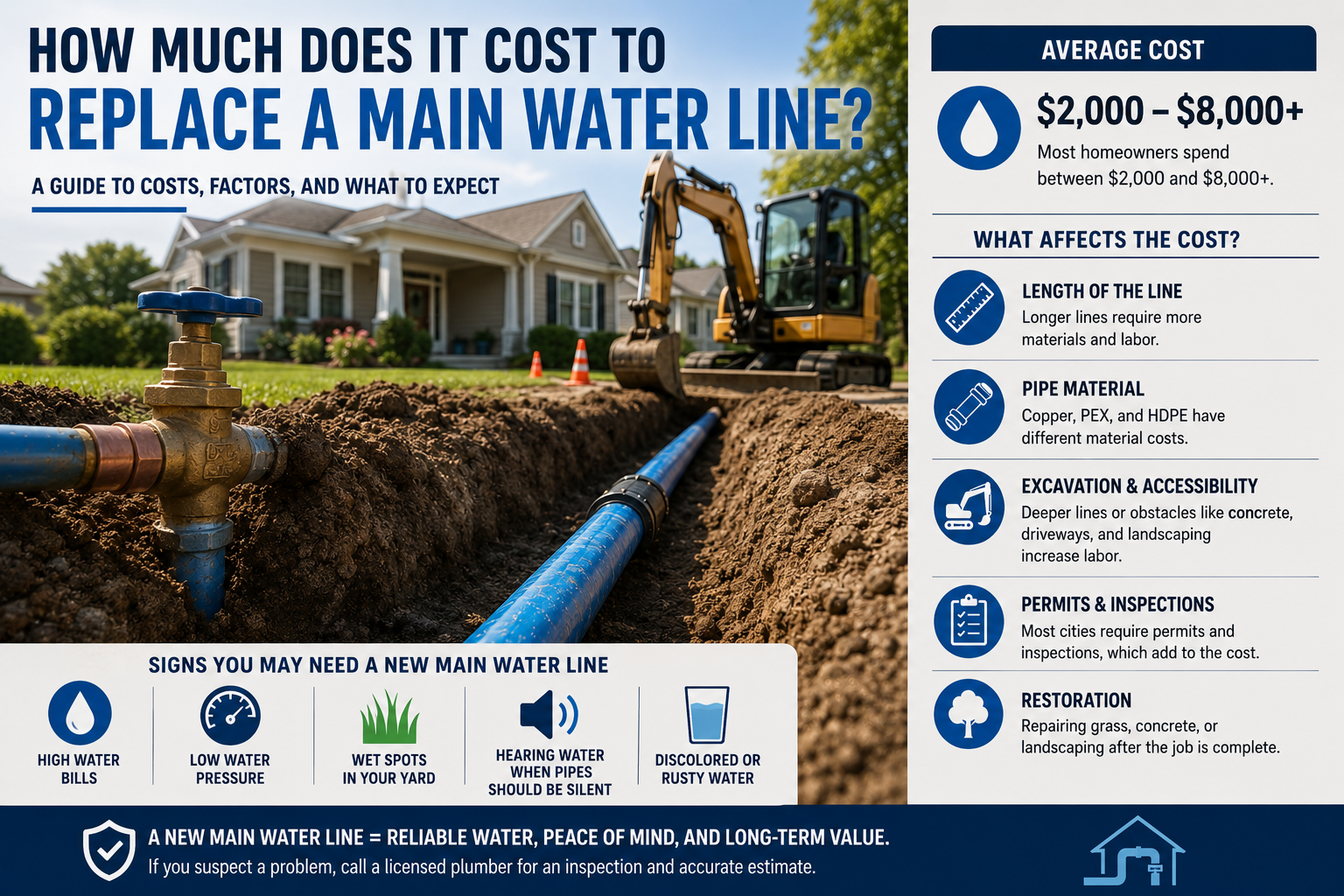
Replacing a main water line typically costs between $2,000 and $8,000, although some projects may cost less while others exceed $10,000 depending on the property’s unique conditions.
The wide price range exists because every water line replacement is different. A short water line in an easily accessible yard will cost much less than replacing a long pipe buried beneath a driveway, sidewalk, or mature landscaping.
Rather than focusing on a single price, it is more helpful to understand what factors influence the total cost of the project.
The Length of the Water Line Makes a Big Difference
One of the largest factors affecting replacement cost is the distance between your home and the water meter or municipal connection.
A house located close to the street requires much less excavation and fewer materials than a home sitting farther back on a large lot.
Longer water lines require more piping, additional labor, and more time to install, naturally increasing the overall project cost.
Pipe Material Affects the Price
Several different materials can be used for residential water lines.
Today, many plumbers install high-density polyethylene (HDPE) or copper water lines because they are durable, reliable, and approved by most local plumbing codes.
Copper has been a trusted plumbing material for decades and offers excellent longevity, although it is generally more expensive than plastic alternatives.
HDPE piping has become increasingly popular because it resists corrosion, handles ground movement well, and requires fewer underground connections that could eventually leak.
The material selected for your replacement project will affect both labor costs and material costs.
Excavation Is Often the Biggest Expense
Replacing an underground water line usually requires digging a trench between your home and the water meter.
The amount of excavation needed depends on the depth of the pipe and what lies above it.
If the water line runs beneath a grassy yard, excavation is generally straightforward. However, if it passes under concrete driveways, sidewalks, patios, retaining walls, or mature landscaping, additional labor and restoration work can increase the overall cost.
The more obstacles the crew must work around, the more time and equipment the project requires.
Tree Roots Can Complicate the Job
Large trees may create additional challenges during water line replacement.
Roots often grow around underground water lines, making excavation slower and more difficult.
In some cases, roots are responsible for damaging the existing water line in the first place by applying pressure over many years.
Protecting healthy trees while replacing underground plumbing often requires careful excavation and specialized equipment.
Permits and Inspections
Most municipalities require permits for main water line replacement.
Because the work involves connecting to the public water supply, local building departments often require inspections before the project is complete.
Permit costs vary depending on your city or county, but they are usually included in a professional plumbing estimate.
Hiring a licensed plumber helps ensure the installation meets all local plumbing codes and inspection requirements.
Trenchless Water Line Replacement
Not every water line replacement requires digging a long trench across your yard.
In some situations, plumbers can use trenchless replacement methods.
These techniques minimize excavation by installing a new water line through the path of the old one or by boring beneath the ground.
Trenchless methods often reduce landscape damage and shorten project timelines.
However, they are not suitable for every property. Soil conditions, pipe location, existing utilities, and the condition of the old water line all determine whether trenchless replacement is possible.
Signs Your Main Water Line May Need Replacement
Water lines usually provide several warning signs before complete failure occurs.
A sudden increase in your monthly water bill is often one of the first indicators.
Low water pressure throughout the entire home may suggest water is escaping before it reaches your plumbing fixtures.
Wet or unusually green areas in the yard sometimes indicate underground leaks.
Some homeowners hear running water even when every faucet is turned off.
Others notice cloudy water, dirt in the water supply, or repeated water line repairs over several years.
If these problems continue returning, replacing the water line may be more cost-effective than repeatedly repairing small leaks.
Repair or Replace?
Not every damaged water line requires complete replacement.
A single isolated leak in an otherwise healthy pipe can often be repaired successfully.
However, if the water line is old, heavily corroded, or developing multiple leaks, replacement usually becomes the better long-term investment.
Repeated repairs add up quickly. Replacing the entire line often provides greater reliability and reduces the risk of future emergencies.
A licensed plumber can evaluate the condition of the existing pipe and recommend the most practical solution.
How Long Does a Main Water Line Last?
The lifespan of a water line depends largely on the material it is made from.
Copper water lines often last 50 years or more when properly installed.
HDPE water lines can also provide decades of reliable service because they resist corrosion and ground movement.
Older galvanized steel pipes generally have shorter lifespans because corrosion gradually reduces water flow and weakens the pipe.
Environmental conditions, soil chemistry, water quality, and installation quality all affect how long a water line remains in good condition.
Can Homeowners Prevent Water Line Problems?
Although underground water lines eventually wear out, homeowners can take several steps to reduce unnecessary damage.
Monitoring your monthly water bill helps identify hidden leaks early.
Paying attention to sudden drops in water pressure can reveal developing problems before complete failure occurs.
Avoid planting large trees directly above underground utilities whenever possible, as expanding root systems may eventually interfere with buried pipes.
Scheduling professional leak detection when unusual symptoms appear can also prevent small problems from becoming much larger repairs.
Why Professional Installation Matters
Main water line replacement is not a typical do-it-yourself project.
The work involves excavation, plumbing connections, municipal regulations, underground utility awareness, and plumbing code compliance.
Licensed plumbers have the equipment and experience necessary to replace underground water lines safely while minimizing disruption to your property.
Professional installation also helps ensure the new water line provides reliable service for decades to come.
Choosing the Right Contractor
Because replacing a main water line is a significant investment, selecting the right plumbing contractor is important.
Look for a licensed and insured plumbing company with experience replacing residential water lines.
A reputable contractor will inspect the existing line, explain your options, provide a written estimate, and answer questions about permits, restoration, and expected project timelines.
Choosing an experienced plumber often saves money over the long term by reducing the likelihood of future problems.
Frequently Asked Questions
How much does it cost to replace a main water line?
Most homeowners spend between $2,000 and $8,000, although costs vary depending on the length of the pipe, excavation requirements, pipe material, permits, and property conditions.
What causes a main water line to fail?
Common causes include aging pipes, corrosion, shifting soil, tree roots, accidental excavation damage, freezing temperatures, and long-term wear.
How do I know if my main water line is leaking?
Warning signs include unusually high water bills, low water pressure throughout the home, wet spots in the yard, muddy areas, or hearing running water when all fixtures are turned off.
Is it better to repair or replace a water line?
A single isolated leak can often be repaired. If the pipe is old or has developed multiple leaks, replacing the entire line is usually the more cost-effective long-term solution.
How long does it take to replace a main water line?
Most residential water line replacement projects are completed within one to three days, depending on the length of the line, excavation requirements, weather conditions, and restoration work.
Will my yard be damaged?
Some excavation is usually necessary during traditional water line replacement, although experienced plumbers work to minimize damage. In certain situations, trenchless replacement methods may significantly reduce landscape disruption.
Replacing Your Main Water Line Is an Investment in Your Home
Replacing a main water line is a major plumbing project, but it is also an investment in your home’s reliability and long-term value. A properly installed water line delivers consistent water pressure, reduces the risk of unexpected leaks, and provides dependable service for decades. While the upfront cost can seem significant, delaying replacement often leads to recurring repairs, higher water bills, and the possibility of extensive water damage.
If you’ve noticed low water pressure throughout your home, unexplained increases in your water bill, or signs of an underground leak, having your water line inspected by a licensed plumber is the best first step. Catching problems early may provide more repair options, while replacing a failing water line before it completely breaks can help prevent a much larger plumbing emergency.
What’s Next?
Doug Herrell Plumbing is a trusted leader in Brevard County, Florida, specializing in slab leak detection and re-piping services. Call us today for a free estimate before a slab leak causes unnecessary damage to your property.
About Doug Herrell Plumbing – lic#CFC 048487
Doug Herrell Plumbing has been Brevard County’s source for plumbing services since 1980. We are a family owned and operated business and take tremendous pride in providing honest and reliable plumbing services at an affordable price.
CALL 321-254-0004
Serving Melbourne, Palm Bay, Viera, Suntree, Titusville, Merritt Island, Melbourne Beach, Indialantic, Indian Harbour Beach, Cape Canaveral, Satellite Beach, Rockledge, West Melbourne, Cocoa, and Cocoa Beach.