Low water pressure is one of the most frustrating plumbing problems homeowners experience. A weak shower, slow-filling bathtub, or kitchen faucet that barely produces enough water can make everyday tasks take longer and become increasingly annoying. While some cases of low water pressure are caused by minor issues that are inexpensive to fix, others may point to larger plumbing problems that require more extensive repairs.
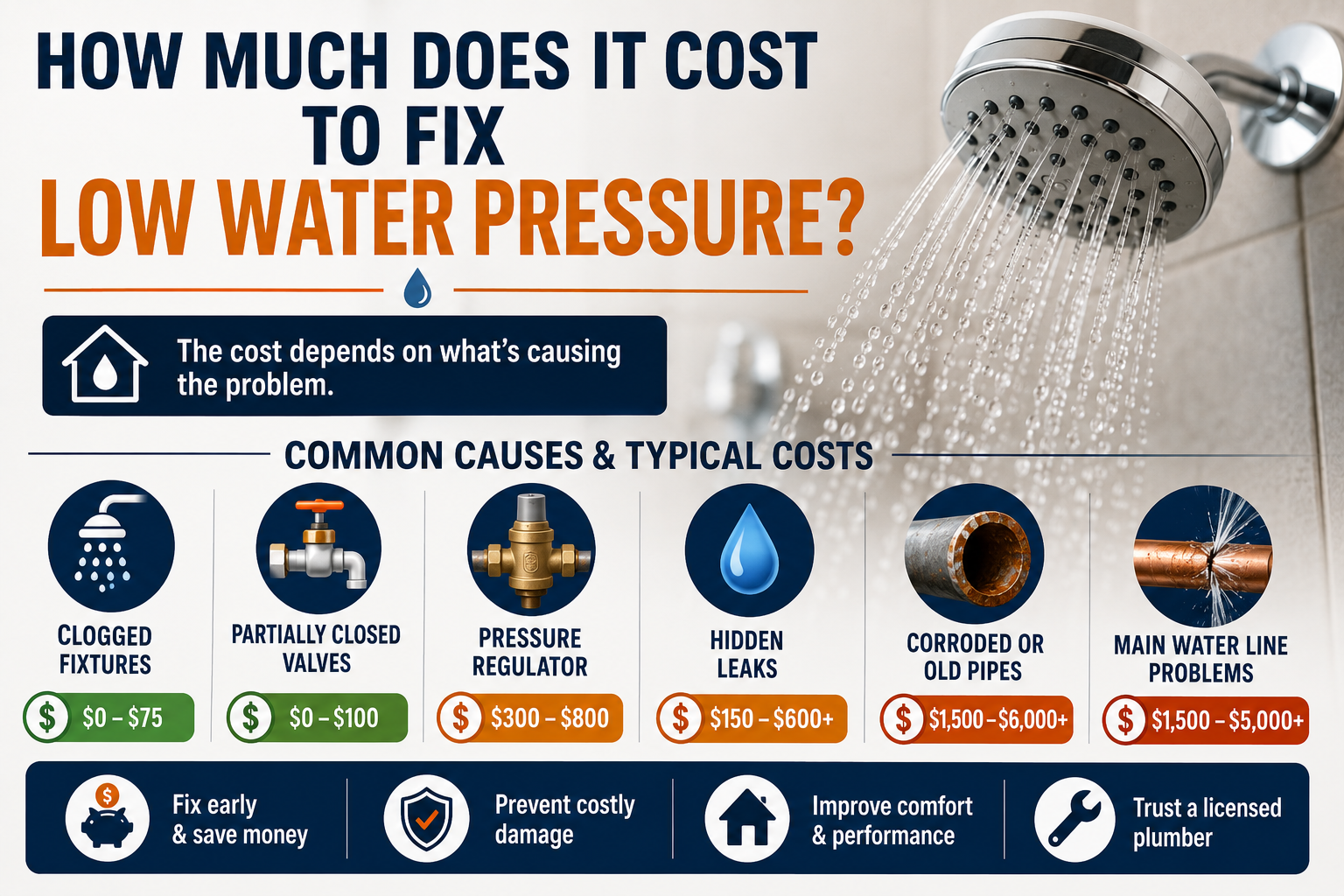
One of the first questions homeowners ask is, “How much does it cost to fix low water pressure?” The answer depends on what is causing the problem. Something as simple as cleaning a clogged faucet aerator may cost little to nothing, while replacing aging pipes or repairing a hidden water leak can be a much larger investment. Understanding the most common causes of low water pressure can help you better estimate repair costs and know when it’s time to call a licensed plumber.
What Causes Low Water Pressure?
Low water pressure is not a plumbing problem itself. Instead, it is a symptom that something within your plumbing system is preventing water from flowing normally.
In some homes, the issue is isolated to a single fixture. In others, every faucet, shower, and toilet throughout the house may experience reduced pressure.
Because there are many possible causes, the first step is always determining why the pressure has dropped before discussing repair costs.
Minor Repairs Can Be Inexpensive
Fortunately, some of the most common causes of low water pressure are also the least expensive to fix.
Mineral deposits often build up inside faucet aerators and showerheads over time, especially in areas with hard water. These deposits restrict water flow, making pressure seem much lower than it actually is.
Cleaning or replacing a clogged aerator or showerhead is often a quick and affordable repair that can restore normal water flow almost immediately.
Loose shut-off valves beneath sinks or behind toilets can also reduce water flow if they are not fully open.
Water Pressure Regulator Problems
Many homes have a pressure reducing valve, also called a pressure regulator, installed where the main water line enters the house.
Its job is to maintain safe and consistent water pressure throughout the plumbing system.
If this valve begins to fail, water pressure may suddenly become much lower than normal.
Replacing a faulty pressure regulator typically costs between $300 and $800, depending on the type of valve, accessibility, and local labor rates.
Although this repair is more expensive than replacing a faucet aerator, it is still much less costly than replacing an entire plumbing system.
Hidden Water Leaks
Hidden leaks are another common cause of low water pressure.
When water escapes from a pipe behind a wall, beneath a floor, or under your home’s concrete slab, less water reaches your plumbing fixtures.
Small leaks may not immediately cause visible water damage, making them difficult for homeowners to detect.
Professional leak detection generally costs between $150 and $600, depending on the complexity of the search and the equipment required. The actual repair cost varies depending on where the leak is located and how accessible the damaged pipe is.
Finding hidden leaks early often prevents much larger repair bills later.
Corroded Pipes
Older homes with galvanized steel plumbing frequently experience low water pressure because corrosion slowly builds inside the pipes.
As rust and mineral deposits accumulate, the inside diameter of the pipe becomes smaller, reducing the amount of water that can flow through the system.
Unfortunately, corrosion cannot simply be cleaned out.
If aging pipes are restricting water flow throughout the house, replacing sections of the plumbing—or in some cases completing a whole-home repipe—may be the best long-term solution.
This is one of the more expensive causes of low water pressure, but it also permanently solves the problem.
Main Water Line Problems
Your home’s main water line delivers fresh water from the municipal supply or private well to your plumbing system.
If this underground pipe develops a leak, becomes crushed, or begins deteriorating, water pressure throughout the entire house may decrease.
Main water line repairs vary significantly depending on excavation requirements, pipe length, and accessibility.
In severe cases, replacing the water line may cost several thousand dollars, but it restores reliable water pressure and helps prevent future underground leaks.
Municipal Water Supply Issues
Sometimes the plumbing inside your home is not the problem at all.
Water utilities occasionally perform maintenance, repair broken water mains, or temporarily reduce pressure while working on the public water system.
If your neighbors are also experiencing low pressure, contacting your local water provider is often the first step.
Fortunately, these situations usually resolve without requiring any repairs inside your home.
Clogged Plumbing Fixtures
Not every low-pressure problem affects the entire house.
If only one faucet or shower has weak water flow, the issue is often isolated to that fixture.
Mineral buildup inside aerators, showerheads, or faucet cartridges commonly reduces water flow over time.
Replacing these components is typically inexpensive and often restores full performance immediately.
Because the repair is simple, it is usually one of the least costly plumbing fixes.
Water Pressure Testing
Before recommending repairs, plumbers often perform a water pressure test.
Using a pressure gauge attached to an outdoor hose bib, they measure the home’s water pressure in pounds per square inch (PSI).
Most residential plumbing systems perform best between 40 and 60 PSI.
Pressure below this range may indicate leaks, pipe restrictions, pressure regulator failure, or municipal supply issues.
Testing water pressure is one of the fastest ways to narrow down the possible causes.
When Low Water Pressure Affects the Whole House
If every faucet, shower, and toilet experiences low water pressure, the cause is usually more significant than a clogged fixture.
Whole-house pressure problems often point toward the pressure regulator, aging plumbing, hidden leaks, or the main water line.
Because several possible causes exist, professional diagnosis is usually recommended before replacing any plumbing components unnecessarily.
Proper testing helps identify the true source of the problem and prevents spending money on repairs that won’t solve it.
Is It Worth Fixing Low Water Pressure?
Absolutely.
Low water pressure is more than an inconvenience.
In some cases, it serves as an early warning sign of developing plumbing problems.
Ignoring the issue may allow hidden leaks, corrosion, or deteriorating pipes to worsen over time.
Addressing the cause early often prevents larger plumbing repairs while improving your home’s comfort and plumbing performance.
Preventing Future Water Pressure Problems
Although not every plumbing issue can be prevented, routine maintenance helps reduce the likelihood of future pressure problems.
Cleaning faucet aerators and showerheads periodically removes mineral buildup before it restricts water flow.
Monitoring your monthly water bill helps identify hidden leaks early.
Scheduling routine plumbing inspections can also uncover developing issues before they become major repairs.
Simple preventative maintenance often saves homeowners money over the long term.
Choosing the Right Plumber
Because low water pressure can have many different causes, proper diagnosis is essential.
An experienced plumber will not simply replace parts based on guesswork. Instead, they will evaluate water pressure, inspect visible plumbing, check shut-off valves, test the pressure regulator if necessary, and recommend the repair that best addresses the underlying problem.
Choosing a licensed plumbing professional helps ensure the issue is fixed correctly the first time.
Frequently Asked Questions
How much does it cost to fix low water pressure?
The cost depends on the cause. Minor issues like clogged aerators may cost very little to fix, while pressure regulator replacement typically ranges from $300 to $800. Larger problems such as hidden leaks or aging pipes may cost more depending on the repairs required.
Can a plumber increase my water pressure?
Yes. A plumber can diagnose the cause of low water pressure and recommend the appropriate repair. This may involve replacing a pressure regulator, repairing a leak, cleaning clogged fixtures, or replacing aging plumbing.
Why is my water pressure suddenly low?
Sudden pressure loss may be caused by a hidden leak, pressure regulator failure, municipal water supply issues, or a partially closed shut-off valve.
Is low water pressure a sign of a plumbing leak?
It can be. Hidden leaks reduce the amount of water reaching your fixtures, which often results in lower water pressure throughout the home.
Can old pipes cause low water pressure?
Yes. Older galvanized steel pipes frequently become restricted by corrosion and mineral buildup, reducing water flow over time.
Should I ignore low water pressure?
No. While some causes are minor, low water pressure can also indicate hidden plumbing problems that become more expensive if left unrepaired.
Fixing Low Water Pressure Starts With Finding the Cause
Low water pressure can have many different causes, ranging from simple fixture clogs to hidden leaks and aging plumbing systems. Because repair costs vary depending on the underlying problem, the most important step is identifying the source before replacing parts or making assumptions. A professional plumbing inspection and water pressure test can quickly narrow down the issue and help you understand the most cost-effective repair options.
Whether your home has recently experienced weaker water pressure or the problem has gradually become worse over time, addressing it early can improve your plumbing system’s performance and help prevent more expensive repairs in the future. If you’ve noticed consistently low water pressure throughout your home, having the system evaluated by a licensed plumber is the best way to restore reliable water flow and protect your plumbing for years to come.
What’s Next?
Doug Herrell Plumbing is a trusted leader in Brevard County, Florida, specializing in slab leak detection and re-piping services. Call us today for a free estimate before a slab leak causes unnecessary damage to your property.
About Doug Herrell Plumbing – lic#CFC 048487
Doug Herrell Plumbing has been Brevard County’s source for plumbing services since 1980. We are a family owned and operated business and take tremendous pride in providing honest and reliable plumbing services at an affordable price.
CALL 321-254-0004
Serving Melbourne, Palm Bay, Viera, Suntree, Titusville, Merritt Island, Melbourne Beach, Indialantic, Indian Harbour Beach, Cape Canaveral, Satellite Beach, Rockledge, West Melbourne, Cocoa, and Cocoa Beach.