Most homeowners don’t think about scheduling a plumbing inspection until something goes wrong. A leaking pipe, unusually high water bill, low water pressure, or slow drain often prompts a call to the plumber. However, a professional plumbing inspection can identify many problems before they become expensive repairs. Just like routine maintenance for your HVAC system or annual roof inspections, checking your plumbing system on a regular basis can help extend its lifespan and prevent unexpected emergencies.
One of the most common questions homeowners ask is, “How much does a plumbing inspection cost?” The answer depends on the size of your home, the type of inspection being performed, and whether specialized equipment is needed. While prices can vary, understanding what is typically included helps homeowners decide whether an inspection is worth the investment.
What Is a Plumbing Inspection?
A plumbing inspection is a professional evaluation of your home’s plumbing system. During the inspection, a licensed plumber examines visible pipes, plumbing fixtures, water supply lines, drain systems, shut-off valves, and other important components to make sure everything is operating properly.
Unlike an emergency repair visit, the goal of a plumbing inspection is to identify existing problems, detect potential issues before they become serious, and recommend preventative maintenance when necessary. Many plumbing problems develop slowly over time, making inspections one of the best ways to catch leaks, corrosion, or worn components before they cause major water damage.
How Much Does a Plumbing Inspection Cost?
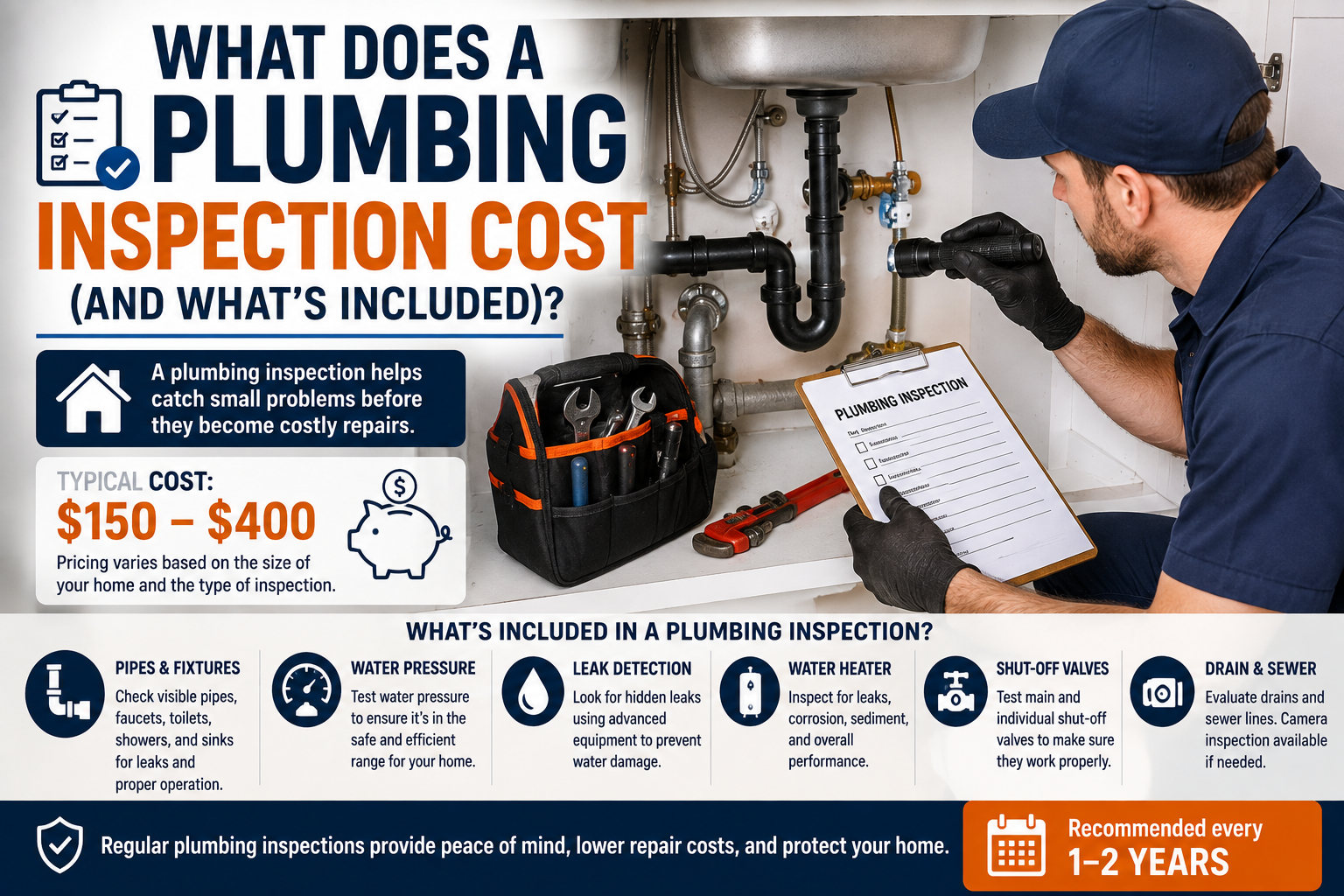
For most homes, a standard plumbing inspection typically costs between $150 and $400. The exact price depends on several factors, including the size of the property, the age of the plumbing system, and the scope of the inspection.
A basic inspection of visible plumbing fixtures and supply lines usually falls toward the lower end of that range. More comprehensive inspections that include sewer camera inspections, leak detection, water pressure testing, or specialized diagnostic equipment will generally cost more.
While an inspection requires an upfront investment, finding a hidden plumbing issue early can often save homeowners thousands of dollars in future repairs.
What Is Usually Included in a Plumbing Inspection?
Every plumbing company performs inspections a little differently, but most comprehensive inspections cover the major components of your home’s plumbing system.
A plumber will typically inspect visible water supply pipes for signs of corrosion, leaks, improper installation, or aging materials. They will also examine drain lines, faucets, sinks, toilets, showers, bathtubs, and outdoor hose bibs to ensure they are functioning properly.
The inspection often includes checking for slow leaks beneath sinks, testing shut-off valves, inspecting exposed pipe connections, and evaluating overall plumbing performance.
If any issues are found, the plumber will explain the problem and recommend repair options before they become larger concerns.
Water Pressure Testing
Many professional plumbing inspections include testing your home’s water pressure.
Water pressure that is too low may indicate hidden leaks, aging pipes, mineral buildup, or municipal supply issues. Water pressure that is too high can place unnecessary stress on pipes, appliances, water heaters, and plumbing fixtures.
Most residential plumbing systems operate best between 40 and 60 PSI. If your pressure falls outside this range, your plumber may recommend additional testing or repairs.
Checking water pressure is one of the simplest ways to evaluate the overall health of your plumbing system.
Leak Detection
One of the most valuable parts of a plumbing inspection is identifying hidden leaks before they become serious.
Not every leak leaves obvious signs. Water may slowly escape behind walls, beneath flooring, or under your home’s concrete foundation for weeks or even months before visible damage appears.
Professional plumbers may use moisture meters, pressure testing equipment, acoustic listening devices, or thermal imaging technology to locate hidden leaks without unnecessary damage to your home.
Finding these leaks early often prevents expensive repairs involving flooring, drywall, or structural damage.
Water Heater Inspection
Most plumbing inspections also include a visual inspection of the water heater.
The plumber checks for corrosion, leaks, sediment buildup, damaged valves, and signs of improper venting or installation.
If the water heater is approaching the end of its expected lifespan, the plumber may recommend maintenance or discuss replacement options before an unexpected failure occurs.
Regular inspections help extend the life of your water heater while improving efficiency.
Checking Shut-Off Valves
Many homeowners never operate their shut-off valves until an emergency occurs.
Unfortunately, valves that sit unused for years sometimes seize or fail when they are finally needed.
During a plumbing inspection, your plumber may test the main water shut-off valve along with individual fixture shut-off valves to confirm they operate properly.
Knowing your valves work correctly can make a major difference during a plumbing emergency.
Drain Inspection
Slow drains often develop gradually, making them easy to ignore.
During an inspection, plumbers check how sinks, tubs, showers, and other fixtures drain while looking for early signs of developing blockages.
If recurring drain problems exist, a plumber may recommend additional testing such as a sewer camera inspection.
Identifying drainage issues early often prevents larger sewer backups later.
Sewer Camera Inspections
Not every plumbing inspection includes a sewer camera inspection, but it can be an excellent investment for older homes or properties experiencing recurring drain problems.
A small waterproof camera is inserted into the sewer line, allowing the plumber to inspect the inside of the pipe.
Camera inspections can reveal tree root intrusion, pipe corrosion, cracks, collapsed sections, grease buildup, and other hidden problems that cannot be seen from above ground.
Because sewer repairs can be expensive, camera inspections often provide valuable peace of mind.
Plumbing Inspections Before Buying a Home
A plumbing inspection is especially valuable during the home-buying process.
While general home inspectors perform a basic evaluation of plumbing fixtures, they typically do not perform detailed plumbing diagnostics.
Hiring a licensed plumber before purchasing a home provides a more thorough assessment of the plumbing system.
This can uncover hidden leaks, aging pipes, sewer line issues, low water pressure, or water heater problems before closing on the property.
For many buyers, this relatively small investment helps avoid unexpected repair costs after moving in.
Older Homes Benefit From Regular Inspections
Homes built several decades ago often contain aging plumbing materials that deserve closer attention.
Galvanized steel pipes, older copper plumbing, aging shut-off valves, and original water heaters become more likely to develop problems as they age.
Scheduling regular plumbing inspections helps homeowners monitor these systems and plan upgrades before emergency repairs become necessary.
Preventative maintenance is almost always less expensive than emergency plumbing work.
Is a Plumbing Inspection Worth the Cost?
For many homeowners, the answer is yes.
A plumbing inspection may identify small leaks before they damage flooring or drywall. It can reveal aging pipes before they burst, detect excessive water pressure before it damages appliances, and uncover sewer problems before backups occur.
Compared to the cost of repairing water damage or replacing flooring, cabinets, or drywall, a routine plumbing inspection is often a very small investment.
Even if no problems are found, many homeowners appreciate the peace of mind that comes with knowing their plumbing system is in good condition.
How Often Should You Schedule a Plumbing Inspection?
There is no universal schedule, but many plumbers recommend having your home’s plumbing inspected every one to two years.
Older homes or properties with previous plumbing issues may benefit from more frequent inspections.
If you’ve recently noticed higher water bills, reduced water pressure, unusual plumbing noises, slow drains, or signs of leaks, scheduling an inspection sooner is usually a smart decision.
Routine inspections help identify developing issues while repairs are still relatively simple.
Choosing the Right Plumbing Company
Not every plumbing inspection offers the same level of detail.
When choosing a plumbing company, look for licensed and insured professionals with experience inspecting residential plumbing systems.
A reputable plumber will explain what is included in the inspection, answer your questions, and provide honest recommendations without unnecessary sales pressure.
The goal should be helping you understand the condition of your plumbing system so you can make informed decisions about future maintenance or repairs.
Frequently Asked Questions
How much does a plumbing inspection cost?
Most plumbing inspections cost between $150 and $400, depending on the size of the home, the complexity of the plumbing system, and whether additional services such as sewer camera inspections or leak detection are included.
What does a plumbing inspection include?
A typical inspection includes checking visible pipes, plumbing fixtures, faucets, toilets, drains, shut-off valves, water pressure, and the water heater. Some inspections also include leak detection or sewer camera inspections.
Is a plumbing inspection worth it?
Yes. A plumbing inspection can identify hidden leaks, aging pipes, water pressure problems, and other issues before they become expensive plumbing emergencies.
How long does a plumbing inspection take?
Most residential plumbing inspections take between one and two hours, depending on the size of the home and whether specialized testing is performed.
Should I get a plumbing inspection before buying a home?
Absolutely. A licensed plumber can identify plumbing issues that may not be included in a standard home inspection, helping you avoid unexpected repair costs after purchasing the property.
How often should plumbing be inspected?
Many homeowners schedule a plumbing inspection every one to two years. Older homes or homes with previous plumbing issues may benefit from more frequent inspections.
A Plumbing Inspection Can Save You Money in the Long Run
A plumbing inspection is one of the simplest ways to protect your home from unexpected water damage and costly repairs. While it may seem like an unnecessary expense when everything appears to be working properly, many plumbing problems begin long before visible symptoms appear. Small leaks, aging pipes, excessive water pressure, and developing drain issues can often be identified during a routine inspection, giving homeowners the opportunity to make repairs before they become much larger and more expensive.
Whether you’re buying a home, living in an older property, or simply want peace of mind, scheduling a professional plumbing inspection is a smart investment. Catching problems early not only helps extend the life of your plumbing system but also protects your home, improves efficiency, and reduces the likelihood of unexpected plumbing emergencies in the future.
What’s Next?
Doug Herrell Plumbing is a trusted leader in Brevard County, Florida, specializing in slab leak detection and re-piping services. Call us today for a free estimate before a slab leak causes unnecessary damage to your property.
About Doug Herrell Plumbing – lic#CFC 048487
Doug Herrell Plumbing has been Brevard County’s source for plumbing services since 1980. We are a family owned and operated business and take tremendous pride in providing honest and reliable plumbing services at an affordable price.
CALL 321-254-0004
Serving Melbourne, Palm Bay, Viera, Suntree, Titusville, Merritt Island, Melbourne Beach, Indialantic, Indian Harbour Beach, Cape Canaveral, Satellite Beach, Rockledge, West Melbourne, Cocoa, and Cocoa Beach.
Table of Contents
- What Is a Plumbing Inspection?
- How Much Does a Plumbing Inspection Cost?
- What Is Usually Included in a Plumbing Inspection?
- Water Pressure Testing
- Leak Detection
- Water Heater Inspection
- Checking Shut-Off Valves
- Drain Inspection
- Sewer Camera Inspections
- Plumbing Inspections Before Buying a Home
- Older Homes Benefit From Regular Inspections
- Is a Plumbing Inspection Worth the Cost?
- How Often Should You Schedule a Plumbing Inspection?
- Choosing the Right Plumbing Company
- Frequently Asked Questions
- A Plumbing Inspection Can Save You Money in the Long Run
- What’s Next?
- Table of Contents