Most homeowners rarely think about the plumbing hidden behind their walls. As long as water flows from the faucet and drains disappear without a problem, it’s easy to assume everything is working as it should. However, the size of your home’s plumbing pipes has a direct impact on water pressure, water flow, plumbing efficiency, and even the lifespan of your plumbing system. Pipes that are too small can leave you dealing with weak showers, slow-filling bathtubs, and frustrating drops in water pressure whenever more than one fixture is being used. Pipes that are too large can create their own set of problems by reducing water velocity and allowing sediment to collect inside the plumbing system over time.
Every modern plumbing system is carefully designed to deliver the right amount of water to every fixture while safely carrying wastewater away from your home. Understanding how pipe sizing works can help you recognize plumbing issues, make smarter remodeling decisions, and understand why professional plumbing installation is so important.
Why Pipe Size Matters More Than You Might Think
Water moves through your plumbing system under pressure. Every time you turn on a faucet, flush a toilet, or start the washing machine, your plumbing system has to deliver enough water without reducing performance elsewhere in the home. The size of each pipe determines how much water can travel through it at one time.
Think of your plumbing system like a highway. A small two-lane road works perfectly for light traffic, but it quickly becomes congested when hundreds of cars try to use it at once. A larger highway can handle much more traffic without slowing everyone down. Plumbing pipes work in much the same way. If too much water is trying to move through a pipe that is too small, pressure drops and fixtures begin competing with each other for water.
Proper pipe sizing ensures that multiple fixtures can operate at the same time while maintaining consistent water pressure throughout your home.
How Water Travels Through Your Home
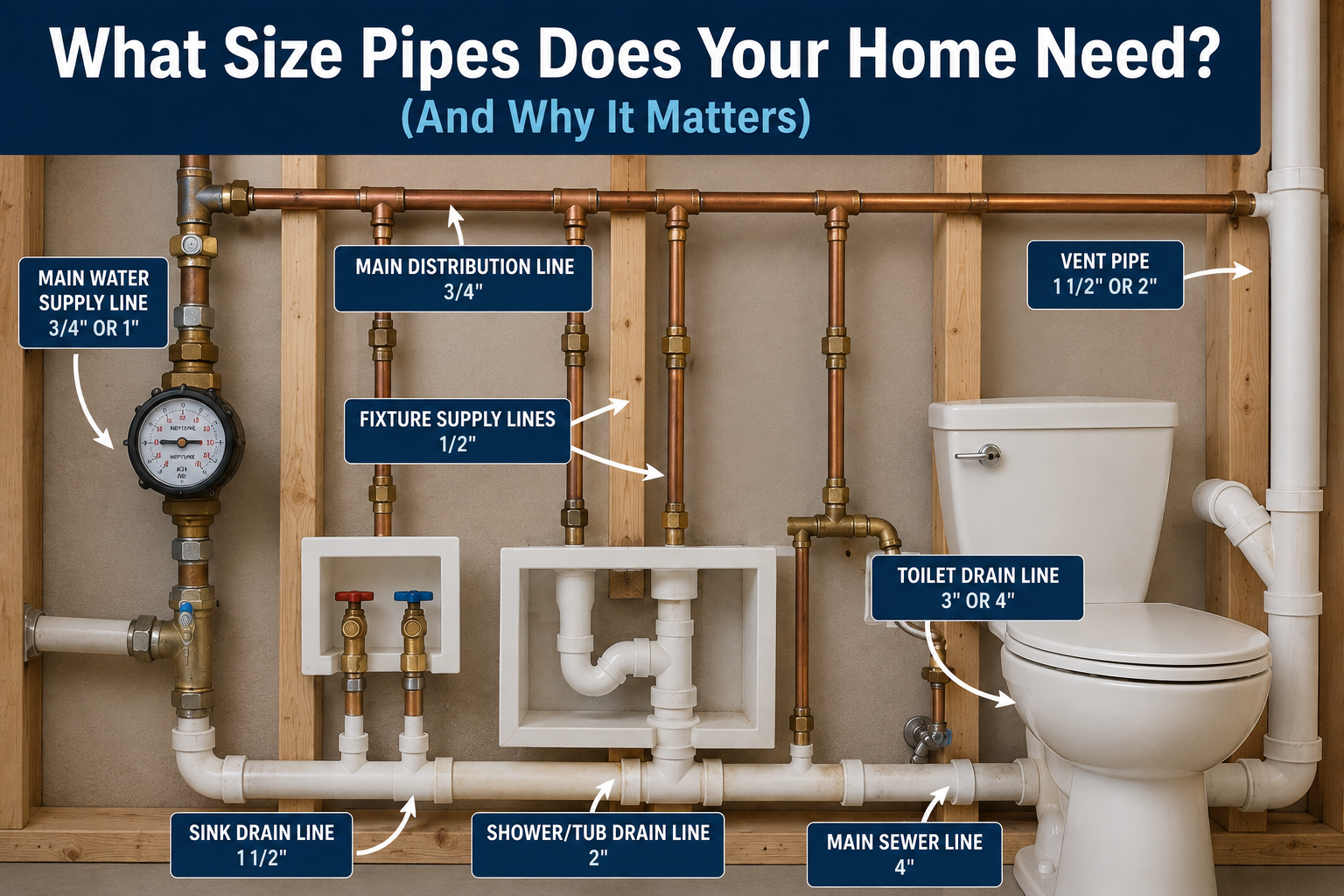
Every home’s plumbing system begins with the main water supply line. This is the pipe that brings clean water from your local water utility or private well into the house. Before entering your plumbing system, the water usually passes through a water meter, which records how much water your household uses each month.
From there, the water travels through the home’s main shut-off valve. This important valve allows you to stop the flow of water to the entire house during emergencies like burst pipes or major leaks.
After passing the shut-off valve, water enters the main supply pipes that distribute it throughout the home. These larger pipes branch into smaller supply lines that feed bathrooms, kitchens, laundry rooms, outdoor faucets, water heaters, refrigerators, dishwashers, and every other plumbing fixture in your house.
This branching system is carefully designed so each fixture receives enough water without affecting the rest of the home.
The Main Water Line Is Usually the Largest Supply Pipe
The largest water pipe inside your home is usually the main water supply line. In many modern homes, this pipe measures either three-quarters of an inch or one inch in diameter.
Smaller homes with fewer bathrooms often function perfectly with a three-quarter inch main supply line. Larger homes with multiple bathrooms, oversized tubs, irrigation systems, or luxury plumbing fixtures may require a full one-inch supply line to provide enough water volume.
The size of the main water line affects everything downstream. If it is too small for your home’s water demands, every fixture may experience reduced performance.
Why Three-Quarter Inch Pipes Are So Common
Once water enters the home, it is typically distributed through three-quarter inch supply pipes before branching into smaller lines.
Three-quarter inch piping provides an excellent balance between water flow and pressure. It can supply several bathrooms or multiple plumbing fixtures at once without creating significant pressure loss.
This is why plumbers commonly use three-quarter inch piping as the primary distribution line throughout residential homes.
Whether your home has one bathroom or four, these larger pipes form the backbone of the plumbing system.
Half-Inch Pipes Supply Individual Fixtures
Although the main plumbing lines are larger, individual plumbing fixtures usually do not require that much water.
Bathroom sinks, toilets, kitchen sinks, dishwashers, refrigerators, and many showers are commonly supplied by half-inch water lines.
These smaller pipes provide plenty of water for a single fixture while keeping installation costs reasonable and maintaining good water pressure throughout the home.
Because each fixture has different water demands, plumbers carefully select pipe sizes based on how much water each appliance or fixture is expected to use.
Larger Fixtures Often Need Larger Pipes
Not every plumbing fixture uses the same amount of water.
Large soaking tubs, oversized showers with multiple showerheads, body sprays, or rainfall shower systems require much higher flow rates than a standard bathroom sink.
In these situations, plumbers often install three-quarter inch supply lines to ensure enough water reaches the fixture without reducing pressure elsewhere in the home.
Without properly sized piping, expensive luxury plumbing fixtures may never perform as intended.
Water Pressure and Pipe Size Work Together
Many homeowners assume water pressure comes entirely from the city water system, but pipe size plays an equally important role.
When water travels through pipes that are too small, friction increases and pressure gradually drops as more fixtures begin operating.
You may notice this when someone flushes a toilet while another person is taking a shower. If your plumbing system cannot deliver enough water, the shower pressure may decrease noticeably.
Properly sized plumbing minimizes these pressure fluctuations and allows multiple fixtures to operate more comfortably at the same time.
Drain Pipes Are Different From Water Supply Pipes
While water supply pipes carry clean, pressurized water into your home, drain pipes perform a completely different job.
Drain pipes rely on gravity instead of pressure. Once water goes down a sink, shower, or toilet, it flows downhill through progressively larger drain pipes until it reaches the home’s main sewer line.
Because wastewater shares space with air inside these pipes, drain pipes are usually much larger than water supply pipes.
Bathroom sinks often use one-and-one-half-inch drain pipes. Showers, bathtubs, and washing machines commonly use two-inch drains. Toilets connect to three-inch or four-inch drain lines before joining the home’s main sewer pipe.
Each drain size is selected to move wastewater efficiently while reducing the chance of clogs.
Older Homes May Have Smaller Pipes
Many older homes were built during a time when families used much less water.
Decades ago, homes often had only one bathroom and very few water-consuming appliances. Dishwashers, automatic washing machines, refrigerator water dispensers, and large luxury showers were far less common.
As a result, some older plumbing systems simply were not designed for today’s water demands.
Older galvanized steel pipes can make matters even worse. Over time, corrosion builds up inside these pipes, reducing their inside diameter. Even if the pipe was originally large enough, years of rust and mineral deposits gradually restrict water flow.
Replacing aging galvanized pipes with modern PEX or copper piping often restores water pressure throughout the home.
What Happens When Pipes Are Too Small?
Undersized plumbing pipes create several noticeable problems that homeowners often mistake for general plumbing issues.
You may experience low water pressure whenever multiple fixtures operate at the same time. Bathtubs may take much longer to fill. Washing machines and dishwashers may seem slower than expected. Showers can lose pressure when someone turns on another faucet elsewhere in the home.
These problems occur because the plumbing system simply cannot move enough water through the existing pipes.
If your home’s plumbing has always struggled with pressure despite no obvious leaks or blockages, undersized piping could be part of the problem.
Can Pipes Be Too Large?
It may seem like installing the biggest pipes possible would solve every plumbing problem, but that is not actually the case.
Water moves most efficiently when it maintains proper velocity.
Oversized pipes slow the movement of water, allowing sediment and minerals to settle inside the plumbing system over time. Larger pipes also contain more water, meaning it may take longer for hot water to reach your faucets and showers.
Professional plumbers carefully balance water velocity, pressure, and flow when selecting pipe sizes for each part of a home’s plumbing system.
Remodeling Often Changes Plumbing Requirements
If you are planning a home addition or bathroom remodel, pipe sizing becomes even more important.
Adding another bathroom, installing a large soaking tub, upgrading to a multi-head shower system, or building an outdoor kitchen all increase your home’s water demand.
Simply connecting new fixtures to the existing plumbing may not provide enough water flow.
Before beginning major remodeling projects, plumbers evaluate the home’s current plumbing system to determine whether larger supply lines or additional plumbing upgrades are necessary.
Planning ahead helps avoid expensive corrections later.
Why Professional Pipe Sizing Makes a Difference
Modern plumbing systems are designed using detailed plumbing codes and engineering calculations.
Professional plumbers consider much more than the diameter of a pipe. They evaluate the number of fixtures, pipe length, expected water demand, water pressure, elevation changes, future expansion plans, and the type of plumbing materials being used.
This careful planning ensures every part of the plumbing system works together efficiently.
Proper pipe sizing also helps reduce future maintenance costs by minimizing unnecessary strain on pipes, valves, fixtures, and appliances.
Choosing the Right Pipe Size Protects Your Home
The plumbing pipes hidden behind your walls may not be something you think about every day, but they have a significant impact on your home’s comfort, efficiency, and reliability. Properly sized pipes allow water to flow consistently throughout the house while ensuring wastewater leaves the home safely and efficiently. They help maintain strong water pressure, reduce stress on your plumbing system, and support everything from simple kitchen faucets to larger appliances and luxury bathroom fixtures.
If your home struggles with inconsistent water pressure, aging pipes, or you’re planning a renovation, pipe sizing may be an important part of the solution. A licensed plumber can evaluate your plumbing system, determine whether the existing pipes are meeting your home’s needs, and recommend upgrades if necessary. Investing in the right plumbing today helps protect your home, improve daily performance, and reduce the likelihood of expensive plumbing problems in the future.
Frequently Asked Questions
What size water pipes do most homes use?
Most modern homes use a three-quarter inch main water supply line with half-inch branch lines serving individual plumbing fixtures. Larger homes with multiple bathrooms may use a one-inch main supply line.
Does bigger plumbing pipe mean better water pressure?
Not always. Pipes should be properly sized for the home’s water demand. Oversized pipes can reduce water velocity, while undersized pipes can lower water pressure when several fixtures are used at once.
What size drain pipe does a toilet use?
Most residential toilets connect to a three-inch or four-inch drain line before joining the home’s main sewer pipe.
Can old plumbing pipes reduce water pressure?
Yes. Older galvanized steel pipes often corrode internally, reducing the inside diameter of the pipe and restricting water flow throughout the home.
Should plumbing pipes be upgraded during a remodel?
If you’re adding bathrooms, installing larger fixtures, or significantly increasing your home’s water demand, upgrading portions of the plumbing system may improve performance and prevent future pressure problems.
What’s Next?
Doug Herrell Plumbing is a trusted leader in Brevard County, Florida, specializing in slab leak detection and re-piping services. Call us today for a free estimate before a slab leak causes unnecessary damage to your property.
About Doug Herrell Plumbing – lic#CFC 048487
Doug Herrell Plumbing has been Brevard County’s source for plumbing services since 1980. We are a family owned and operated business and take tremendous pride in providing honest and reliable plumbing services at an affordable price.
CALL 321-254-0004
Serving Melbourne, Palm Bay, Viera, Suntree, Titusville, Merritt Island, Melbourne Beach, Indialantic, Indian Harbour Beach, Cape Canaveral, Satellite Beach, Rockledge, West Melbourne, Cocoa, and Cocoa Beach.
Table of Contents
- Why Pipe Size Matters More Than You Might Think
- How Water Travels Through Your Home
- The Main Water Line Is Usually the Largest Supply Pipe
- Why Three-Quarter Inch Pipes Are So Common
- Half-Inch Pipes Supply Individual Fixtures
- Larger Fixtures Often Need Larger Pipes
- Water Pressure and Pipe Size Work Together
- Drain Pipes Are Different From Water Supply Pipes
- Older Homes May Have Smaller Pipes
- What Happens When Pipes Are Too Small?
- Can Pipes Be Too Large?
- Remodeling Often Changes Plumbing Requirements
- Why Professional Pipe Sizing Makes a Difference
- Choosing the Right Pipe Size Protects Your Home
- Frequently Asked Questions
- What’s Next?
- Table of Contents