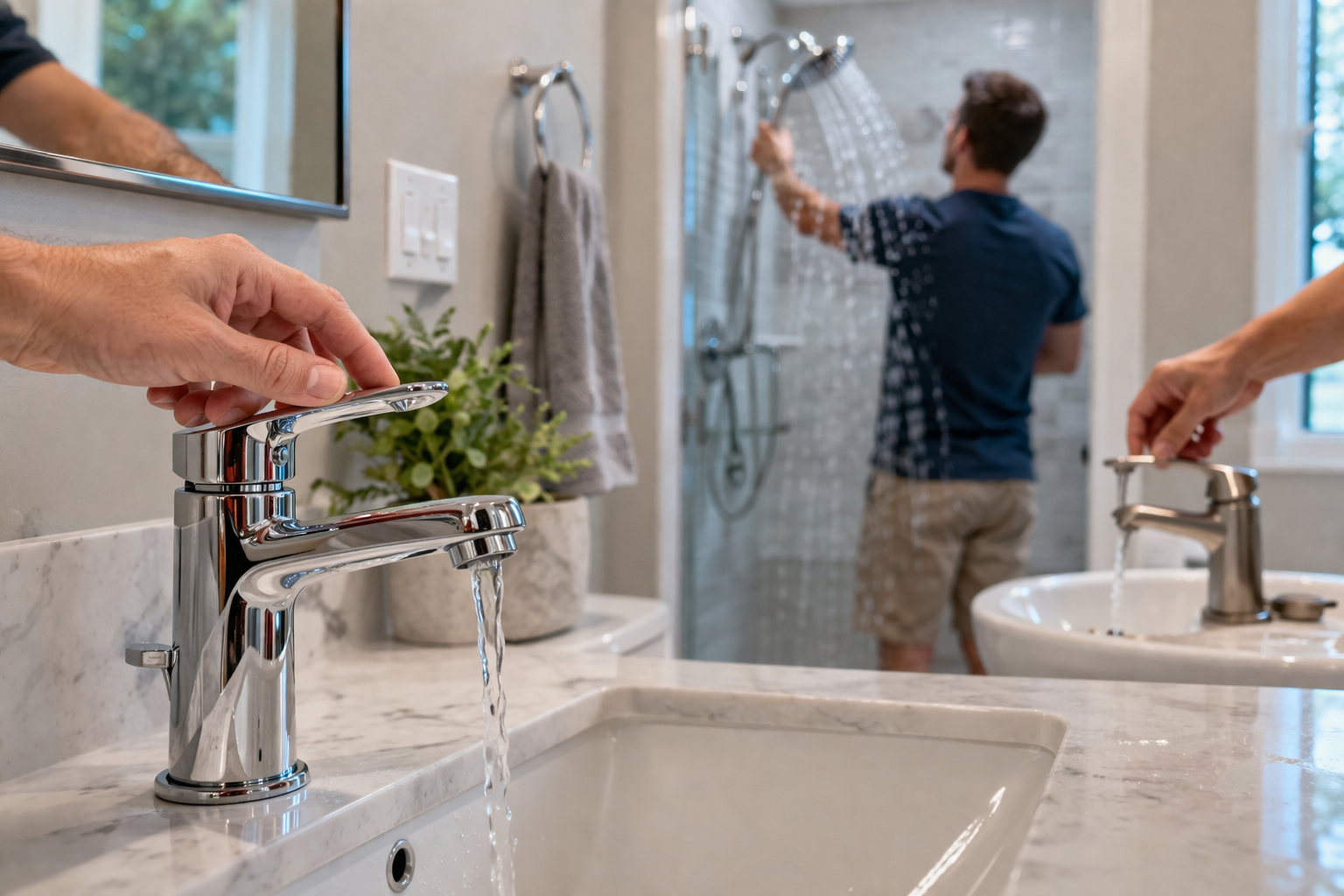
If you’ve ever turned on the shower while someone is using the sink or flushing a toilet and suddenly felt your water pressure drop, you’re not alone. This is one of the most common plumbing complaints homeowners deal with, especially in older homes or houses with outdated plumbing systems. While it might seem like a small annoyance, it can actually point to bigger issues inside your plumbing system that shouldn’t be ignored.
Understanding why your water pressure drops when multiple fixtures are in use is the first step to fixing the problem. In many cases, it comes down to how water moves through your pipes, how your system is designed, and whether any hidden issues are limiting flow.
Let’s break it down in a way that makes sense and helps you figure out what’s really going on in your home.
How Water Pressure Works in Your Home
Before diving into the causes, it helps to understand how water pressure works. Water enters your home through a main supply line, usually coming from your city’s water system or a well. That water is delivered at a certain pressure level, typically measured in PSI (pounds per square inch).
From there, your plumbing system distributes water to different fixtures like sinks, showers, toilets, and appliances. When only one fixture is running, all the available pressure is directed to that single outlet. But when multiple fixtures are used at the same time, that pressure has to be shared.
Think of it like traffic on a highway. When only one car is on the road, it moves freely. But as more cars enter, traffic slows down. The same idea applies to water flow inside your pipes.
Normal Pressure Drop vs. a Bigger Problem
A small drop in pressure when using multiple fixtures is completely normal. However, if the drop is significant—like your shower turning into a trickle when someone turns on a faucet—that’s a sign something isn’t right.
You should start paying attention if:
- Water pressure drops drastically, not just slightly
- It happens every time multiple fixtures are used
- Pressure stays low even after turning other fixtures off
- You notice inconsistent pressure throughout the house
These signs usually point to an underlying plumbing issue rather than normal system behavior.
Common Reasons Your Water Pressure Drops
1. Your Pipes Are Too Small
One of the most common causes is undersized plumbing pipes. Older homes, especially those built decades ago, often have smaller diameter pipes that weren’t designed for modern water usage.
Today’s households use more water than ever—multiple bathrooms, dishwashers, washing machines, and outdoor irrigation systems all running at once. If your pipes are too small, they simply can’t keep up with the demand.
When multiple fixtures are in use, the limited pipe size restricts flow, causing a noticeable drop in pressure.
2. A Failing or Misadjusted Pressure Regulator
Many homes have a water pressure regulator installed where the main water line enters the house. This device controls and stabilizes the incoming water pressure.
If the regulator is failing or set too low, it can limit how much pressure reaches your fixtures. When you try to run multiple fixtures, there isn’t enough pressure to go around.
A faulty regulator can also cause fluctuating pressure, which may feel like your water is surging or dropping randomly.
3. Hidden Leaks in Your Plumbing System
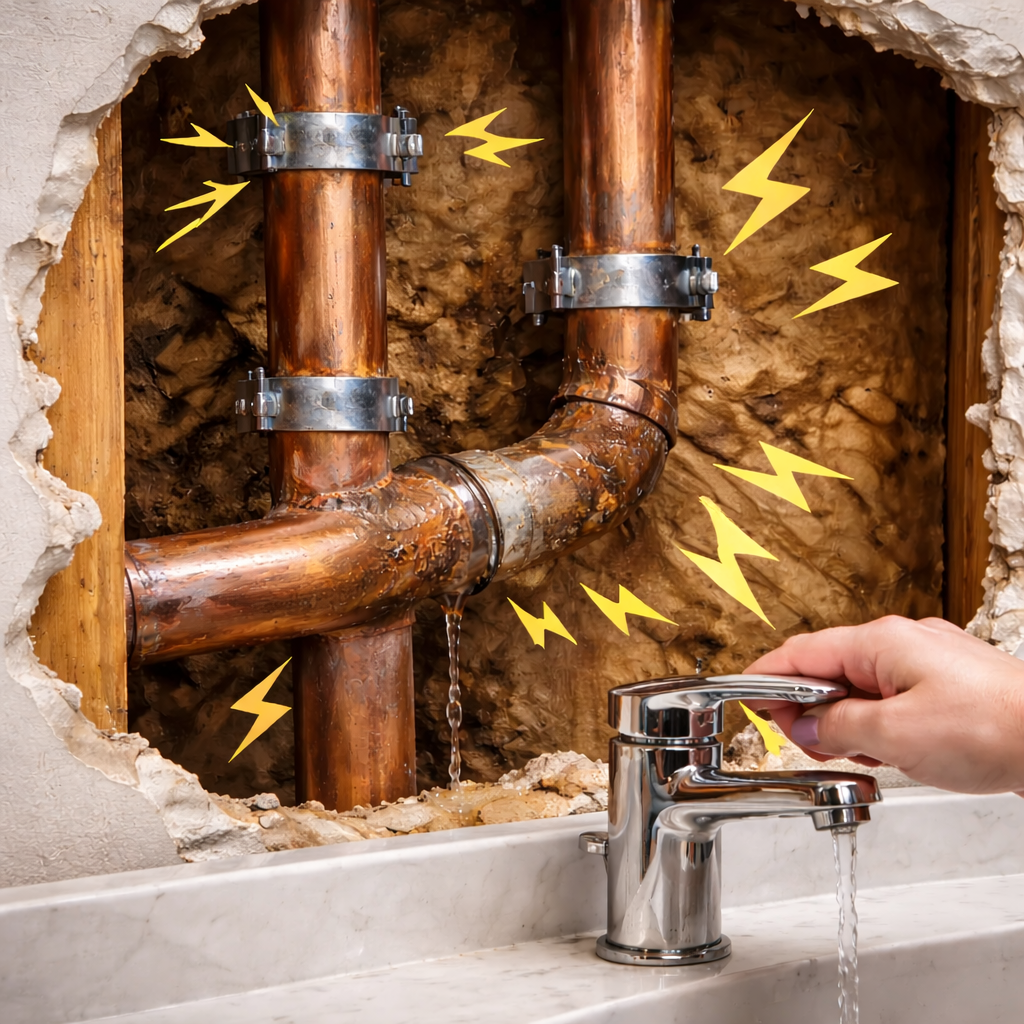
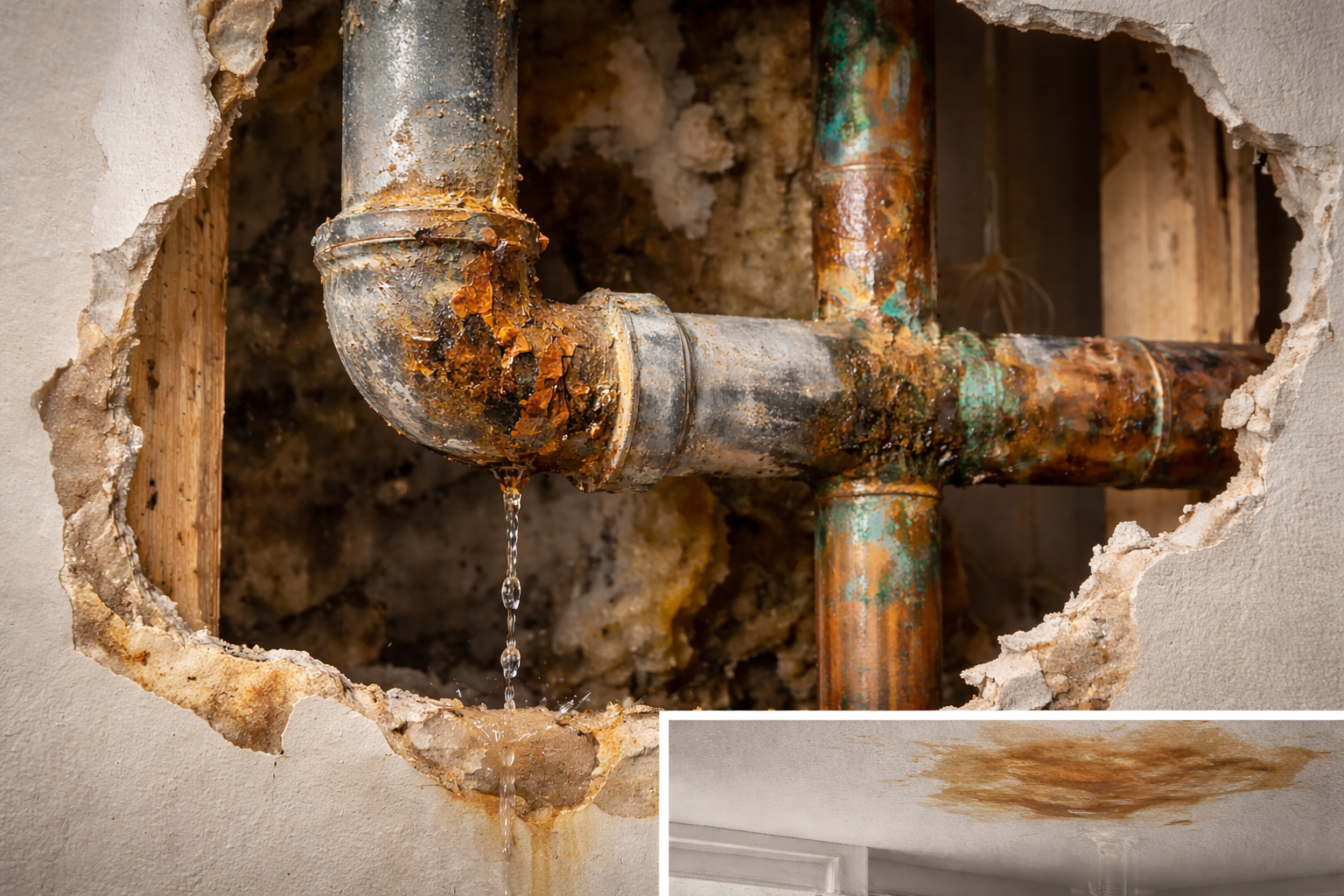
Leaks don’t always show up as puddles or visible water damage. In many cases, they happen behind walls, under floors, or even under your home’s foundation.
When there’s a leak, water is constantly escaping your system. That reduces the amount of pressure available to your fixtures. The more fixtures you use, the more noticeable the pressure drop becomes.
This is especially important in Florida homes where slab leaks are more common due to shifting soil and aging pipes.
4. Corroded or Buildup Inside Pipes
Over time, pipes can become clogged with mineral deposits, rust, or debris. This is especially common in homes with hard water or older galvanized steel pipes.
As buildup forms inside the pipes, it reduces the diameter of the water pathway. Even if your pipes were originally sized correctly, this buildup can restrict flow just like undersized pipes.
When multiple fixtures are used, the restricted pipes can’t deliver enough water, leading to a drop in pressure.
5. Problems with Your Main Water Supply Line
Sometimes the issue isn’t inside your home at all. The main water line that brings water into your house could be damaged, partially blocked, or too small for your current needs.
Tree roots, corrosion, or shifting ground can all affect your main line. If this line is compromised, it limits the total amount of water entering your home, which becomes obvious when multiple fixtures are running.
6. Municipal Water Supply Limitations
If you’re connected to city water, your pressure can also depend on the local supply system. During peak usage times—like early mornings or evenings—your neighborhood may experience lower pressure overall.
If your home already has minor plumbing limitations, these drops in city pressure can make the issue feel much worse.
7. Old or Outdated Plumbing Systems
Older homes often have plumbing systems that simply weren’t designed for today’s usage. Materials like galvanized steel or polybutylene can degrade over time, leading to reduced performance and reliability.
Even if there aren’t major leaks, aging pipes can struggle to maintain consistent pressure when demand increases.
How to Tell What’s Causing Your Pressure Drop
If you’re dealing with low pressure when multiple fixtures are running, there are a few ways to narrow down the cause.
Start by checking if the problem happens throughout the entire house or only in certain areas. If it’s only affecting one bathroom or fixture, the issue is likely localized. But if it happens everywhere, it’s probably related to your main system.
You can also test your water pressure using a simple gauge attached to an outdoor spigot. Most homes should have pressure between 40 and 60 PSI. If your pressure is already low with only one fixture running, that points to a supply or regulator issue.
Another clue is your water bill. If it has increased without a clear reason, it could indicate a hidden leak.
How to Fix Low Water Pressure When Using Multiple Fixtures
Upgrade Your Plumbing System
If your home has outdated or undersized pipes, upgrading to modern materials like PEX can make a huge difference. PEX piping allows for better flow and can handle multiple fixtures more efficiently.
This is often part of a full repiping project, which not only improves pressure but also prevents future leaks and plumbing failures.
Adjust or Replace the Pressure Regulator
If your pressure regulator is the problem, a simple adjustment might fix it. However, if it’s failing, it will need to be replaced.
A properly functioning regulator ensures consistent pressure throughout your home, even when multiple fixtures are in use.
Fix Hidden Leaks
Leak detection is critical if you suspect water is escaping somewhere in your system. Professional plumbers use specialized equipment to locate leaks without tearing apart your home.
Once the leak is repaired, your water pressure should improve immediately.
Clean or Replace Clogged Pipes
If buildup is restricting your pipes, they may need to be cleaned or replaced. In severe cases, especially with older pipes, replacement is usually the best long-term solution.
Upgrade Your Main Water Line
If your main line is the bottleneck, replacing or upsizing it can dramatically improve your home’s water flow and pressure.
When Should You Call a Plumber?
While some minor pressure issues can be diagnosed on your own, most problems that affect multiple fixtures require professional attention.
You should call a plumber if:
- The pressure drop is severe or getting worse
- You suspect a hidden leak
- Your home has older plumbing materials
- You’ve never had your plumbing system inspected
- Your water bill has increased unexpectedly
A professional inspection can quickly identify the root cause and recommend the best solution.
Why This Problem Shouldn’t Be Ignored
Low water pressure might seem like a small inconvenience, but it often signals a deeper issue. Ignoring it can lead to bigger problems like leaks, water damage, or even complete pipe failure.
Fixing the issue early can save you money, improve your home’s efficiency, and make everyday tasks like showering, washing dishes, and doing laundry much more comfortable.
Significant Loss Of Pressure Usually Points To A Problem Within Your Plumbing
If your water pressure drops when you use multiple fixtures, it’s not something you just have to live with. While a slight drop is normal, a significant loss of pressure usually points to a problem within your plumbing system.
From undersized pipes and failing pressure regulators to hidden leaks and aging plumbing, there are several possible causes. The key is identifying the issue early and taking the right steps to fix it.
In many cases, solving the problem not only restores your water pressure but also improves the overall health of your plumbing system. If you’re dealing with ongoing pressure issues, having a professional take a closer look can make all the difference.
What’s Next?
Doug Herrell Plumbing is a trusted leader in Brevard County, Florida, specializing in slab leak detection and re-piping services. Call us today for a free estimate before a slab leak causes unnecessary damage to your property.
About Doug Herrell Plumbing – lic#CFC 048487
Doug Herrell Plumbing has been Brevard County’s source for plumbing services since 1980. We are a family owned and operated business and take tremendous pride in providing honest and reliable plumbing services at an affordable price.
CALL 321-254-0004
Serving Melbourne, Palm Bay, Viera, Suntree, Titusville, Merritt Island, Melbourne Beach, Indialantic, Indian Harbour Beach, Cape Canaveral, Satellite Beach, Rockledge, West Melbourne, Cocoa, and Cocoa Beach.
Table of Contents
- How Water Pressure Works in Your Home
- Normal Pressure Drop vs. a Bigger Problem
- Common Reasons Your Water Pressure Drops
- How to Tell What’s Causing Your Pressure Drop
- How to Fix Low Water Pressure When Using Multiple Fixtures
- When Should You Call a Plumber?
- Why This Problem Shouldn’t Be Ignored
- Significant Loss Of Pressure Usually Points To A Problem Within Your Plumbing
- What’s Next?
- Table of Contents