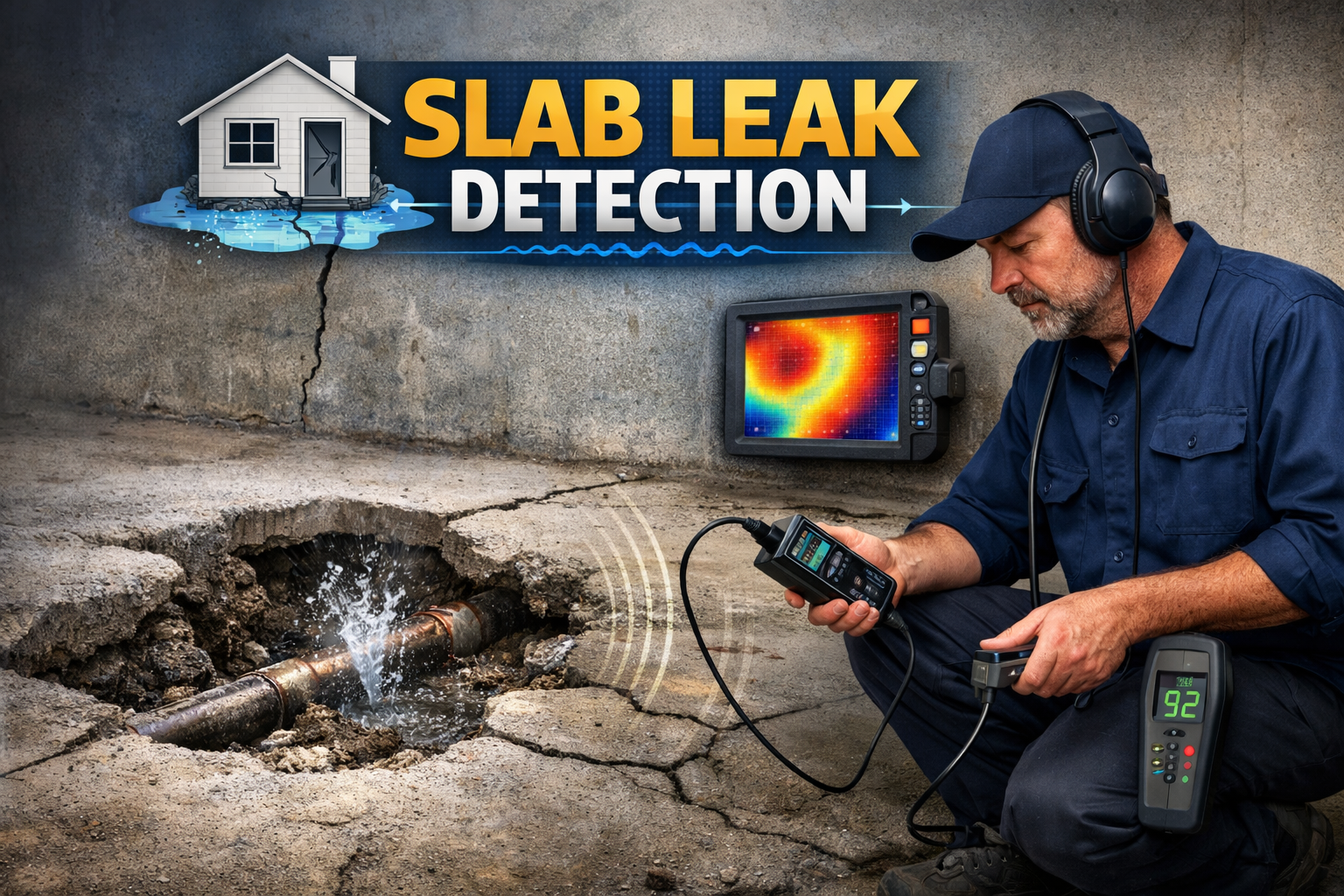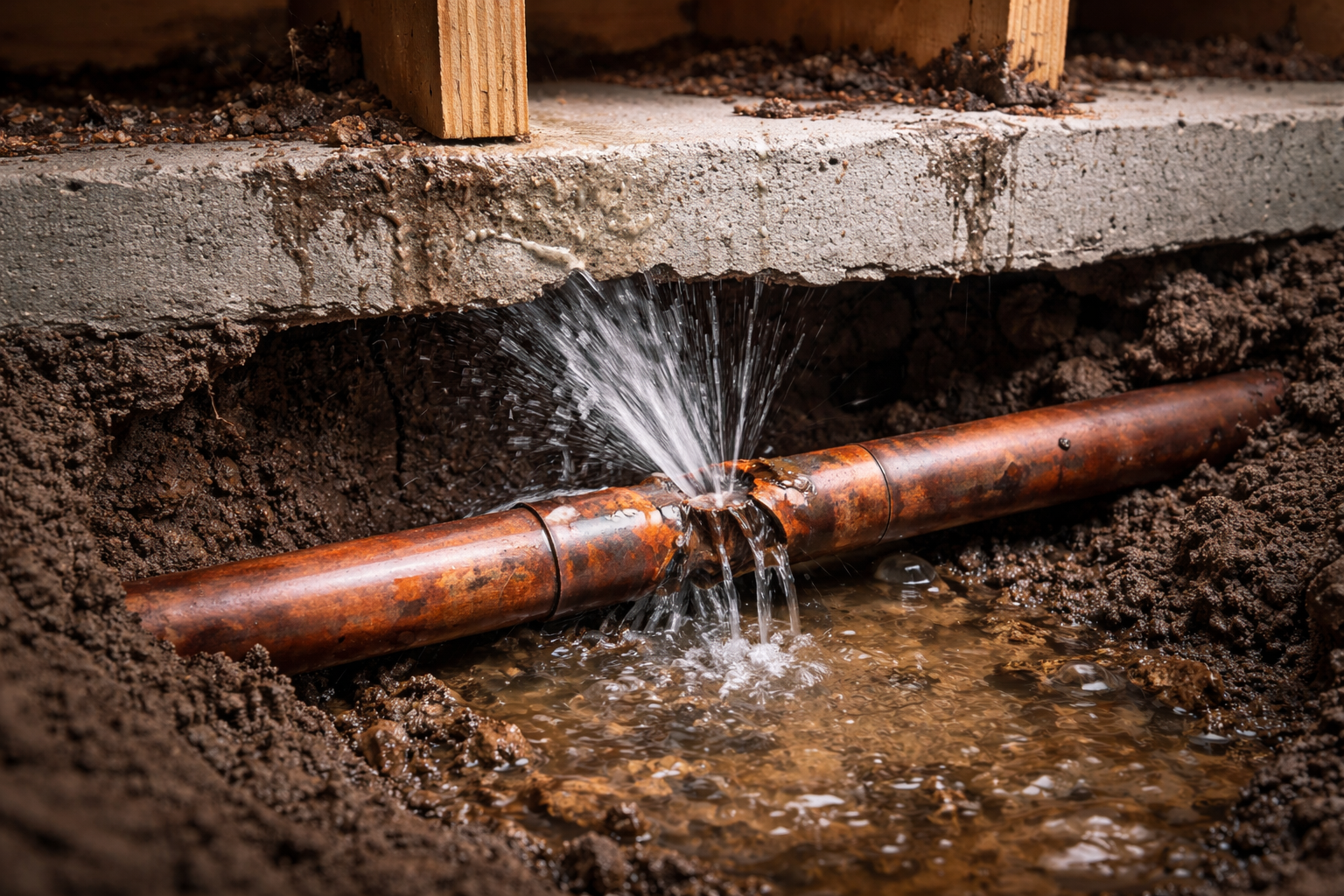
A slab leak is a water leak that occurs in the plumbing pipes located underneath a home’s concrete foundation, also known as the slab. Because these pipes are buried beneath the floor, slab leaks are difficult to see and often go unnoticed until they cause serious damage. Left untreated, a slab leak can waste large amounts of water, weaken the foundation, raise utility bills, and lead to mold or structural problems inside the home.
Slab leaks are considered one of the most serious plumbing issues a homeowner can face. Unlike a leaking faucet or pipe under a sink, slab leaks are hidden and continue to run day and night. Understanding how slab leaks form, how to spot the warning signs, and how professionals locate and repair them can help homeowners act quickly and avoid expensive repairs.
Why Slab Leaks Are So Dangerous
Most homes today are built on a concrete slab foundation. Water supply lines often run through or underneath this slab before connecting to sinks, showers, toilets, and appliances. When one of these pipes breaks or develops a pinhole leak, water escapes directly into the soil under the home.
Over time, this constant flow of water can wash away the soil that supports the foundation. This can cause floors to shift, crack, or settle unevenly. Moisture trapped under the slab can also lead to mold growth and musty odors inside the home.
According to the Environmental Protection Agency, household leaks can waste nearly 10,000 gallons of water per year, and slab leaks are among the most costly because they often go undetected for long periods.
https://www.epa.gov/watersense/fix-leak-week
Common Causes of Slab Leaks
Slab leaks do not happen overnight. They usually develop due to long-term wear, pressure, or environmental factors.
One of the most common causes is pipe corrosion. Older homes often have copper or galvanized pipes that can corrode over time. Chemical reactions between the pipe material, soil, and water can slowly eat away at the pipe until it begins to leak.
Another major cause is foundation movement. Shifting soil, settling, or expansion and contraction can put stress on pipes under the slab. Even small movements can cause pipes to crack or joints to separate.
Poor installation can also lead to slab leaks. Pipes that were bent too sharply, installed without proper support, or exposed to rough surfaces during construction may wear out faster. High water pressure can further stress the pipes and speed up failure.
Signs You May Have a Slab Leak
Because slab leaks are hidden beneath concrete, homeowners usually notice indirect warning signs rather than visible water. One of the most common signs is a sudden increase in your water bill. If your usage hasn’t changed but your bill keeps climbing, a hidden leak may be the cause.
Another common sign is warm or damp spots on the floor. If a hot water line is leaking under the slab, the heat can transfer through the concrete, making parts of the floor feel warm. Damp carpet, warped flooring, or loose tiles can also indicate moisture below the surface.
Some homeowners hear the sound of running water even when all faucets and appliances are turned off. Low water pressure, moldy smells, unexplained cracks in walls or floors, and visible foundation cracks can also be signs of a slab leak.
Any of these symptoms should be taken seriously, as slab leaks tend to worsen over time.
How to Confirm a Hidden Water Leak
If you suspect a slab leak, one simple test you can do at home is a water meter test. Turn off all water fixtures and appliances in the house, then check your water meter. If the meter continues to move, it indicates an active leak somewhere in the system.
However, this test cannot tell you where the leak is located. That’s where professional leak detection becomes essential.
Professional Slab Leak Detection Methods
Modern plumbers use advanced, non-invasive tools to locate slab leaks without tearing up floors unnecessarily. These methods allow them to pinpoint the leak accurately and recommend the best repair option.
Acoustic Leak Detection
Acoustic detection uses highly sensitive microphones to listen for the sound of water escaping from pipes beneath the slab. This method works well for pressurized water lines and allows plumbers to locate leaks with precision.
Thermal Imaging
Thermal cameras detect temperature differences caused by leaking hot water pipes. Warm areas beneath the slab show up clearly on the camera, helping plumbers identify the leak’s location.
Pressure Testing
Plumbers may isolate sections of the plumbing system and test water pressure to determine where a leak exists. A pressure drop often indicates a leak in that section.
The home improvement experts at This Old House provide a helpful explanation of how professionals find hidden water leaks:
https://www.thisoldhouse.com/plumbing/21016498/how-to-find-hidden-water-leaks
Slab Leak Repair Options Explained
Once the leak is located, the plumber will recommend the most effective repair method. The right solution depends on the condition of the plumbing, the location of the leak, and the age of the home.
Spot Repair
A spot repair involves opening the slab directly over the leak and replacing the damaged section of pipe. This method works best when the plumbing is otherwise in good condition and the leak is isolated.
Pipe Rerouting
Rerouting involves abandoning the leaking pipe under the slab and running new pipes through walls or ceilings instead. This option is often recommended for older homes with multiple leaks or deteriorating pipes because it prevents future slab leaks.
Epoxy Pipe Lining
Epoxy lining coats the inside of existing pipes to seal leaks and strengthen the pipe walls. While less invasive, it is not suitable for all situations and depends on pipe material and condition.
The American Society of Home Inspectors explains how plumbing leaks can impact foundations and structural integrity:
https://www.ashi.org/homeowner-resources/inspection/structural-movement-and-foundations/
Cost to Detect and Repair a Slab Leak
Slab leak costs vary depending on the severity of the leak and the repair method used. Leak detection itself typically costs a few hundred dollars, but this service can save thousands by preventing unnecessary damage.
Spot repairs are often less expensive than rerouting, but they may not be the best long-term solution if the plumbing system is aging. Rerouting costs more upfront but can eliminate future slab leak risks.
Delaying repairs almost always increases costs due to water damage, mold remediation, and foundation repairs.
Does Homeowners Insurance Cover Slab Leaks?
In many cases, homeowners insurance covers the damage caused by the leak, such as flooring or drywall repair, but not the actual plumbing repair itself. Coverage varies widely by policy, so it’s important to contact your insurance provider as soon as a slab leak is suspected.
Documenting the issue early and having professional leak detection reports can help with insurance claims.
Why Slab Leak Repairs Should Never Be Delayed
Ignoring a slab leak can lead to serious and expensive consequences. Constant water flow can erode soil beneath the foundation, causing settling or cracking. Moisture can lead to mold growth, which affects indoor air quality and health. Flooring, cabinets, and walls may also suffer extensive water damage.
Early detection and professional repair are always more affordable than dealing with long-term structural issues.
When to Call a Slab Leak Specialist
Slab leaks are not DIY repairs. Specialized equipment and experience are required to locate and fix them safely. If you notice warning signs such as high water bills, warm floors, or unexplained moisture, calling a licensed plumber immediately is the best course of action.
Professional plumbers can accurately diagnose the issue, explain your repair options, and protect your home from further damage.
Frequently Asked Questions About Slab Leaks
What is a slab leak?
A slab leak is a water leak that occurs in pipes located beneath a home’s concrete foundation.
How do plumbers find slab leaks without breaking floors?
They use acoustic listening devices, thermal cameras, and pressure testing to locate leaks without unnecessary demolition.
Are slab leaks dangerous?
Yes. Slab leaks can cause foundation damage, mold growth, and high water bills if left untreated.
How long can a slab leak go unnoticed?
Some slab leaks go undetected for weeks or months, slowly causing damage beneath the home.
Is rerouting better than repairing a slab leak?
In older homes, rerouting is often the better long-term solution because it prevents future leaks under the slab.
Do slab leaks raise water bills?
Yes. Because the leak runs continuously, it usually causes a noticeable increase in water usage.
Slab Leaks Are Hidden Plumbing Problems
Slab leaks are hidden plumbing problems that can cause serious damage if ignored. Because the leak occurs beneath your home’s foundation, early detection and professional repair are critical. Understanding the warning signs, knowing how leak detection works, and acting quickly can save homeowners thousands of dollars in repairs.
If you suspect a slab leak, don’t wait. Professional leak detection and repair services can protect your foundation, plumbing system, and peace of mind for years to come.
What’s Next?
Doug Herrell Plumbing is a trusted leader in Brevard County, Florida, specializing in slab leak detection and re-piping services. Call us today for a free estimate before a slab leak causes unnecessary damage to your property.
About Doug Herrell Plumbing – lic#CFC 048487
Doug Herrell Plumbing has been Brevard County’s source for plumbing services since 1980. We are a family owned and operated business and take tremendous pride in providing honest and reliable plumbing services at an affordable price.
CALL 321-254-0004
Serving Melbourne, Palm Bay, Viera, Suntree, Titusville, Merritt Island, Melbourne Beach, Indialantic, Indian Harbour Beach, Cape Canaveral, Satellite Beach, Rockledge, West Melbourne, Cocoa, and Cocoa Beach.
continue reading