- What Is PEX Plumbing?
- Why Homeowners Choose PEX for Repiping
- When a House Needs to Be Repiped
- How PEX Repiping Is Typically Done
- How Long a PEX Repipe Takes
- What Happens After the Repipe
- Is PEX Safe for Drinking Water?
- Cost Considerations for PEX Repiping
- Why Professional Installation Matters
- Benefits Homeowners Notice After Repiping With PEX
- When to Talk to a Repipe Specialist
- Repiping A House With Pex
- What’s Next?
Repiping a house is a big decision for any homeowner. When plumbing pipes start to fail, leak, or lose water pressure, patch repairs are no longer enough. This is when many homeowners begin looking into a full home repipe. One of the most popular options today is repiping with PEX.
PEX piping has changed the way homes are replumbed. It is flexible, durable, and designed to last for decades. Because of its reliability and lower installation cost compared to traditional materials, many homeowners now choose PEX when replacing old plumbing systems.
What Is PEX Plumbing?
PEX stands for cross-linked polyethylene. It is a flexible plastic piping material used for water supply lines throughout a home. Unlike rigid copper or galvanized pipes, PEX bends easily and can be routed through walls, ceilings, and attics with fewer connections.
Because PEX has fewer fittings, there are fewer places for leaks to develop. It is also resistant to corrosion, scale buildup, and pinhole leaks that commonly affect older plumbing systems.
PEX has become one of the most trusted materials for modern residential plumbing.
Why Homeowners Choose PEX for Repiping
One of the biggest reasons homeowners choose PEX is reliability. Older plumbing systems made from galvanized steel or aging copper often develop corrosion inside the pipes. This reduces water pressure and increases the risk of leaks.
PEX does not rust or corrode. It also handles temperature changes better than metal piping, which helps reduce stress on the system over time.
Another major benefit is flexibility. Because PEX can bend around corners, plumbers do not need to open as many walls during installation. This often means less damage to the home and faster completion.
PEX is also quieter than metal pipes. Many homeowners notice reduced pipe noise and water hammer after a PEX repipe.
When a House Needs to Be Repiped
A repipe is usually recommended when plumbing problems become frequent or widespread. Common signs include recurring leaks, low water pressure throughout the home, discolored water, or pipes that are decades old.
Homes built with galvanized pipes are especially prone to failure. These pipes rust from the inside out, slowly closing off water flow. Copper pipes can also fail due to pinhole leaks caused by water chemistry or age.
If repairs keep adding up, repiping the home becomes the safer and more cost-effective long-term solution.
How PEX Repiping Is Typically Done
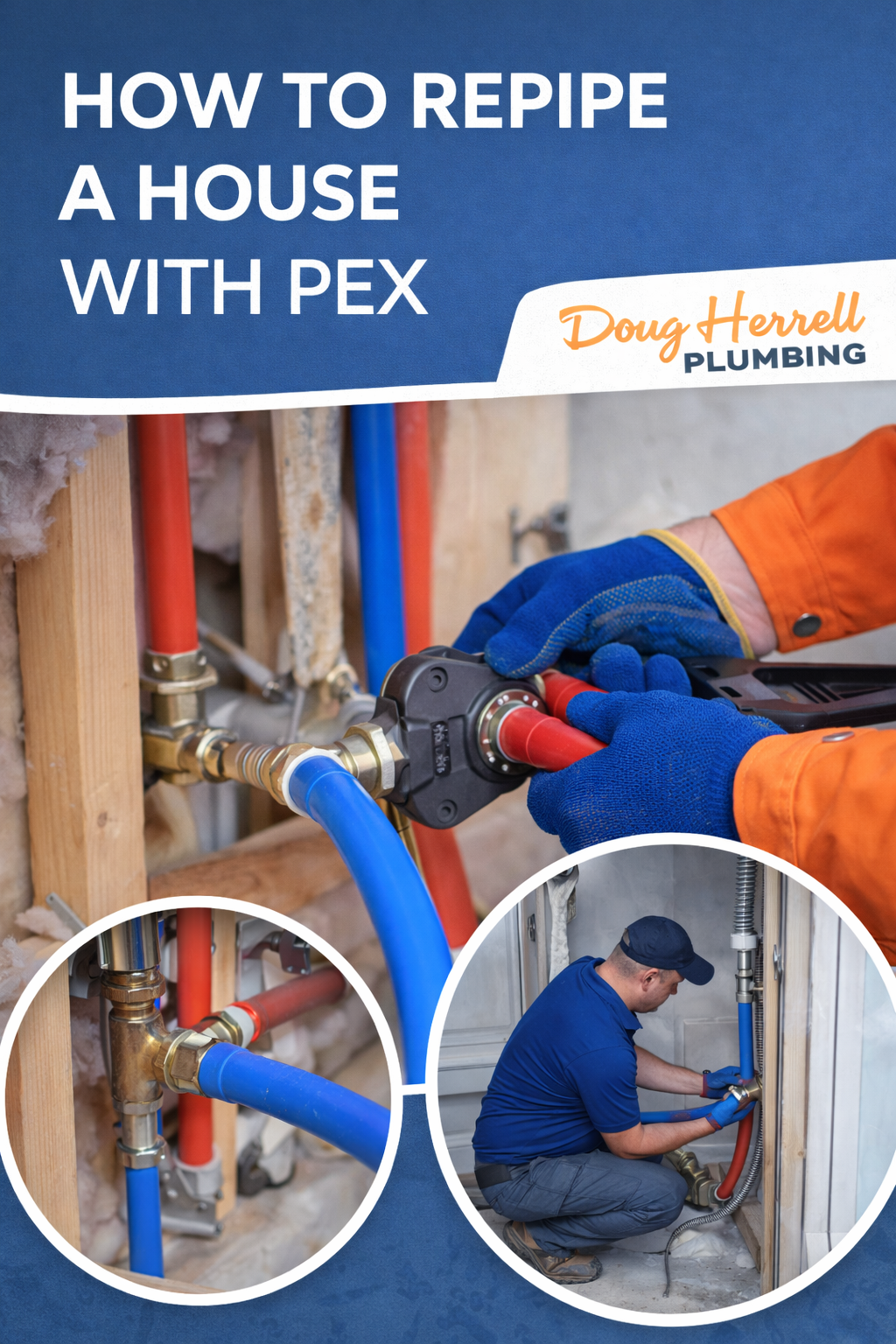
Repiping a house with PEX is not a small repair. It involves replacing most or all of the water supply lines inside the home. During the process, plumbers install new PEX piping that runs from the main water line to each fixture.
In many homes, the new piping is run through the attic, walls, or ceiling spaces. Old pipes are usually abandoned in place once the new system is active. This avoids unnecessary demolition and speeds up the process.
Each fixture is then connected to the new PEX system, ensuring consistent water pressure and reliable performance throughout the house.
How Long a PEX Repipe Takes
One of the advantages of PEX is installation speed. In many cases, a full house repipe can be completed in one to two days, depending on the size of the home and the plumbing layout.
Because fewer fittings are required and the material is easier to work with, plumbers can move efficiently without sacrificing quality. Water is typically shut off only during active work and restored as soon as testing is complete.
Most homeowners are able to stay in the home during the repipe.
What Happens After the Repipe
Once the new PEX system is installed, plumbers test the lines to ensure there are no leaks and that water pressure is stable. Fixtures are checked, and the system is balanced to provide even flow throughout the home.
Any small access points created during installation are usually patched or prepared for repair. Homeowners immediately notice stronger water pressure, clearer water, and more consistent performance.
A properly installed PEX system can last 40 to 50 years or more when maintained correctly.
Is PEX Safe for Drinking Water?
PEX is approved for residential plumbing in most areas and meets strict safety standards. It does not corrode or release metal into drinking water the way older pipes can.
PEX has been widely used in homes across the country for decades and continues to be one of the most trusted materials in modern plumbing systems.
Homeowners concerned about water quality often see improvements after switching from aging metal pipes to PEX.
Cost Considerations for PEX Repiping
The cost of repiping a house depends on several factors, including home size, number of fixtures, accessibility, and pipe layout. PEX is typically more affordable than copper, both in materials and labor.
While repiping is an investment, it often saves money over time by preventing repeated leak repairs, water damage, and emergency plumbing calls.
Many homeowners view repiping as a long-term upgrade that adds value and peace of mind.
Why Professional Installation Matters
Although PEX is easier to work with than metal piping, proper installation is still critical. Pipes must be sized correctly, supported properly, and routed safely to prevent issues later.
A professional plumber understands water pressure requirements, local codes, and proper connection methods. This ensures the system performs correctly and lasts as intended.
Poor installation can lead to pressure imbalance, noise, or future leaks.
Benefits Homeowners Notice After Repiping With PEX
After a PEX repipe, many homeowners notice immediate improvements. Water pressure is often stronger and more consistent. Hot water reaches fixtures faster. Water appears clearer and tastes cleaner.
Another major benefit is peace of mind. Knowing that old, failing pipes are no longer behind the walls removes the stress of unexpected leaks or water damage.
PEX also performs well in Florida-style homes where heat, humidity, and slab foundations can strain older plumbing materials.
When to Talk to a Repipe Specialist
If your home has frequent leaks, low pressure, or outdated piping, speaking with a repipe specialist is the best next step. A professional evaluation can determine whether partial repairs are still viable or if a full repipe is the smarter long-term choice.
Early planning allows homeowners to avoid emergency situations and control costs.
Repiping A House With Pex
Repiping a house with PEX is one of the most effective ways to upgrade an aging plumbing system. Its flexibility, durability, and resistance to corrosion make it a reliable solution for long-term water supply issues.
While repiping is a major project, it often eliminates ongoing plumbing problems and restores confidence in the home’s water system. For many homeowners, PEX repiping is not just a repair—it’s an investment in the future of the home.
If plumbing problems are becoming more frequent, a PEX repipe may be the permanent solution that brings lasting peace of mind.
What’s Next?
Doug Herrell Plumbing is a trusted leader in Brevard County, Florida, specializing in slab leak detection and re-piping services. Call us today for a free estimate before a slab leak causes unnecessary damage to your property.
About Doug Herrell Plumbing – lic#CFC 048487
Doug Herrell Plumbing has been Brevard County’s source for plumbing services since 1980. We are a family owned and operated business and take tremendous pride in providing honest and reliable plumbing services at an affordable price.
CALL 321-254-0004
Serving Melbourne, Palm Bay, Viera, Suntree, Titusville, Merritt Island, Melbourne Beach, Indialantic, Indian Harbour Beach, Cape Canaveral, Satellite Beach, Rockledge, West Melbourne, Cocoa, and Cocoa Beach.
continue reading