- What Is Considered Low Water Pressure?
- Common Signs of Low Water Pressure
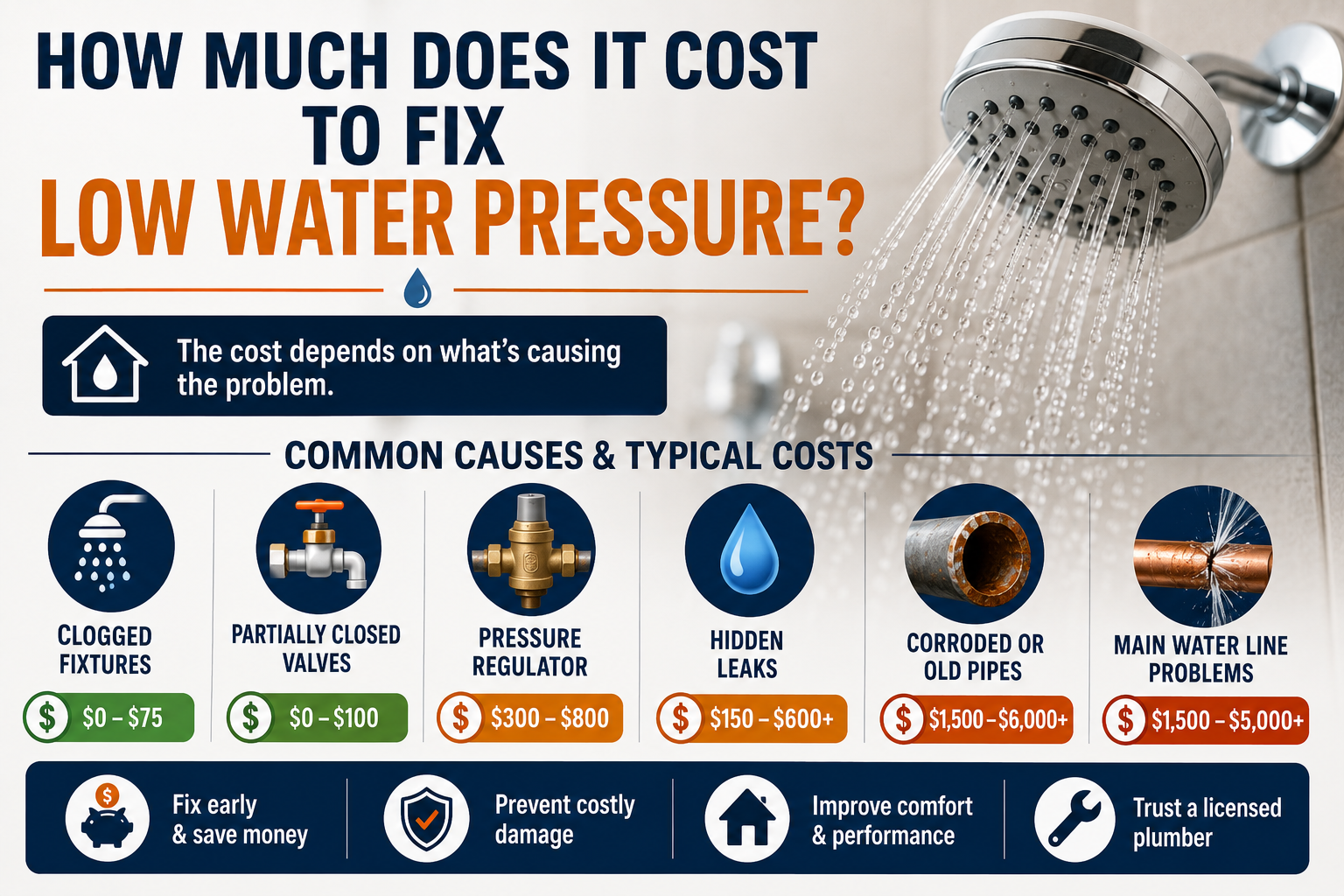
- Common Causes of Low Water Pressure
- How to Improve Water Pressure at Home
- Professional Water Pressure Testing
- Plumbing Services That Improve Water Pressure
- Why Low Water Pressure Shouldn’t Be Ignored
- When to Call a Professional Plumber
- Frequently Asked Questions About Low Water Pressure
- Low Water Pressure Is a Sign Your Plumbing Needs Attention
- What’s Next?
Low water pressure is one of the most frustrating plumbing problems homeowners deal with. Whether your shower barely trickles, your faucets take forever to fill a sink, or multiple fixtures can’t be used at the same time, poor water pressure affects everyday comfort. Simple tasks like showering, washing dishes, or doing laundry can quickly become annoying when water pressure drops.
The good news is that low water pressure is often fixable. In some cases, the solution is simple. In others, it may point to a larger plumbing issue that needs professional attention. Understanding what causes low water pressure and how it can be improved helps homeowners know when a quick fix is possible and when it’s time to call a plumber.
What Is Considered Low Water Pressure?
Water pressure is measured in pounds per square inch, or PSI. Most homes operate best between 40 and 60 PSI. Anything below 40 PSI can feel weak, especially when multiple fixtures are running at the same time.
Low water pressure may affect the entire home or only one fixture. When pressure is low everywhere, the issue is usually related to the main water supply or plumbing system. When it’s limited to one faucet or shower, the cause is often localized.
According to the U.S. Environmental Protection Agency, household plumbing systems are designed to operate efficiently within safe pressure ranges.
https://www.epa.gov/watersense
Common Signs of Low Water Pressure
Many homeowners notice low water pressure gradually. One of the most obvious signs is weak water flow from faucets or showerheads. You may also notice pressure drops when someone flushes a toilet or runs a washing machine.
Other signs include longer wait times for hot water, uneven pressure between fixtures, and sputtering faucets. In some cases, pressure may fluctuate throughout the day, feeling stronger at night and weaker in the morning.
If water pressure continues to decline over time, it usually indicates an underlying plumbing issue that should not be ignored.
Common Causes of Low Water Pressure
Low water pressure can be caused by several different issues. Identifying the source is the first step toward fixing the problem.
Clogged Faucet Aerators
One of the most common causes of low pressure is mineral buildup inside faucet aerators. Over time, sediment from hard water collects inside the small screen at the tip of the faucet, restricting water flow.
This issue usually affects only one fixture and can often be resolved by removing and cleaning the aerator.
Partially Closed Shut-Off Valves
Every home has a main shut-off valve and individual fixture valves. If one of these valves is not fully open, water pressure can be reduced throughout the house or at a specific fixture.
Sometimes valves are partially closed after plumbing repairs and never reopened completely.
Aging or Corroded Pipes
Older homes often have galvanized steel or aging copper pipes. Over time, these pipes can corrode internally, narrowing the diameter and restricting water flow.
As corrosion worsens, pressure continues to decline and may eventually lead to leaks or pipe failure. This is one of the most common causes of low pressure in older homes.
Hidden Water Leaks
A hidden leak can significantly reduce water pressure. When water escapes from the system before reaching your fixtures, less pressure remains available.
Slab leaks, underground leaks, or leaks behind walls often cause pressure loss along with higher water bills.
The This Old House explains how hidden leaks commonly impact household water pressure:
https://www.thisoldhouse.com/plumbing/21015137/how-to-find-a-water-leak
Pressure Regulator Failure
Many homes use a pressure-reducing valve (PRV) to control incoming water pressure. When this valve fails, pressure may drop suddenly or become inconsistent.
A failing pressure regulator can cause low pressure, high pressure, or fluctuating pressure throughout the home.
Municipal Water Supply Issues
Sometimes the problem isn’t inside your home at all. City water maintenance, pipe breaks, or system upgrades can temporarily reduce water pressure.
If neighbors are experiencing the same issue, the cause may be coming from the municipal supply.
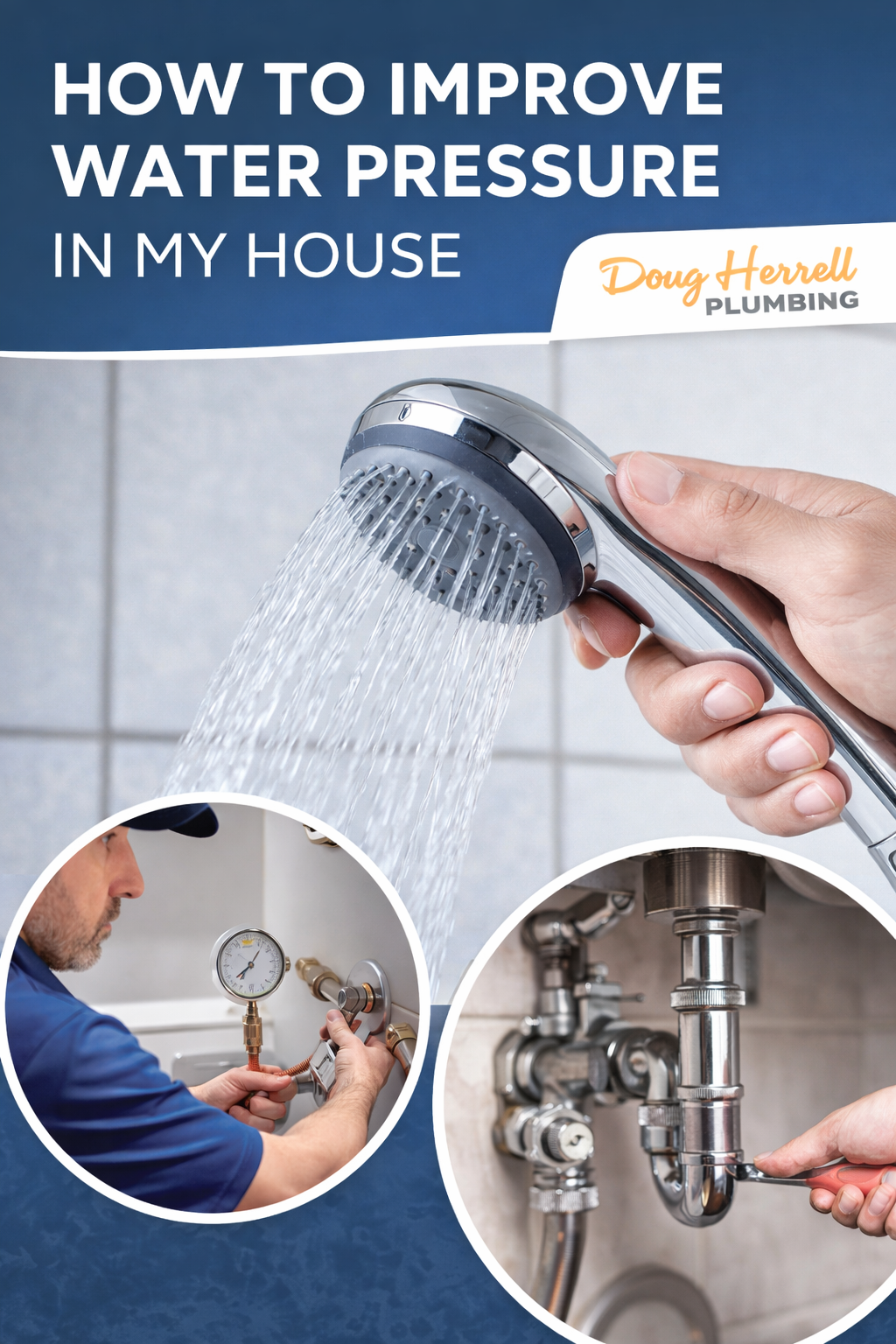
How to Improve Water Pressure at Home
There are a few basic steps homeowners can safely check before calling a plumber.
Start by testing multiple fixtures throughout the house. If only one faucet is affected, clean or replace the aerator. Check visible shut-off valves to ensure they are fully open.
If pressure is low everywhere, inspect the main shut-off valve and check your water meter area for signs of leaks. Monitoring your water bill can also reveal hidden problems.
If these steps don’t improve pressure, professional diagnosis is usually required.
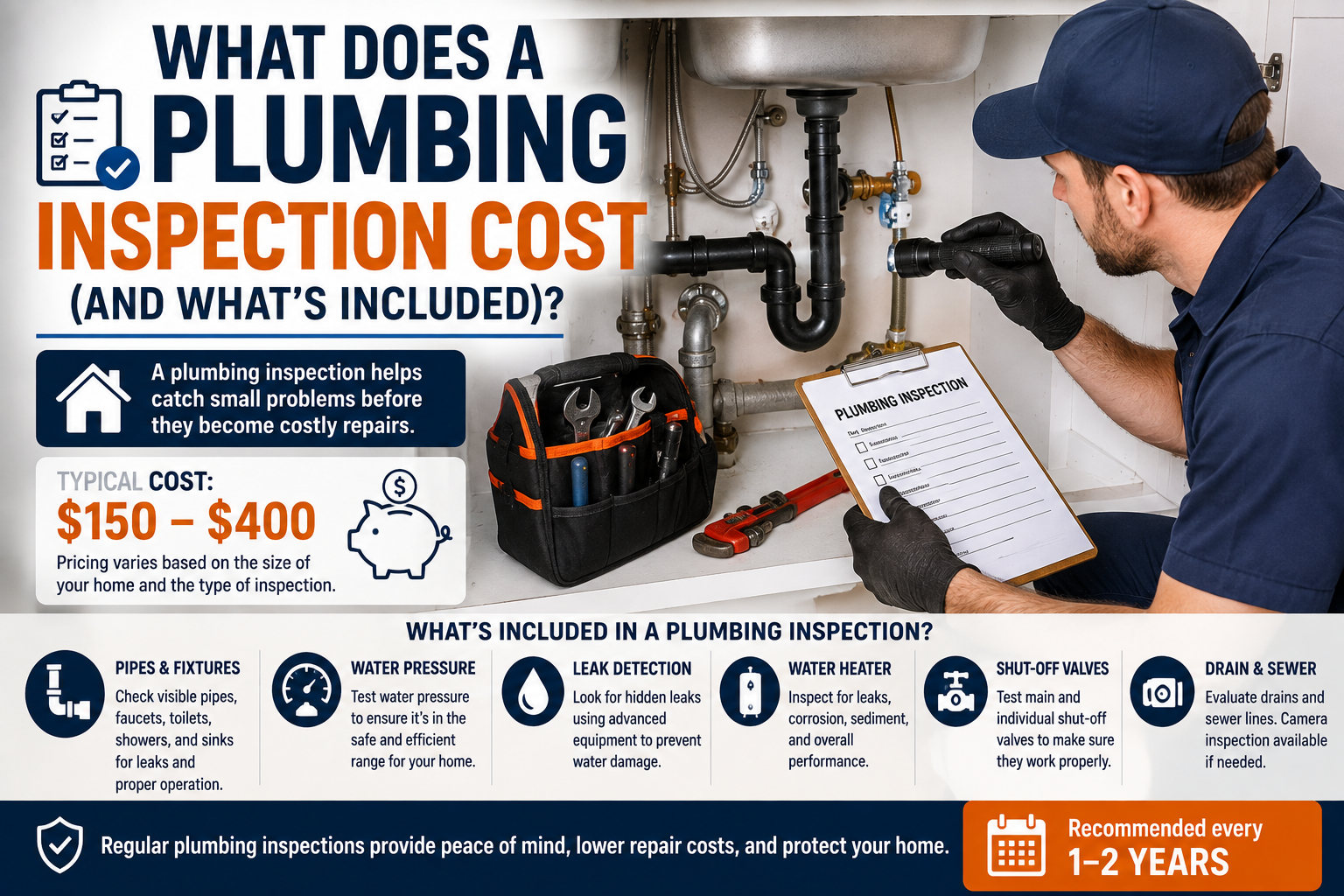
Professional Water Pressure Testing
When a plumber evaluates low water pressure, the first step is testing the PSI at different points in the system. This helps determine whether the issue is related to supply, internal plumbing, or pressure regulation.
Pressure testing allows plumbers to identify restrictions, failing regulators, and pipe deterioration without unnecessary damage to your home.
Professional testing ensures the correct solution is applied rather than guessing or replacing parts unnecessarily.
Plumbing Services That Improve Water Pressure
Depending on the cause, several plumbing services may be recommended.
Leak Detection and Repair
Hidden water leaks are a major cause of pressure loss. Professional leak detection uses acoustic equipment, thermal imaging, and pressure testing to locate leaks without damaging floors or walls.
Once repaired, water pressure often improves immediately.
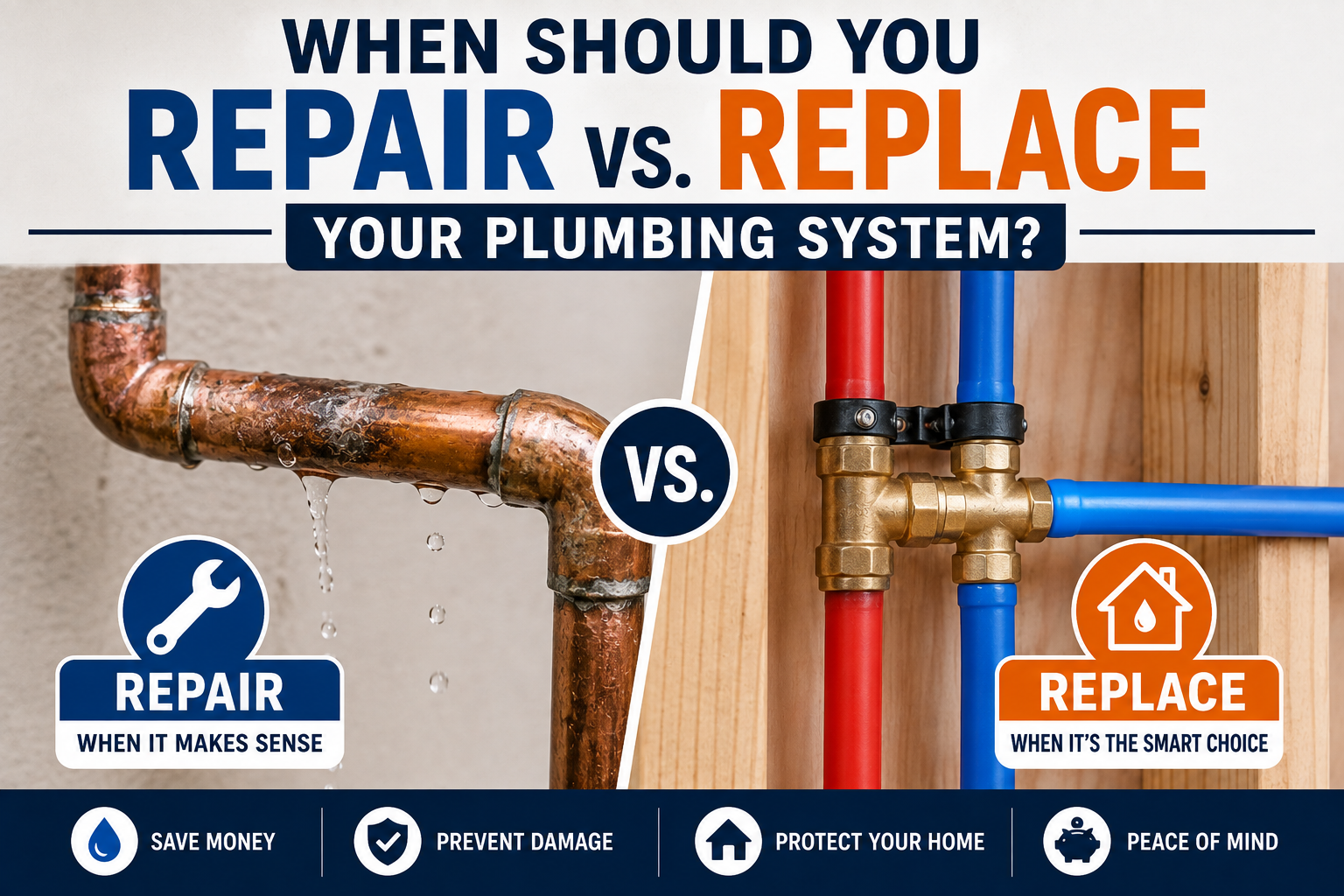
Pipe Replacement or Repiping
If pipes are corroded or severely restricted, repiping may be the best long-term solution. Replacing old galvanized or damaged copper pipes with modern materials restores full water flow and prevents future leaks.
Repiping not only improves pressure but also increases water quality and system reliability.
Pressure Regulator Replacement
If the pressure-reducing valve has failed, replacing it can restore proper pressure throughout the home. This is a common repair in homes older than 15 to 20 years.
A properly functioning regulator protects your plumbing system while maintaining comfortable water flow.
Water Line Repair or Replacement
In some cases, the main water line from the meter to the house is damaged or partially blocked. Repairing or replacing this line can dramatically improve pressure.
Tree roots, corrosion, or underground shifting can all affect the main water line.
Why Low Water Pressure Shouldn’t Be Ignored
Low water pressure is often a warning sign of a larger plumbing problem. Ignoring it can allow leaks, corrosion, or pipe damage to worsen over time.
Small pressure issues can turn into burst pipes, slab leaks, or major water damage if left untreated. Early diagnosis is almost always more affordable than emergency repairs.
When to Call a Professional Plumber
You should contact a plumber if:
- Water pressure is low throughout the entire house
• Pressure continues to decline over time
• You hear running water with no fixtures on
• Your water bill suddenly increases
• You have an older home with original piping
A licensed plumber can identify the true cause and recommend the safest and most effective solution.
Frequently Asked Questions About Low Water Pressure
Why is my water pressure suddenly low?
Sudden pressure loss is often caused by a leak, failing pressure regulator, or municipal water issue.
Can low water pressure mean I have a leak?
Yes. Hidden leaks are a very common cause of reduced pressure.
Is low water pressure dangerous?
While not immediately dangerous, it can signal serious plumbing problems that worsen over time.
Can old pipes reduce water pressure?
Yes. Corroded pipes restrict water flow and are a major cause of low pressure in older homes.
Will increasing water pressure damage my plumbing?
Yes if done incorrectly. Pressure must stay within safe limits to prevent pipe damage.
How do plumbers test water pressure?
They use pressure gauges and system testing to evaluate flow and identify restrictions.
Low Water Pressure Is a Sign Your Plumbing Needs Attention
Low water pressure is more than just an inconvenience. It often points to hidden leaks, aging pipes, or failing plumbing components. While some minor issues can be resolved quickly, ongoing pressure problems should always be professionally inspected.
If your home’s water pressure isn’t what it used to be, having it checked early can prevent expensive repairs later. Restoring proper pressure improves comfort, protects your plumbing system, and ensures your home runs the way it should.
What’s Next?
Doug Herrell Plumbing is a trusted leader in Brevard County, Florida, specializing in slab leak detection and re-piping services. Call us today for a free estimate before a slab leak causes unnecessary damage to your property.
About Doug Herrell Plumbing – lic#CFC 048487
Doug Herrell Plumbing has been Brevard County’s source for plumbing services since 1980. We are a family owned and operated business and take tremendous pride in providing honest and reliable plumbing services at an affordable price.
CALL 321-254-0004
Serving Melbourne, Palm Bay, Viera, Suntree, Titusville, Merritt Island, Melbourne Beach, Indialantic, Indian Harbour Beach, Cape Canaveral, Satellite Beach, Rockledge, West Melbourne, Cocoa, and Cocoa Beach.